Can Service Contracts Cut Straightener Feeder Downtime?
- Share
- publisher
- David Park - Senior Stamping Engineer, FANTY Machinery
- Issue Time
- Sep 23,2026
Summary
A service contract is the cheapest part of owning a coil line and the least examined. This breaks the annual fee into preventive visits, parts allowance, response commitment and remote support.
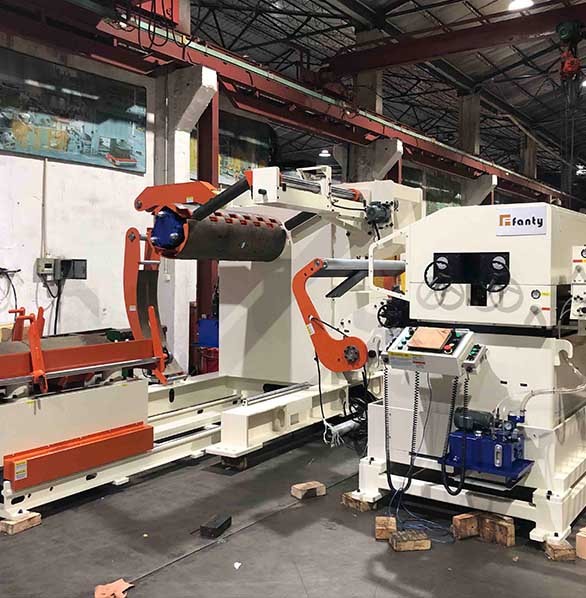
A coil line rarely fails on the day the warranty runs out. It fails in year three, on a Tuesday morning, with a full coil on the mandrel and a truck waiting at the dock.
That is the moment a NC straightener feeder service contract is either worth its invoice or worth nothing at all.
Most buyers sign one as an appendix to the purchase order without pricing what it actually delivers. This walks through where the money goes, which tiers earn their keep, and what no contract can promise.
The specification decisions that set your downtime exposure in the first place are covered in the coil line guide library, and the machines themselves are listed in the product range.
Where the Money in a Service Contract Actually Goes
Suppliers quote a service contract as one annual number. Break it into its four components and the negotiation gets much easier.
Preventive visits. Typically two to four scheduled visits a year, each one to two days, covering roll inspection, lubrication, gap verification, electrical checks and a written report.
Parts allowance. Either a fixed credit, a percentage discount off list, or nothing at all. This single line decides whether the contract pays for itself.
Response commitment. A promised time to acknowledge, a promised time to attend, and a promised time to have a qualified engineer on site.
Remote support. Phone and remote-diagnostic access outside normal hours. Cheap for the supplier, valuable to you at 02:00.
Ask for the four components priced separately. A supplier who cannot split them is usually selling a discount off list with a calendar attached.
| Contract tier | What it gives you | Where it costs you | Where it misleads |
|---|---|---|---|
| Parts discount only | 10-20% off list prices on spares, no visits | You still pay for every visit, and you still diagnose the fault yourself | The discount looks generous until you compare list prices against a competitor's list |
| Scheduled visits only | Two or three preventive visits, written reports, a parts discount | Breakdowns in month four wait until the visit in month six | Reports can read as clean for years on a machine that is drifting out of tolerance |
| Visits plus response time | Everything above, plus a contracted attendance window and remote support | The highest annual fee, and the window is only as good as the local engineer pool | An eight-hour attendance promise is measured from acknowledgement, not from your phone call |
| Full-coverage with parts included | Labour and a defined parts basket at no extra charge | You pay for wear you would never have claimed, and exclusions are written tight | "Parts included" usually excludes rolls, servo drives, bearings and anything consumable |
Which Visits Are Worth Paying For
Not every scheduled visit carries the same value, and the ones that look least urgent usually pay back most.
- Roll geometry check. Diameter taper, crown and surface condition measured and logged. This is the visit that catches flatness drift before the customer does.
- Feed calibration against a master. Feed length verified over 50 strokes at production speed, not at jog speed. The two numbers are never the same.
- Brake and tension audit. Pay-off tension checked at full coil and at remnant diameter. Most tension complaints live in this gap.
- Electrical and safety loop test. Interlocks, emergency stops and die-protection signals verified end to end. Cheap to test, expensive to discover during an incident.
- Operator practice review. Watch a real changeover. Half of what you are paying for is finding the shortcuts the night shift invented.
If a supplier's visit report does not contain measurements, you are paying for a wipe-down and a coffee.
Insist on a signed sheet with the actual values, the acceptance band and the trend against the previous visit.
What a Contract Cannot Promise You
A service contract is a commercial agreement, not an engineering guarantee, and the gap between those two shows up in predictable places.
It cannot make an under-specified machine fit your job. If the straightener was sold with five rolls for a material that needs nine, no visit schedule recovers the flatness.
It cannot cover wear you caused. Roll bruising from a weld bead, a bent coil end, or a mandrel run without a hold-down will be excluded, and rightly so.
It cannot promise a response you have not staffed for. A four-hour attendance clause is worthless if the nearest qualified engineer is a flight away.
Check where the engineer actually lives before you sign the window.
It cannot substitute for your own records. Without a machine log, the supplier cannot tell a sudden fault from a slow drift, and neither can you.
It cannot price-protect you indefinitely. Most agreements index parts prices annually. Ask for the index and the cap, in writing, before year one ends.
Read the exclusions page first. On most contracts it is shorter than the inclusions page and considerably more useful.
Turning Response Time Into a Downtime Number
Response time is the easiest clause to argue about and the easiest to price, once you put a cost per hour on a stopped line.
Take a line running two shifts at 18 hours a day, producing 1,800 parts an hour with a contribution of $0.42 per part. A stopped line costs roughly $756 an hour before scrap and overtime.
Now compare two contracts. The cheaper one promises next-day attendance; the dearer one promises eight hours. On the arithmetic above, the difference is worth about $9,000 per avoided breakdown day.
Two breakdown days a year and the eight-hour clause is already ahead. One breakdown day a year and it is not.
Be honest about your failure history. A line that has run three years without a stoppage is buying peace of mind, not uptime. Say so, and price it that way.
Also count the cost you cannot invoice: the customer who moves next quarter's order because your delivery slipped twice.
Which Clauses Carry Value Into Year Three
The first year of any contract is easy, because the machine is still close to new. The value is decided by what the paperwork says about year three.
Parts price basis. Fix the reference price list and the annual escalation index. A contract that references "current list price" gives the supplier a free option on your budget.
Engineer continuity. Ask for the same lead engineer where possible. A new face every visit spends half the day learning your line.
Roll replacement terms. Agree the wear limit, the reconditioning route and the lead time for a replacement set before you need one.
Software and parameter access. Confirm that feed recipes, servo parameters and the machine log remain yours and exportable at any time.
Exit terms. You should be able to leave with a current machine health report and a spare-parts list, not with a locked controller.
With installations running in more than 60 countries, we have seen the same three clauses cause disputes everywhere: parts indexation, engineer continuity and parameter ownership.
What to Measure in the First Ninety Days
A new contract should be judged on evidence, and ninety days is enough to gather it.
Response against promise. Log every call, the acknowledgement time and the attendance time. Compare them with the contract, in writing, at the end of the quarter.
Parts consumption. Track what was ordered, at what price, against the discount you were promised. This is where a contract quietly underdelivers.
Tolerance trend. Feed length and flatness readings from each visit, plotted. A flat line is a working contract; a rising line is a warning.
Operator feedback. Ask the people who run the line. They know whether the visits changed anything within a week.
Bring that record to the renewal conversation. A supplier with three years of your measurements is far easier to hold to a price than one with none.
Machines we have delivered across 200-plus production lines usually settle into a stable maintenance pattern by month six. If yours has not, the contract is not the thing to renegotiate first.
Does a service contract stop being worth it above 5% of machine price?
A useful ceiling is 3 to 5% of the machine's purchase price per year. Above that, compare the fee against your own maintenance hours and the last three years of breakdown cost.
If the fee exceeds your measured annual downtime cost, you are buying reassurance rather than uptime.
How many preventive visits a year does an 18-hour line actually need?
Three is a reasonable default for 18 hours a day. Single-shift operations often do fine on two. Add a fourth only if the line runs coated or high-strength strip, where roll wear accelerates.
Should you include parts under $500 in the contract or buy them as needed?
Include the cheap, high-consumption items and exclude the expensive ones.
Bearings, seals, sensors and guide parts are worth covering; work rolls, servo drives and mandrels are not, because the premium you pay for them exceeds the expected failure rate.
Does the service contract cover the press as well as the feeder?
Usually not. Most agreements are scoped to the coil handling equipment the supplier built.
Press, die and tooling maintenance is a separate arrangement, and blending them in one contract usually means neither is well defined.
Where to go next
A service contract protects a machine you have already specified. The decisions that set how much protection it needs, and what each specification line costs you, sit in the guide library.
the coil line guide library