Can a Decoiler Hold Back Tension Without a Drag Brake?
- Share
- publisher
- David Park - Senior Stamping Engineer, FANTY Machinery
- Issue Time
- Nov 3,2026
Summary
When the loop behind the machine breathes and the strip slaps the guard, the brake is the third suspect rather than the first. This is a diagnostic sequence: what the symptom looks like, how the three braking methods differ, two causes that mimic a brake fault, the loop and current readings that separate them, and the cases where a drag brake is the wrong answer entirely.
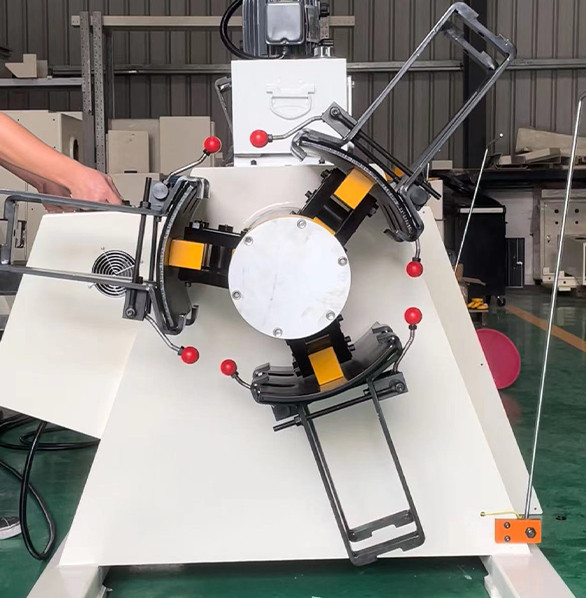
A decoiler that cannot hold back tension announces itself in a specific way: the loop behind the machine breathes, the strip slaps the floor guard, and the operator blames the controls.
Back tension on an uncoiler machine is not a single feature. It comes from three different mechanisms, and which one you need depends on coil mass, line speed and how often the line stops.
This is a diagnostic sequence for the case where the loop will not settle, run in the order that finds the cause fastest.
What the Loop Looks Like When the Brake Is Missing
The first evidence is rarely a fault code. It is a loop that overshoots and then corrects, over and over, at a period of a few seconds.
Watch the strip between the uncoiler and the first driven roll. On a healthy line the sag sits at a steady height and moves by 20 to 40 mm as the line accelerates.
Without usable back tension the sag swings 150 mm or more. At the bottom of the swing the strip touches the floor or the guard, and at the top it pulls tight enough to drag the coil forward.
The coil keeps turning after the command stops. That is inertia, and it is the physical problem every braking method is trying to solve.
A 1,500 kg coil at 1.2 m diameter carries enough rotational energy to feed several metres of strip after the drive is de-energised.
Listen as well as watch. A rhythmic clunk once per revolution points at the mandrel or the coil wrap, not at the brake.
Check the Brake Type Before You Change Anything
Three mechanisms hold a coil back, and they are not interchangeable. Identify which one is fitted before adjusting anything, because the fix differs completely.
| Brake type | What it holds | Best fit | Where it bites you |
|---|---|---|---|
| Pneumatic disc or caliper | Static and dynamic torque through air pressure | Heavy coils, frequent stops | Pressure droop at the end of a shift changes tension without warning |
| Motor regeneration | Torque from the drive in braking mode | Variable speed lines, thin strip | Needs a drive rated for continuous braking and a resistor that can dissipate it |
| Mechanical drag or friction pad | A fixed retarding force | Simple, low-speed, single-direction work | Fixed torque is wrong at both ends of a coil, so tension drifts as diameter falls |
The third row is the one that generates the most complaints. A friction pad set for a full coil is far too strong when the coil is down to 300 mm of remaining wrap.
Check the nameplate and the pneumatic schematic before touching pressure. Plenty of "brake faults" turn out to be a caliper fed from a regulator that also serves the clamp.
Rated coil mass, mandrel bore and brake torque for each frame size are published on our coil handling equipment pages.
Three Causes That Look Like a Brake Fault
When the loop will not settle, the brake is the third suspect rather than the first. Two other faults produce the same symptom and cost less to fix.
Loose mandrel grip. If the coil can rotate a few degrees on the mandrel, every brake application is absorbed by that slip before it reaches the strip. Check the segment expansion and the bore condition.
Coil wound loose. A coil that was wound with low tension unwinds in steps rather than smoothly. No brake setting fixes it, because the strip itself is storing and releasing energy.
Sensor placement. A loop sensor aimed at a shiny or oily surface reads intermittently, so the control sees tension changes that are not there. Move it, shield it, or change the sensing principle.
Rank the three by what you can verify in ten minutes. Mandrel grip is a visual check with the coil off. Sensor behaviour shows on the input LED while the line runs. Coil winding quality is visible on the coil face.
Measure Loop Height and Armature Current Together
Two readings taken at the same moment separate a mechanical fault from a control one. Neither reading means much alone.
Log loop height with a simple distance sensor or a marked rod, and log motor current from the drive. Then run the line through acceleration, steady state and a stop.
| Reading | What it suggests | Where it misleads you |
|---|---|---|
| Loop stable, current spikes on every stop | Brake applying late, so the drive does the holding | A hot drive is often blamed on the motor instead of the brake |
| Loop sags slowly and recovers | Brake torque slightly high for the coil diameter | Reads as a feed problem downstream rather than a brake setting |
| Current flat, loop oscillating | Sensor or control loop, not the brake | Adjusting brake pressure makes it worse and hides the cause |
| Both flat, strip still slaps | Coil wound loose, or mandrel slipping | No electrical trace will show it, so the search stops too early |
Sample at one-second intervals for at least ten minutes. Faster sampling buries the trend in electrical noise, and slower sampling misses the acceleration event entirely.
Keep the trace with the machine file. When tension drifts again, a comparison against a known-good run answers in minutes what a fresh investigation takes a shift to find.
Take the readings over a full coil, not a single pass. Tension behaviour at 1.2 m diameter and at 400 mm diameter are different machines as far as the brake is concerned.
FANTY builds decoiler and uncoiler units for lines running in more than 60 countries. Across that fleet, plants with a current trace on file resolve tension complaints in hours rather than days.

When a Drag Brake Is the Wrong Answer
A drag brake is a cheap, reliable solution in the right place, and a persistent nuisance in the wrong one.
Thin strip at high speed. Below about 0.5 mm, the tension a fixed pad applies is enough to stretch the strip between the uncoiler and the first roll. The loop looks stable and the parts come out long.
Frequent acceleration. A line that starts and stops more than 20 times an hour needs torque that tracks the command, not a constant retarding force.
Wide coil, narrow strip. A pad set for a 1,250 mm coil is over-specified when the line is running 300 mm slit coil, because the moment arm changes with diameter rather than width.
Count the coil changes per shift before choosing. Twenty changes on a 1,200 kg coil is a different duty cycle from two changes on a 5-tonne coil, even though the strip is the same.
The trap is maintenance-driven. Drag pads wear, and a worn pad gives less torque, so operators raise the pressure to compensate.
That works until a new pad is fitted and the line suddenly runs at double the intended tension.
What to Change in the Order Sheet
Most tension problems are decided at purchase, in four lines of specification that cost little to add and a great deal to retrofit.
- State the coil mass range and the maximum diameter, not just the width.
- Specify the braking method and the torque range it must cover.
- Ask for a separate air regulator on the brake circuit.
- Require a diameter-tracking tension reference if speed varies more than 2:1.
Add the coil bore tolerance to the same sheet. A mandrel sized for a nominal 508 mm bore will slip on a coil that measures 511 mm, and the slip reads as lost tension rather than as a fit problem.
Then ask for the tension range in newtons, not as a percentage. Percentages of an unnamed maximum cannot be checked on site, and they are the most common way a specification quietly becomes unenforceable.
The fourth item is the one that separates a machine that works from a machine that works on one coil size. Torque needed falls as diameter falls, so a controller that does not know the diameter is guessing.
How much torque does a 1,500 kg coil need at 1.2 m diameter?
For 200 N of strip tension, torque is roughly 120 Nm at 1.2 m diameter and 40 Nm at 400 mm. A brake sized only for the full-coil figure will over-brake the tail of the coil by a factor of three.
Can a 0.4 mm strip run with a friction drag pad?
Usually not above 40 m per minute. The pad's minimum usable torque is high enough to stretch thin strip, so tension varies with diameter and the cut lengths drift by 0.3 to 0.8 mm.
How often should brake linings be checked on a 2-shift line?
Every 500 hours, or monthly on two shifts. Lining thickness below 2 mm, or a pressure setting that has crept up more than 15 percent since commissioning, both mean the pad is near the end of its life.
Where to go next
Brake torque is one line in the specification chain that runs from capacity through type and mandrel to control. The guide below walks that chain in order, which is the sequence that avoids retrofits.
Read the decoiler specification guide