Can an NC Straightener Feeder Handle High-Tensile Steel?
- Share
- publisher
- David Park - Senior Stamping Engineer, FANTY Machinery
- Issue Time
- Aug 27,2026
Summary
Can an NC Straightener Feeder handle high-tensile steel? Yes — with the right roll size, frame strength, setup, and maintenance. A complete engineering guide.
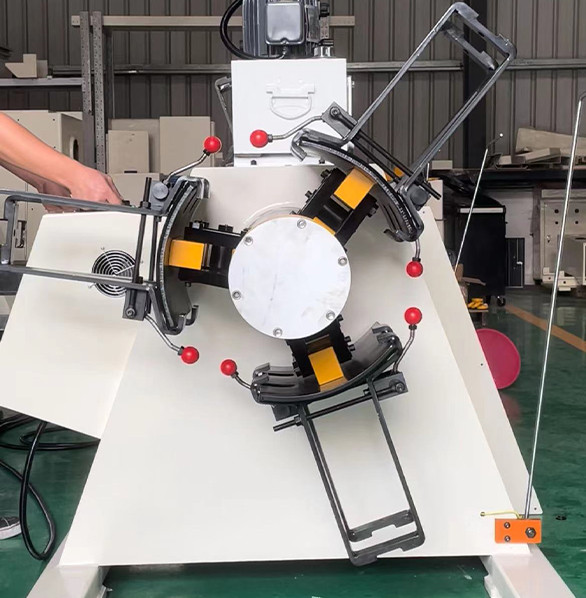
More and more stamping shops are being asked to run high-tensile steel — the dual-phase, martensitic, and high-strength low-alloy grades used in automotive structural parts, chassis brackets, and reinforcement plates. High-tensile steel is stronger, lighter, and better for crash performance, but it is also a nightmare for coil feeding equipment that was sized for mild steel. The material's higher yield strength resists straightening, its springback is stronger, and its hardness wears rolls faster. So the question every plant manager asks before buying: can an NC Straightener Feeder handle high-tensile steel? The honest answer is yes — but only if the machine is engineered for it. A standard mild-steel feeder will struggle; a correctly configured NC Straightener Feeder with the right roll diameter, roll count, motor power, and frame stiffness processes high-tensile strip all day at ±0.05 mm accuracy. This guide explains exactly what changes, what to specify, and how to set up the machine for high-tensile production.
High-tensile steel is not just "stronger mild steel" — it behaves differently at every stage of the coil line, from the decoiler to the straightener to the feeder. The straightener must bend the strip beyond its elastic limit with enough force to remove coil-set, and the feeder must push that stiff material without buckling. FANTY has spent 12 years building NC Straightener Feeder lines for 200+ installations in 60+ countries from a 45,000 m² factory with 370 staff and 80+ R&D engineers, and high-strength steel applications are a core part of that experience.
 An NC Straightener Feeder running high-tensile strip — heavier rolls and more power make it possible.
Why High-Tensile Steel Is Different for the Straightener
The straightener works by bending the strip repeatedly between offset rolls to eliminate the coil-set curvature the coil develops when it is wound. The amount of force needed to bend a strip depends on its yield strength, thickness, and width — and high-tensile steel can have two to three times the yield strength of mild steel. A straightener sized for 0.8 mm mild steel at 350 MPa yield simply cannot flatten 0.8 mm dual-phase steel at 780 MPa; the rolls will flex, the strip will keep its coil-set, and the parts will come out bowed and twisted.
Three things must change for high-tensile:
- Larger work-roll diameter. Bigger rolls resist deflection under the higher bending loads, keeping the gap uniform across the strip width.
- More rolls or stronger frames. Additional work rolls distribute the bending, and a heavier frame stops flex that would ruin flatness.
- Higher roll force and motor power. The straightener drive must generate enough force to bend the material and feed it without stalling.
Get these three right and the straightener handles high-tensile like any other material. Get them wrong and no amount of roll gap adjustment will save you.
What Makes a Straightener "High-Tensile Rated"?
Check the specification sheet for two numbers: the maximum yield strength of the material (in MPa) and the maximum width at that strength. A genuinely high-tensile-capable NC Straightener Feeder will state, for example, "up to 780 MPa yield at 200 mm width" or similar, rather than a single vague material thickness. That rating is the honest test of whether the machine was designed for the material you plan to run.
High-Tensile Straightener Specifications Compared
When you compare NC Straightener Feeder quotes for high-tensile work, use this table to check the critical differences between a mild-steel unit and a high-tensile-rated unit:
| Specification | Standard (Mild Steel) | High-Tensile Rated |
|---|---|---|
| Material yield strength | Up to 350–400 MPa | 600–980 MPa rated |
| Work-roll diameter | Ø40–50 mm | Ø60–90 mm |
| Work-roll count | 9–11 rolls | 11–13 rolls for the same width |
| Roll material hardness | 58–60 HRC | 60–62 HRC, often coated |
| Frame construction | Welded plate | Ribbed or thicker plate, stress-relieved |
| Feed motor power | Standard servo | Higher torque servo for stiff strip |
| Feeding accuracy | ±0.05 mm | ±0.05 mm maintained at full load |
Notice that feeding accuracy stays the same on both — the NC servo control is equally capable. The difference is entirely in the mechanical strength and the roll geometry that keep the strip flat and the feed consistent under the higher loads.
Setting Up the Straightener for High-Tensile Strip
Once you have a machine with the right hardware, setup determines success. High-tensile steel needs a different straightening approach than mild steel:
- Use less roll penetration, more passes. Over-bending high-tensile strip creates work-hardening and surface marks. Set a moderate roll overlap and rely on the roll count to do the flattening.
- Check flatness at the exit, not the entry. Walk the strip through the straightener, stop with the strip in the die area, and verify flatness visually before starting production. High-tensile springback means the flatness at the entry tells you nothing.
- Expect springback in the feed. The strip's stiffness resists the feeder's push; keep guide clearances correct and let the NC servo feeder's closed loop manage the extra load.
- Warm up the line. Run a few short strokes before full production so the rolls and bearings settle into their operating state.
If you see edge wave or center buckle on high-tensile parts, adjust the roll bank angle and penetration in small steps — a quarter turn at a time — rather than big swings. High-tensile reacts to over-adjustment by creasing, and a creased roll is expensive to fix.
 Setting roll penetration on an NC Straightener Feeder — small adjustments prevent creasing on high-tensile strip.
Roll Wear and Maintenance on High-Tensile Materials
High-tensile steel is abrasive. Its higher hardness and surface scale accelerate roll wear, which changes the roll geometry over time and slowly degrades flatness without any obvious failure. On a line running high-tensile, adopt a more aggressive inspection schedule:
- Inspect work rolls weekly. Look for wear lines, pitting, and surface damage — the first signs that the roll needs re-grinding or replacement.
- Track flatness trend. If flatness degrades gradually over weeks, it is almost always roll wear, not setup drift.
- Keep spare rolls on hand. High-tensile lines consume rolls faster; a stocked spare keeps the line running while the worn set is re-ground.
- Use the right roll surface. Hardened and optionally coated rolls (chrome or ceramic) resist wear far better than standard rolls on abrasive material.
FANTY's high-tensile-configured NC Straightener Feeders ship with hardened work rolls and a documented re-grinding schedule, because roll maintenance is where high-tensile lines make or lose their operating cost.
Feeding Accuracy Under Load
One concern buyers raise is whether the NC servo feeder can hold ±0.05 mm accuracy when pushing stiff, springy strip. It can — the servo closed loop measures actual position at the encoder and corrects every cycle, regardless of the strip's resistance. What matters is that the machine is specified with a motor and frame strong enough that the mechanics themselves do not flex. A flimsy feeder frame will flex under high-tensile load and no controller can correct for mechanical compliance. This is why frame stiffness is a headline spec for high-tensile machines.
When High-Tensile Runs Need a Different Machine Altogether
There is a limit to what any in-line straightener can do. Very high strength grades above about 1,000 MPa yield, very thick high-tensile plates, or materials with extreme springback may need a different approach: a multi-stand straightener, a different roll configuration, or even a tension leveler. If your application is in that range, be honest about it during the specification phase. A reputable builder will tell you when an NC Straightener Feeder is the right tool and when it is not — FANTY engineers routinely advise customers on which configuration suits their exact grade, and that honesty is part of the reason our high-tensile lines run reliably in demanding automotive supply chains.
Specify the Full Grade Range
When you request a quote, list every material grade you plan to run — not just the thickest or the strongest, but the full range including the softest. The machine must handle the softest grade without marking it and the hardest without flexing. A machine tuned to the full range is more expensive up front and dramatically cheaper over the life of the line.
Frequently Asked Questions About High-Tensile Steel Feeding
Can a standard NC Straightener Feeder process high-tensile steel?
Only up to the strength its rolls and frame can handle. If the rated yield strength on the spec sheet is below your material grade, the machine will struggle with flatness and roll life. For regular high-tensile production, choose a unit explicitly rated for your MPa range.
Does high-tensile steel affect feeding accuracy?
Not if the machine is built stiff enough. The NC servo closed-loop control holds ±0.05 mm regardless of material, as long as the frame and drive do not flex under load. Frame stiffness, not the controller, is the limiting factor on high-tensile lines.
How much faster do work rolls wear on high-tensile steel?
Depending on the grade and surface condition, rolls can wear two to four times faster than on mild steel. Plan a shorter re-grinding interval, inspect weekly, and stock spares. Coated rolls significantly extend the interval on abrasive grades.
What is the practical upper limit for an in-line straightener?
For most standard NC Straightener Feeder configurations, the practical range is up to about 980 MPa yield, depending on thickness and width. Above that — or for very thick high-tensile plates — a multi-stand straightener or tension leveler may be required. Always confirm your grade with the builder.
Will high-tensile strip damage the decoiler or feeder guides?
It can. The stiff strip exerts higher forces on entry guides, side guides, and feed rollers, so high-tensile-rated machines use heavier guides and hardened surfaces. Make sure the guides are adjusted to the strip width with minimal clearance to prevent the strip from buckling sideways.
Specifying an NC Straightener Feeder for High-Tensile Work
When you send your requirements to a builder, include this information so they can configure the right machine:
- Full material grade list with yield strength (MPa) for each.
- Thickness range and maximum strip width.
- Coil weight, OD, and ID.
- Feed length range and maximum required feed speed / SPM.
- Required flatness tolerance on the finished part.
- Production hours per day — this drives roll material and spare strategy.
With those numbers, a builder can confirm whether a standard or high-tensile-rated NC Straightener Feeder fits, what roll configuration you need, and what maintenance schedule keeps the line profitable. The machine that handles your full material range is the machine that runs for years without surprises.
Planning to Run High-Tensile Steel on Your Line?
Send us your material grades, strip dimensions, and target SPM. FANTY's application engineers will confirm the right NC Straightener Feeder configuration — rolls, power, and frame — for your high-tensile application.
Get a High-Tensile Feeder Configuration