How Do You Build an Efficient Coil Feeding Line for Automotive Stamping Production?
- Share
- publisher
- David Park - Stamping Engineer, FANTY Machinery
- Issue Time
- Jul 17,2026
Summary
Learn how to design and build an efficient automotive stamping coil feeding line. Covers decoiler, feeder, straightener selection and line integration for auto parts production.
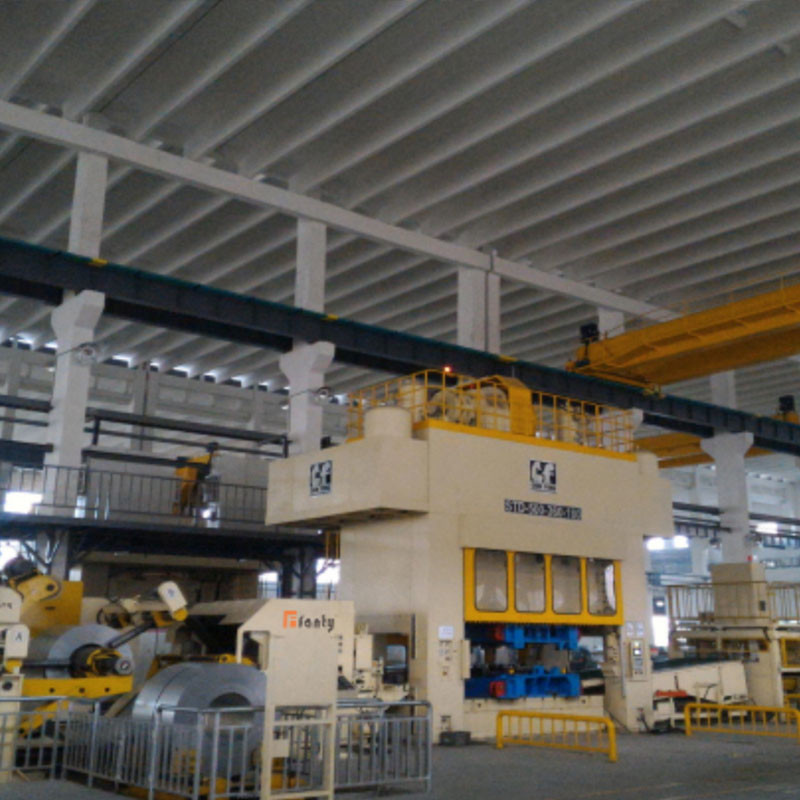
In automotive stamping, a poorly designed coil feeding line can scrap an entire batch of parts and damage expensive progressive dies. Building the right automotive stamping coil feeding line requires careful equipment selection, precise material handling knowledge, and proper integration.
With over 200 coil feeding line installations for automotive Tier 1 and Tier 2 suppliers worldwide, FANTY has learned exactly what separates a reliable line from a problematic one.
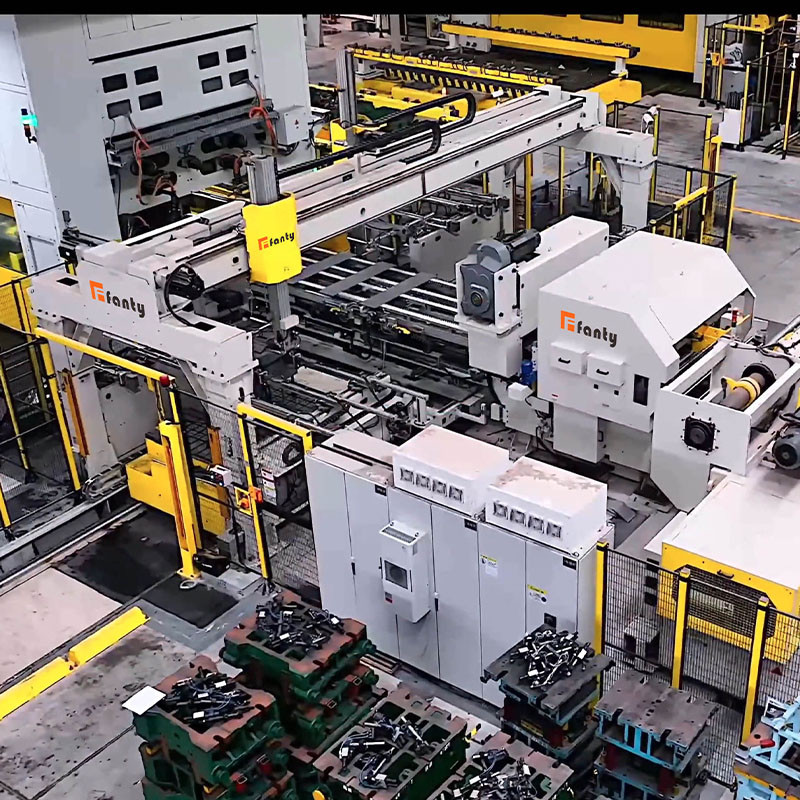
Essential Components for Automotive-Grade Lines
| Component | Automotive Requirement | Why It Matters |
|---|---|---|
| Hydraulic Decoiler | 5-15 ton capacity, 1,600 mm width | Automotive coils are heavy; fast loading is critical |
| Precision Straightener | 11-17 rollers, HRC 60+ hardness | AHSS and HSS materials need aggressive straightening |
| NC Servo Feeder | ±0.05 mm accuracy, 150-250 SPM | Automotive tolerances require highest precision |
| Coil Car / Loading | Hydraulic lift, motorized traverse | Safe, fast changes without forklift dependency |
| Loop Control | Dancer roll or photoelectric sensor | Maintains stable tension between decoiler and straightener |
| Safety System | Light curtains, e-stops, coil-end detection | Operator safety and die protection are non-negotiable |
Each component must be selected not just for its individual performance, but for how it integrates with the rest of the line. A decoiler that feeds too fast for the straightener, or a straightener that cannot match the feeder's speed, creates bottlenecks that undermine the entire line's efficiency.
Material Considerations by Type
HSS / AHSS (340-1,500 MPa)
Needs 15+ straightening rollers with programmable over-bending compensation to handle springback
Aluminum Alloys
Surface-scratch sensitive — requires polyurethane-coated or chrome-plated rollers to prevent marking
Copper & Brass (EV)
Ultra-thin gauges (0.1 mm) need anti-buckling guides. Surface contamination affects conductivity
Modern automotive stamping processes increasingly run multiple material types on the same line — switching from steel to aluminum between jobs. An NC straightener feeder with programmable roller pressure profiles can store settings for each material and recall them instantly, making multi-material production practical.
Line Design Principles for Maximum Uptime
- Design material flow in a straight, unobstructed path from coil car to press exit — every bend adds tension variation and scrap risk
- Target sub-10-minute coil changes using hydraulic decoilers with powered mandrel expansion and automatic coil centering
- Synchronize feeder timing with the press angle encoder — cam profile matching is essential for consistent part quality
- Include remote diagnostics capability — FANTY's IoT module reduces on-site service calls by up to 60%
- Plan for future expansion — leave space for additional press lines or material handling automation
Automotive OEMs increasingly require suppliers to demonstrate Industry 4.0 capabilities. A modern coil feeding line should include production data collection (parts counted, material usage tracked, stats reported to MES), predictive maintenance sensors monitoring roller wear and bearing temperature, and automatic job change when the press signals a new production run.
What is the typical ROI timeline for an automotive coil feeding line?
Most facilities see full ROI within 12-18 months through 15-25% scrap reduction, 60-80% faster changeovers, and lower labor requirements.
Can the same line handle both steel and aluminum?
Yes, with careful roller selection. FANTY offers machines with interchangeable roller sets or adjustable pressure profiles suitable for both materials. Dedicated roller sets for each material deliver the best results.
How does press speed affect feeder selection?
Presses above 150 SPM require NC servo feeders with high-speed feed profiles. FANTY feeders are rated for 200+ SPM with ±0.05 mm accuracy, suitable for modern high-speed automotive presses.
What safety features are essential?
Light curtains at the press feed area, emergency stops at multiple locations, coil end detection, overload protection, and safety-rated PLC. FANTY machines meet CE safety standards as standard.
Related reading
Part of the the coil line guide library — the full library of coil handling, straightening and feeding guides from FANTY.
Ready to design your automotive stamping coil feeding line? Contact FANTY's engineering team for a free consultation based on your specific parts and production targets.
Fanty · NC Straightener Feeder
Still Fighting Strip Memory After Straightening?
Send the strip thickness, material grade and target flatness. We specify roll diameter, roll count and NC feed pitch so the line holds tolerance from the first coil, not the fiftieth.
Get a Free QuoteFANTY Machinery · 13 years on stamping automation · 2,000+ coil lines installed · engineers reply within 24 hours