How Does Coil ID Mismatch Affect a Decoiler Mandrel?
- Share
- publisher
- David Park - Senior Stamping Engineer, FANTY Machinery
- Issue Time
- Oct 21,2026
Summary
Coil ID is not a standard, and a mandrel covers a fixed expansion range rather than every coil a supplier ships. This works through the contact-area arithmetic, what a 2 mm and a 25 mm gap do to the strip, the sleeve and stepped-mandrel options, and the cases where a wider range is the wrong answer.
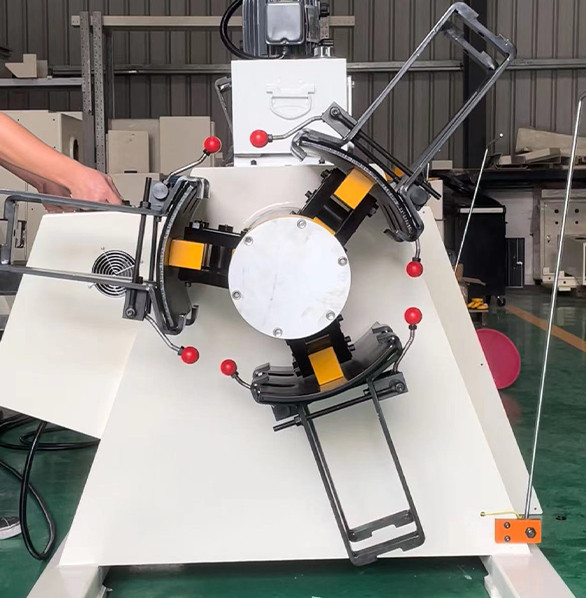
A 610 mm coil on a mandrel built for 508 mm is not a 2 mm problem. It is a contact-area problem, and the arithmetic decides whether the coil holds.
Most mandrels expand over a fixed range: 480-540 mm, or 580-640 mm. Buyers order the range they last used, then meet a supplier shipping a different ID.
The calculation below applies to any decoiler machine or uncoiler, whatever the capacity, because the geometry is the same at every size.
Measure the Coil Before You Quote the Mandrel
Coil ID is not a standard. 508 mm and 610 mm dominate, but 400, 450 and 760 mm all turn up on imported stock.

Measure three coils from the same supplier, not one. A mill that changes its mandrel between orders will change your ID without telling you.
Measure the inner wrap as well. A crushed core reads 5-10 mm under nominal, and no expansion range recovers a coil that is already oval.
Write down two numbers: the nominal ID, and the worst case you will actually receive over five years. The second one sizes the machine.
A supplier who cannot state the ID tolerance has not measured it. Ask for the mill certificate and read the coil diameter line.
The Expansion Arithmetic
A mandrel's usable range is set by segment travel, not by the nameplate. A 508 mm mandrel that expands 60 mm covers 508 to 568 and nothing more.
The capacity, type and mandrel sequence behind this arithmetic is covered in the coil line guide library, which starts from coil weight rather than ID.
Contact area falls roughly with the gap. A 5 mm gap on a 508 mm mandrel removes about 8% of the contact arc; a 25 mm gap removes close to a third.
| Mandrel nominal | Usable range | Coil ID it handles | Where it costs you |
|---|---|---|---|
| 508 mm | 480-540 | 508 standard, 500-530 worn | 610 coils need a sleeve or another mandrel |
| 508 mm wide-range | 470-570 | 508 plus sloppy cores | Wider travel means coarser segment steps |
| 610 mm | 580-640 | 610 standard | Cannot hold 508 without an adapter |
| 610 mm stepped | 500-640 | Both, with a step | The step joint marks the inner wrap |
| 760 mm | 700-780 | 760 only | Oversized and slow for anything smaller |
Two numbers decide the order: the ID range you will receive over five years, and the stated expansion. If the second does not cover the first with 10 mm spare, specify an adapter.
If the answer is a sleeve, price the changeover as production loss. Twenty minutes twice a week is 35 hours a year of lost press time.
Do the sum on the coil you will run at 2 a.m., not the one in the quotation photo. That is where the mismatch shows.
What a 2 mm Gap Does to the Strip
A mandrel does not hold a coil by friction alone. It holds it by wrapping the inner lap around segment faces that match its radius.
With a small gap, two or three segments carry the load and the rest float. The inner lap takes a local flat and the next layer follows it.
That flat becomes camber the downstream equipment cannot remove. It shows as edge wave on one side of the strip, 20-30 m into the coil.
At a large gap the coil drops onto the segments and telescopes. The inner laps slide, and the coil walks toward the outboard end of the mandrel.
The change between the two is not gradual. Contact falls away quickly once the gap passes about 15 mm on a 508 mm mandrel.
Where the Segment Contact Goes Wrong
Five checks find most of it, and all five are visual or hand tools.
Do them on an empty mandrel with the power off. A coil sitting on the mandrel hides exactly the faces you need to see.

- Segment faces: look for a bright polished band. That is where the coil was actually gripped.
- Wedge and screw: measure expansion at three positions. Uneven travel means a worn wedge, not a worn coil.
- Segment springs: a collapsed spring lets the segment trail, and the coil runs out of round.
- Mandrel nose: a bent nose from a crane lift stops the coil seating square, and the strip cambers from the first metre.
- Brake and drag: with partial contact the torque needed rises, and a 15% drag increase is often the first symptom you see.
Two Coil IDs, One Line: What to Specify
A line receiving both 508 and 610 mm coils has three honest options, and one that is sold as universal.
A stepped mandrel covers both with machined steps, at the cost of a joint that marks the inner wrap on light gauge.
A sleeve or adapter ring is cheaper and keeps full contact, but adds a 10-20 minute changeover and a storage problem.
A second mandrel or a second uncoiler costs the most and removes the changeover entirely. On a two-shift line running both IDs weekly it pays back inside a year.
Expansion range and capacity for each model sit in our decoiler range. Check them against the worst coil ID you will receive, not the average.
The dishonest option is a wide-range mandrel sold as universal. It holds neither ID well and marks both.
Ask for the expansion range in writing, with the segment travel figure beside it. A range quoted without travel is a sales number.
Sleeves, Adapters and Their Limits
Wall thickness decides the reach.
A 25 mm wall sleeve on a 508 mm mandrel brings the surface to 558 mm. Reaching 610 needs 51 mm of wall, which is a different sleeve, not a shim.
Runout adds up.
Sleeve runout plus mandrel runout plus core ovality should stay under 1.5 mm at the coil face. Past that the strip cambers and the edge wave returns.
Weight does not transfer.
A sleeve does not raise capacity. A 10 t uncoiler stays a 10 t uncoiler, and the sleeve's own mass comes off the top of that figure.
Check the sleeve's own concentricity before it goes on. A sleeve machined 0.2 mm off centre cambers the strip worse than the gap it was bought to fix.
When a Wider Mandrel Range Is the Wrong Fix
Wider expansion is not free. Every extra 10 mm of travel costs segment stiffness, and a soft segment marks the coil it is meant to protect.
It also costs concentricity. A mandrel expanding 120 mm cannot hold 0.05 mm runout at both ends of its range, whatever the drawing says.
And it does nothing for a crushed core. If the inner lap is oval, the mandrel grips the high points and the coil runs out of round regardless of range.
The honest answer for a mixed-ID line is one mandrel per ID, or a documented sleeve changeover. Not a universal claim.
There is a cost to that honesty: two mandrels need two storage positions and a changeover plan. Budget both, or the second one lives on the floor.
A last boundary: none of this arithmetic covers coils stored on their side for a year. Those need re-shaping before they go on any mandrel.
Reading the Coil After It Comes Off
Pull the coil off after 30 laps and look at the inner wrap. The pattern of marks tells you more than any runout gauge.
A bright band on two opposite segments means the mandrel carries the coil on two faces. That is a range problem, not a brake problem.
Marks spread across all segments mean good contact and normal seating. Light polishing is expected; deep scoring is not.
A crushed inner lap with a flat on one side means the coil was dropped or stored badly. The mandrel cannot fix it and should not try.
- Photograph the inner wrap at every coil change for a month.
- Compare the band width against the mandrel's nominal contact arc.
- Note which segment positions carry the marks; the pattern shifts before the strip defect appears.
- Check the coil's own ovality with a tape measure across two diameters.
- Keep the photographs with the coil certificate, so a supplier conversation has evidence.
These are the questions that arrive with a coil list attached. The numbers are the ones we quote against.
Can a 508 mm mandrel hold a 610 mm coil with a sleeve?
Only with a 51 mm wall sleeve, which is a machined adapter rather than a shim. Below 45 mm of wall the sleeve deflects under a 10 t coil.
How much contact area is lost with a 10 mm coil ID gap?
About 15% of the contact arc on a 508 mm mandrel. That is enough to mark the inner lap on 0.8 mm strip.
What runout should a mandrel hold across its range?
0.05 mm at the segment face, measured at both ends of the travel. A used mandrel at 0.15 mm will camber light gauge.
How long does an adapter sleeve change take?
10-20 minutes with two people and a coil car. A stepped mandrel takes zero, which is why it wins on high-changeover lines.
Does a 610 mm mandrel need a different coil car?
Usually not, but check the saddle width. A car sized for 508 mm coils can leave a 610 mm coil sitting on its edges.
Where to go next
This is one input in the capacity, type and mandrel decision chain. The full sequence, from coil weight to control choice, is set out in our coil line knowledge base.
The Coil Line Guide Library