How Does a Coil Line Survive the First Week On Site?
- Share
- publisher
- David Park - Senior Stamping Engineer, FANTY Machinery
- Issue Time
- Oct 20,2026
Summary
Most of what goes wrong in a coil line's first week was decided before the machine arrived: the slab, the supply, the alignment. Four faults account for nearly every early failure, and each one has a test that takes under an hour. This lays out a seven-day plan with an owner for each day, and says plainly what the first week cannot prove.
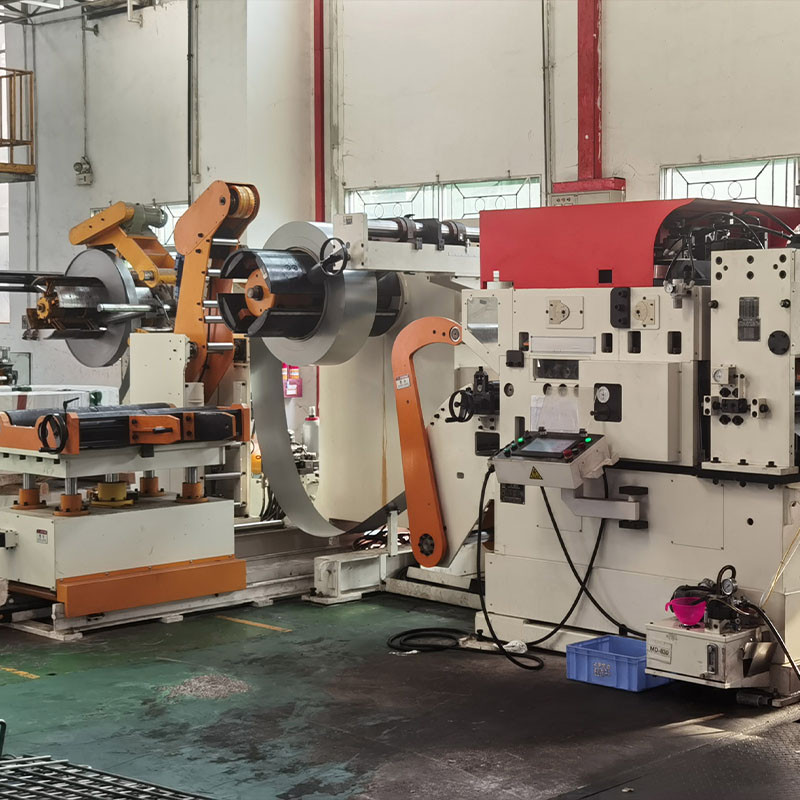
By the end of day five, most plants have run a coil, made parts and declared the line good. That declaration is usually premature, and it is expensive when it turns out to be wrong.
An NC straightener feeder arrives aligned to a tolerance measured in hundredths of a millimetre, and then gets bolted to a slab built by a different contractor to a different specification.
The first week is the only period when a fault is cheap to fix, because the installation crew, the supplier's engineer and the plant's own people are all still in the same building.
The First Week Is an Installation Test, Not a Production Test
Production pressure starts on day two. The planner sees a machine that runs and starts loading it, and the checks that should have happened quietly stop happening.
That is the single most common pattern in a failed first month. The line runs before it is measured, and the measurements never get taken.
Protect the week. Seven days of structured checks cost less than one week of a fault that nobody can find in month two.
Write the plan before the machine ships, with names against each day. A plan without owners is a wish list.
The checks below take about four hours of engineering time across the week. Everything else is production.
The other thing that happens in week one is that everybody learns the machine at once, which is an opportunity that does not come back.
Book two hours with the supplier's engineer for the operators, separately from the session for the plant engineer. The questions are different.
Day One: What to Check Before the First Coil
Start with the slab. A feeler gauge under each base pad should show contact, and a dial indicator on the base should not move when a person walks past.
Then the supply. Voltage at the panel with the press idle, and again during a press stroke. A dip above 8 percent explains a whole family of future faults.
Air pressure next, measured at the machine while both the brake and the clamp are actuated. A static reading tells you almost nothing.
Hydraulic pressure measured at the actuator rather than at the gauge, with a load on the mandrel. This single reading catches most of the pressure-drop faults that appear in week three.
Finally the alignment record. Pass line height, coupling alignment and roll gap at four points, all written down and dated.
Six measurements, ninety minutes, and a baseline that every later reading can be compared against.
Photograph every gauge and indicator on day one, at the value it was set to. It costs nothing and ends most later arguments.
Four Faults That Appear in the First 100 Strokes
| Fault | What it looks like | Root cause | Where It Costs You |
|---|---|---|---|
| Short feed after 40 strokes | Feed length drifts low | Roll pressure set for heavier gauge | Scrap on the first production run |
| Line stops on coil present | Sensor reads no coil | Factory default range on the sensor | Twenty minutes, once you know where to look |
| Strip walks to one side | Edge guide wearing a groove | Coil not centred on the mandrel | Guide replacement and edge scrap |
| Flatness reject at speed | Bow appears above 150 SPM | Slab flex under the decoiler | A foundation problem with no cheap fix |
Three of the four are settings. The fourth is a foundation problem, and it is the reason day one measurement matters so much.
A slab that flexes will not show up at 60 SPM. It shows up the first time the line runs at production speed, which is usually day four.
Coil present faults are the most common first-week call, and the sensor is usually fine. The reflector or the target is what moved.
Day Three: Where the Settings Drift
Settings move in the first 72 hours because the machine reaches operating temperature for the first time and because grout is still curing.
Re-check roll gap at four points, guide lock torque and anchor torque. All three will have changed from day one, and none of them will have changed much.
The changes are small enough to look insignificant and large enough to matter over a week of running.
Record the delta rather than the absolute value. A 0.02 mm drift in three days predicts what a month will do.
This is also the day to run the line empty for an hour before running strip, so the frame reaches a stable temperature first.
Grout cure time decides how much drift to expect. A 28-day mix keeps moving for a month, which is why day-three readings look small.
Record the recipe that produced good parts, in the control and on paper. Two records survive a control failure and one does not.
Day Five: What to Do When the First Complaint Arrives
The first complaint is usually flatness or feed length, and it usually arrives with no data attached.
Ask three questions before touching anything: at what speed, on which coil, and what did the strip look like before the die.
Those three answers separate a machine problem from a material problem in most cases, and they cost nothing to ask.
Then compare against the day one baseline. A setting that has not moved rules out the setting, which is valuable information.
Do not adjust before measuring. An adjustment made without a baseline destroys the only evidence you have.
What the First Week Cannot Tell You
It cannot tell you how the line behaves at the end of a coil, because the first week rarely runs a coil to its last ten metres.
It cannot tell you how rolls wear. Wear is a months-long process, and a first-week measurement is a starting point rather than a limit.
It cannot tell you how the line performs on a material you have not run yet, which is why the acceptance material belongs in the contract.
And it cannot tell you whether the die is right. A line that passes every check will still reject flatness if the die was set on a bad pass line.
Treat a clean first week as evidence that the installation was done properly. That is a real and valuable fact, and it is narrower than a capability guarantee.
It cannot test a material change either, and the next job may well be a different grade at a different yield strength.
A first week also cannot show thermal drift, because the oil in a hydraulic circuit is new and the bay is at ambient.
Drift appears around day twenty, once the oil has cycled a few hundred times and settled at working temperature.
It cannot show coil-to-coil variation either.
A mill tolerance of plus or minus 0.05 mm on a 1.2 mm strip is invisible on one coil and obvious across forty, so a line tuned to the first coil may be tuned to an outlier.
None of that argues against a careful first week. It argues against treating the first week as the end of commissioning and closing the log.
Keep the log open for a month and the drift shows up in it rather than in a customer complaint.
A Seven-Day Plan With Owners
- Day one, plant engineer: slab contact, supply voltage under load, air pressure under simultaneous demand, hydraulic pressure at the actuator.
- Day two, supplier engineer: alignment record, roll gap at four points, pass line against the die drawing.
- Day three, plant fitter: re-torque anchors and guide locks, record the delta from day one.
- Day four, production: first full-shift run at production speed, with a strip sample every two hours.
- Day five, quality: flatness and feed length samples before the die, compared against the acceptance figures.
- Day six, maintenance: lubrication route proven, spare parts located, pressure table posted at the machine.
- Day seven, plant engineer: sign the record, photocopy it, and put one copy in the machine file and one on the machine.
The coil line range lists the measurements each model should be checked against, which is the reference a day-one baseline needs.
Where to go next
A first week that goes well is mostly a matter of what was settled before the machine shipped. The selection and import cost guide covers that earlier layer, which is where the expensive decisions actually live.
The Coil Line Guide LibraryHow many hours should first-week commissioning take?
Eight to twelve engineering hours across seven days, plus production running time. Under four hours usually means checks were skipped.
What voltage dip is acceptable during a press stroke?
Under 5 percent. Above 8 percent the drive will derate and feed faults will appear at speed rather than at low speed.
Should anchor bolts be re-torqued in the first week?
Yes, on day three. Grout settles and a new base typically loses 20 to 30 percent of its initial torque.
Why does flatness fail at 150 SPM but pass at 60 SPM?
Usually slab flex under the decoiler. It only becomes visible once dynamic loads reach production speed.
Can the first week prove the line's rated capacity?
No. It proves the installation. Capacity needs a stepped speed run on the acceptance material, which is a separate test.
Which 3 documents belong at the machine after week one?
The pressure table, the roll gap log and the torque values. Anything that lives only in a binder will not be used at 3 a.m.