How Fast Can an NC Servo Feeder Feed and Stay Accurate?
- Share
- publisher
- David Park - Senior Stamping Engineer, FANTY Machinery
- Issue Time
- Sep 9,2026
Summary
An NC servo feeder's usable speed depends on feed length, strip gauge and press SPM — accuracy is quoted at a speed, not in a vacuum. How to read speed ratings and validate them.
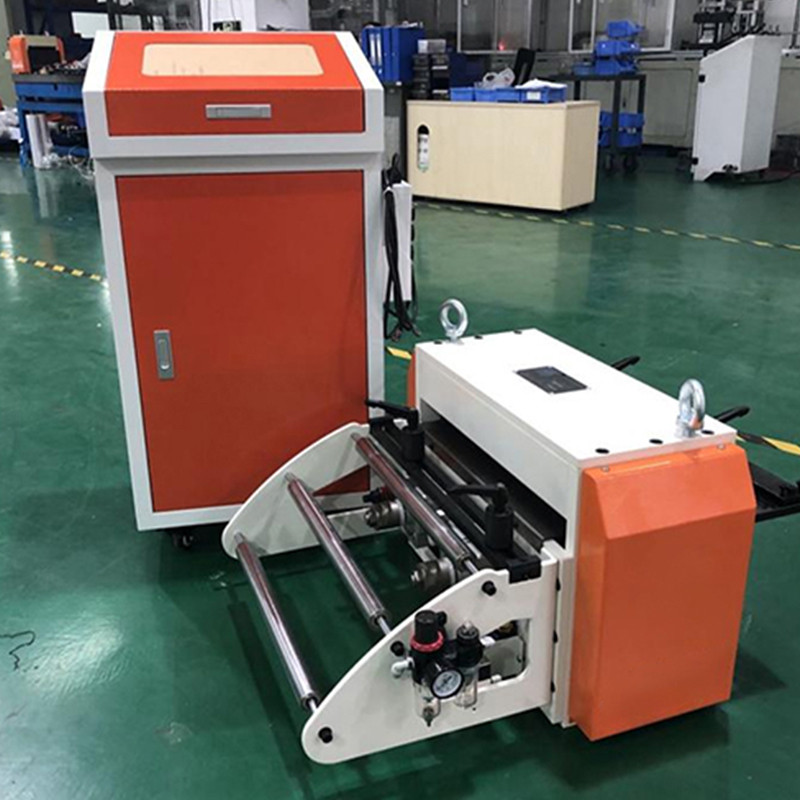
The brochure says the NC servo feeder is rated for 40 m/min, but your die needs a 25 mm pitch at 200 SPM, and someone needs to know whether the machine can actually do both at once. The honest answer is that feeding speed and feeding accuracy are one specification, not two: an NC servo feeder holds a rated accuracy only up to a rated speed, and the practical ceiling depends as much on your feed length and strip gauge as on the motor. This guide explains how to read speed ratings, where the real limits come from, and how to test a feeder before you trust it with a progressive die — the same machines we build and validate across our coil feeding product range.
Short pitches are the real speed test
Think about what one feed stroke involves: accelerate the strip from rest, move it the feed length, decelerate, and settle with the strip locked while the press strokes. At a fixed SPM, a short feed length leaves almost no time for acceleration and deceleration, so the feeder must reach a high peak velocity and stop hard. That is why a machine can comfortably feed 300 mm at 40 m/min yet struggle with a 25 mm pitch at the same line speed — the accel/decel profile is far more aggressive on the short stroke.
The practical consequence: compare feeders on the feed length and SPM you actually run, not on a headline metres-per-minute figure. A line doing long automotive blanks has a different speed requirement from one running small connector terminals. If your jobs are mostly short pitches above 150 SPM, ask the supplier to state the achievable feed rate at your exact pitch, and treat that number as the specification that matters. The same rule applies on an NC Straightener Feeder or a 3-in-1 decoiler straightener feeder, where the feed module is an NC servo feeder doing the same job inside an integrated line — quote its speed the same way.
It helps to think in terms of the time budget inside one press cycle. At 200 SPM, each stroke lasts 300 ms, and the feeder's move must fit inside the portion of that cycle the die leaves free — typically well under half of it. Within that window the strip has to accelerate, travel, decelerate and lock. Shorten the pitch and the travel time shrinks but the accel/decel share of the window grows, which is why very short pitches punish undersized servos the hardest.
Where accuracy gets lost at speed
When a feeder starts to miss at high speed, the cause is almost always one of three things. First is slip between the feed rolls and the strip: at high acceleration the roll grip can be overcome by strip inertia, and the material slides — the error appears on every part until the grip or roll pressure is corrected. Second is overshoot on deceleration: if the servo decel ramp is too aggressive for the moving mass, the control has to correct backwards, and a feed that hunts never settles into the die consistently. Third is resonance or vibration in the stand and pass line at certain speeds, which shows up as a periodic accuracy wobble that a parts-per-million measurement will expose.
Heavier strip changes the picture too. Thick material resists bending and carries more momentum, so the same feeder that holds ±0.05 mm on 1.0 mm strip may need a larger servo or a slower ramp on 3.2 mm material. A well-built NC servo feeder with headroom in both motor and frame will hold its rated accuracy across the middle of its strip range and degrade gracefully at the edges — which is exactly the behaviour you want to see in a factory test.
Temperature deserves a mention as well. A long run at high SPM heats the strip, the rolls and the control electronics, and thermal growth shifts dimensions in ways a cold-start test will never reveal. When you validate a feeder, measure accuracy again after thirty minutes of continuous running, not just on the first hundred strokes.
Reading the speed table like an engineer
Suppliers publish speed ratings in different formats, and comparing them requires translating to your job. The table below shows how the same machine class behaves across typical feed lengths — the shape of the numbers matters more than any single value, because it tells you where the feeder has margin.
| Feed length band | Practical speed range | What limits it |
|---|---|---|
| Very short (10–40 mm) | Highest SPM, moderate m/min | Accel/decel time; strip grip at high stroke rate |
| Medium (40–150 mm) | Balanced speed and stroke rate | Motor acceleration torque vs strip mass |
| Long (150–400 mm) | High m/min, lower SPM | Total stroke travel time at the press rate |
| Extra long (400 mm+) | Speed limited by press and loop | Press stroke rate and material float control |
When you look at a data sheet, find the row that matches your feed length and check the SPM at your accuracy requirement. If the sheet only quotes a bare maximum speed with no feed length or accuracy attached, treat it as a marketing number and ask for the full operating curve — any reputable builder, FANTY included, can provide the curve for the strip range and pitches you plan to run.
Testing speed and accuracy before you commit
A feeder that claims accuracy at speed should prove it. The standard method is a run-off at the target SPM with the actual strip width and thickness, feeding against the same type of die stop or checking system you use in production. Measure a sample of parts across the speed range — not just at the top speed — because a feeder that drifts only at 180 SPM will hide in a test done at 200.
During the test, watch three things. The feed-length display should settle to the same value stroke after stroke; a display that oscillates is telling you the control is hunting. Second, listen and feel for vibration at the pitch you will run, since resonance changes with speed. Third, check the part dimensions at the start, middle, and end of a long run: thermal growth in the machine and strip can shift accuracy over an hour even when the first hundred parts look perfect. FANTY runs exactly this kind of validation before shipping an NC servo feeder, and our test reports record measured feed lengths across the SPM range rather than a single calculated value.
Checks to run on your own line
Even without a factory visit, you can benchmark your current feeder and set a baseline for the next purchase.
- Record feed-length deviation every 50 strokes at your normal SPM; the scatter band tells you the real accuracy, not the label.
- Run the same job at 80%, 100%, and 110% of your target speed and log scrap; the knee of the curve is your true maximum.
- Check feed roll wear and grip pressure before blaming speed; worn rolls slip exactly the way an overspeed does.
- Compare the pitch you actually run against the feeder's rated pitch range; a machine at 10% of its maximum pitch is working hardest, not easiest.
- Ask your next supplier for a measured test report at your feed length before you sign — it is the cheapest insurance on the order.
- Re-test after thirty minutes of continuous running: a feeder that drifts only when hot will pass every short test and fail every shift.
NC servo feeder speed FAQ
Why does my feeder lose accuracy only at high SPM?
At higher stroke rates the accel/decel ramps tighten and any slip, overshoot or resonance has less time to settle. Check roll grip and roll condition first; if they are sound, the servo tuning or motor headroom is the limit.
Is a higher m/min rating always a better feeder?
No. A high metres-per-minute rating with no feed length or accuracy attached is not comparable across machines. What matters is the accuracy your feeder holds at the SPM and pitch of your actual jobs.
Can thin strip feed faster than thick strip?
Usually yes, up to a point. Thin strip is light, so it accelerates easily, but it also floats and disturbs easily in the loop. Thick strip is stable but heavy, which taxes the servo on short aggressive strokes. Each has its own ceiling.
How do I know if I need a bigger servo motor?
If the feeder holds accuracy at medium speed but drifts or faults at your target SPM with correct roll grip, the accel torque is the bottleneck. Ask for the torque curve at your feed length before upgrading — a retune sometimes fixes what a bigger motor would mask.
What accuracy should a new NC servo feeder guarantee?
For a well-built machine running within its rated range, expect a documented ±0.05 mm class accuracy at the quoted speed, verified by a measured run-off. FANTY quotes accuracy at your feed length and SPM and stands behind it with the test report.
Want the real speed curve for your job?
Send your strip width and thickness, feed length, and target SPM. FANTY will tell you honestly whether a standard NC servo feeder covers it with margin — or show you the next size up that does.
Get a Feeder Sizing Check