How Much Coil Buffer Does a Stamping Cell Need?
- Share
- publisher
- David Park - Senior Stamping Engineer, FANTY Machinery
- Issue Time
- Oct 17,2026
Summary
Most cells size coil buffer by looking at the floor and guessing. The number that matters is how long a changeover takes against how long one coil lasts, and both are measurable.
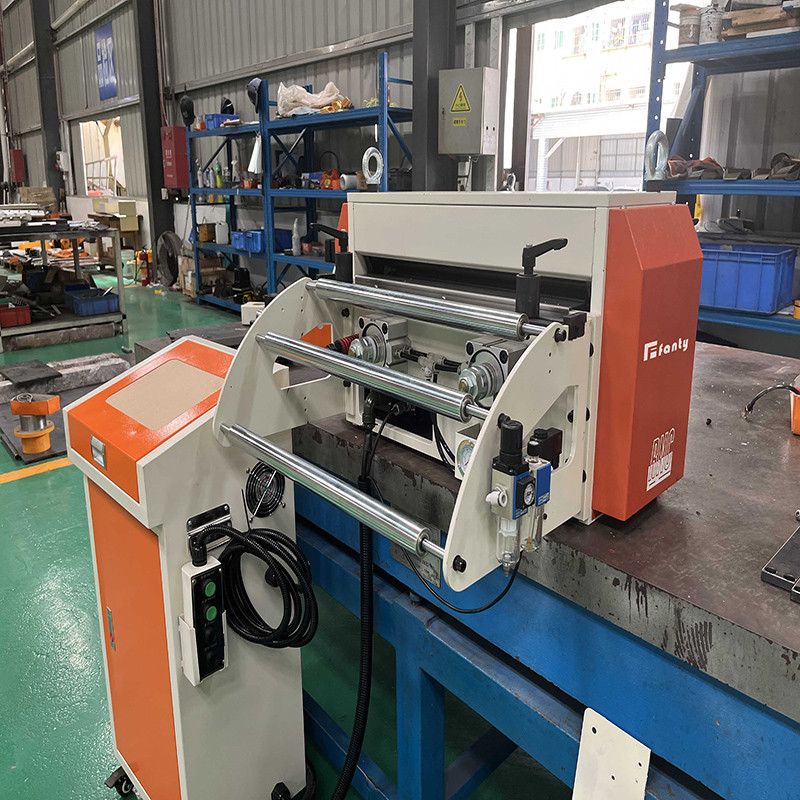
Ask three people in the same plant how much coil buffer the cell needs and you will get three answers, all based on how much floor happens to be free.
Buffer is not a space decision. It is the ratio between how long a coil lasts and how long it takes to change one, and both of those numbers already exist in your production data.
The calculation below takes about ten minutes and produces a figure a supplier can be held to.
Buffer Is a Time Problem Wearing a Space Costume
One coil of 1.2 mm cold rolled steel at 1,000 mm wide and 4,500 kg holds roughly 600 metres of strip.
At a 400 mm feed length and 200 SPM, that coil lasts about nine minutes of press time. Nine minutes is shorter than most changeovers, which is the whole problem in one sentence.
Two coils give eighteen minutes. Three give twenty-seven. A changeover that takes twenty minutes needs three coils merely to keep the press from stopping while the operator works.
That is the arithmetic in full. Everything else is detail about how to run the changeover without stopping the press.
The Four Inputs That Set the Number
Feed length in millimetres, strokes per minute, coil weight, and changeover time. Four numbers, no sales literature.
Feed length and SPM give you parts per minute of run time. Coil weight and strip section give you metres per coil, which converts to minutes per coil.
Changeover time is the fourth input and the one plants estimate worst. Measure it, from last good part of the old coil to first good part of the new one.
A servo feeder that threads in thirty seconds does not make the changeover thirty seconds. The coil still has to arrive, be loaded, be centred and be proven.
Worked Example: 200 SPM, Eight-Hour Shift
Take a 200 SPM cell, 400 mm feed, 4,500 kg coils, and a measured changeover of 22 minutes including coil car travel and first-piece approval.
Feed rate is 200 strokes per minute at 0.4 m each, which is 80 metres per minute. A 600 metre coil therefore runs for 7.5 minutes, not the nine I assumed earlier.
Round to eight minutes and the buffer requirement becomes obvious: three coils buy 24 minutes, which covers one 22-minute changeover with two minutes of margin.
| Buffer (coils) | Run time gained | Covers a 22-minute changeover? | Where It Costs You |
|---|---|---|---|
| 2 coils | 16 minutes | No, the press stops | Cheapest, and it guarantees a stoppage every cycle |
| 3 coils | 24 minutes | Yes, with 2 minutes spare | Needs 3 coil positions plus car travel space |
| 4 coils | 32 minutes | Yes, with 10 minutes spare | Floor space and a longer loading route |
| Continuous line | Not applicable | Yes, by design | Capital cost of a second decoiler and a stitcher |
Note what the table says about four coils. The extra coil buys ten minutes of margin that a well-run changeover will never use, and costs three metres of floor plus a longer coil car route.
Sensitivity: What Ten Strokes Per Minute Actually Costs
Speed changes the requirement faster than most people expect, because it changes run time per coil linearly and nothing else.
At 240 SPM the same coil lasts 6.5 minutes, so three coils buy 19.5 minutes and no longer cover a 22-minute changeover. The cell that worked at 200 SPM stalls at 240.
| Line speed | Minutes per coil | Coils needed for a 22-minute change | What changes |
|---|---|---|---|
| 160 SPM | 10.0 | 3 | Comfortable, with slack for coil end slowdown |
| 200 SPM | 8.0 | 3 | Marginal, two minutes of margin |
| 240 SPM | 6.7 | 4 | Buffer had to grow with the speed increase |
| 300 SPM | 5.3 | 5 | Floor plan, not buffer count, becomes the limit |
This is the argument for specifying buffer as a time requirement rather than a coil count. A coil count silently expires the day someone raises the press speed.
Write the requirement as twenty-five minutes of run time at maximum rated speed, and the number stays valid through every speed change afterwards.
Three Thresholds a Supplier Can Be Held To
- Changeover time: measured from last good part to first good part, not from mandrel release to mandrel clamp.
- Buffer run time: stated in minutes at rated SPM, with the coil weight and feed length that produced it.
- Coil end behaviour: what the line does in the last 20 metres, because that is where most stops actually happen.
- Loading cycle: coil car travel plus centring plus mandrel expansion, measured as one figure rather than three.
A supplier who quotes changeover as a single measured number is telling you something useful. One who quotes it as a range is telling you they have not measured it.
When a Bigger Buffer Cannot Help
Where the Buffer Count Comes From in Practice
Three plants running similar work will choose three different buffers, and each choice is rational for the constraint it actually has.
A plant with a coil car and one operator stages three coils and treats the fourth position as storage for the next job.
A plant without a car stages two, because the third cannot be loaded without blocking the aisle with a forklift for six minutes.
A plant running one die for a month stages two and accepts the stop, because the changeover happens once a week and nobody feels it.
The only number that matters is the one the cell can hold without adding labour. Everything beyond that is capital spending on floor space.
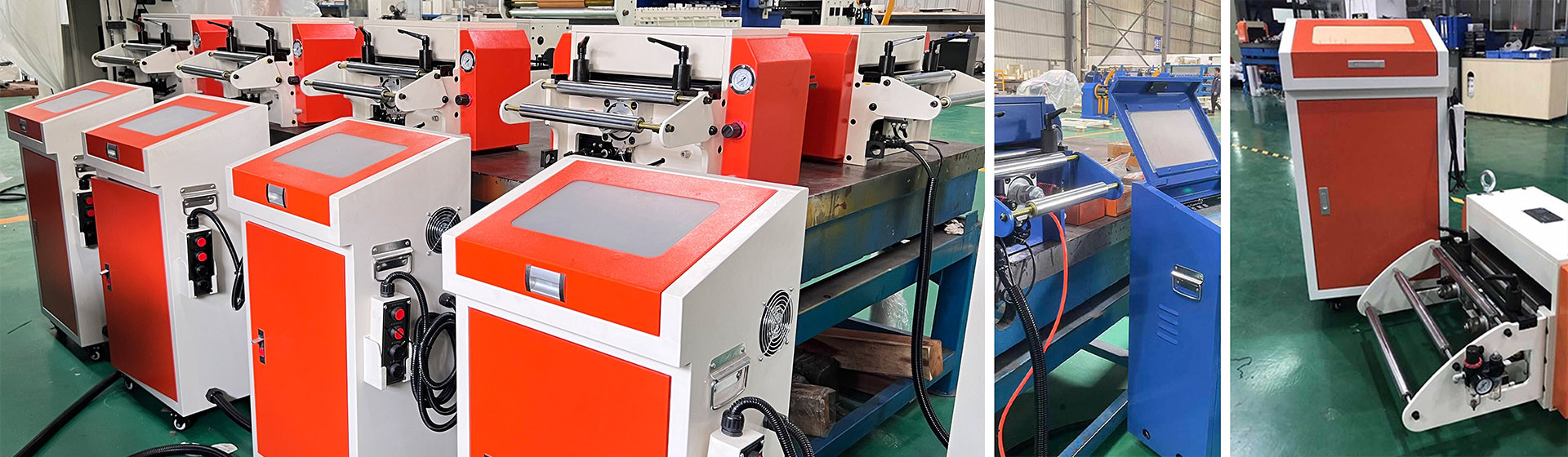
If the buffer is quoted alongside the line, the press feeder range and its coil capacity figures are the place to start, because coil weight sets this arithmetic before anything else does.
What a Coil Car Adds to the Arithmetic
A coil car does not change run time per coil. It changes the length of the changeover, which is the other side of the same ratio.
Manual loading with a forklift takes twelve to eighteen minutes for a 4,500 kg coil, counting approach, lift, centring and retrieval.
A track-mounted car with auto-centring takes four to six minutes, and the operator never leaves the control panel.
Ten minutes off every changeover is worth more than a fourth coil position, and in most quotations it costs about the same.
One measurement is worth taking before any of this: how long the press takes to return to steady state after a stop.
A cold restart on a progressive die costs three to five parts, and those parts come out of the coil the buffer was meant to protect.
That is usually where this calculation ends. Plants ask how many coils, when the more valuable question is how fast one coil replaces another.
Buffer stops helping once the changeover is longer than the total run time of the coils you can physically stage beside the line.
It also stops helping when the constraint moves downstream. If the cell after the press can only take forty parts a minute, adding coil positions solves a problem you do not have.
Nor does it help with a job mix where every coil is a different width. In that case the buffer is worthless, because the changeover is not the coil but the guides and the die.
Count restart losses against the buffer as well. A cycle that stops twice a shift loses eight to ten parts to restart alone.
Floor space is the wrong constraint to optimise. Changeover minutes and restart losses are the two that reach cost per part.
Where the mix is that varied, the money is better spent on quick-release guides and a second die cart than on a fourth coil position.
Where to go next
Buffer sizing sits inside a wider question: how the whole line is laid out and specified. The error budget from decoiler to die is worth reading next, because it fixes what the buffer has to protect.
The Coil Line Guide LibraryHow many minutes of buffer should a 200 SPM cell carry?
Twenty to twenty-five minutes at rated speed covers a normal 22-minute changeover with margin. Below fifteen minutes the press stops on most cycles.
Does coil weight or coil width matter more for buffer?
Weight drives total run time, width drives changeover time. A heavy narrow coil buys minutes but forces a guide change, which usually consumes them.
What is a realistic changeover time for a 4,500 kg coil?
Eighteen to twenty-five minutes with a coil car, a single operator and a proven first-piece routine. Anything quoted under ten minutes assumes a staged coil and a second person.
Can an NC servo feeder reduce changeover time?
It removes threading time, typically sixty to ninety seconds. The remaining twenty minutes are coil handling, guide setting and first-piece approval.
Is a continuous line cheaper than a four-coil buffer?
Only above roughly 4,000 hours a year of press time. Below that the second decoiler cannot pay back the floor space it consumes.