How Much Coil Car Capacity Does a Decoiler Need?
- Share
- publisher
- David Park - Senior Stamping Engineer, FANTY Machinery
- Issue Time
- Sep 26,2026
Summary
A coil car is bought on load and lift height, but it is specified on the worst coil the line will ever run. This works through the capacity calculation for a 5 to 15 tonne range, the lift height that is usually wrong etc.
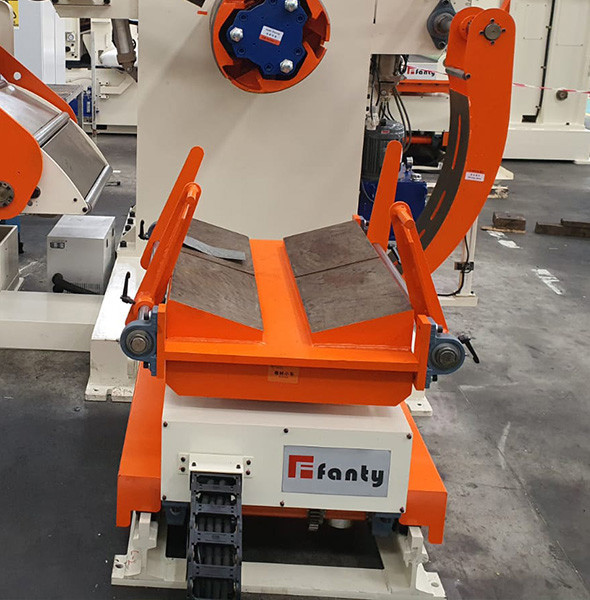
A coil car that lifts 8 tonnes will not lift the 11 tonne coil that arrives in month two, and the purchase order will not care that the average was 7.
Capacity is set by the heaviest coil the line will ever run, not by the daily average, and the gap between those two numbers is where most coil car specifications go wrong.
This is the sizing calculation for a decoiler line, worked through on a 12 tonne coil, with the lift height and reach figures that buyers routinely get wrong.
The specification chain that decides what the machine itself can hold is set out in the coil line guide library, and the equipment range is listed under our machines.
Start With the Heaviest Coil, Not the Average One
Every coil car is quoted against a weight. The real question is which weight.
Buyers usually reach for the current production average, which on a typical appliance or automotive job sits between 5 and 8 tonnes.
The car should be sized on the heaviest coil the line can accept, which is set by the mandrel rating and the coil width the line was bought for.
Some plants call the same machine a coil uncoiler, and the capacity question does not change with the name. What changes is the load the car has to place on the mandrel.
If the decoiler takes 15 tonne coils, the car has to lift 15 tonnes, even when today's coils are 6.
Price the gap before deciding. Stepping a car from 8 to 15 tonnes adds roughly 20 to 30 per cent to its cost, and it removes a limit that is far more expensive to correct after installation.
The Three Inputs That Set Coil Car Capacity
Capacity is not one number. It is the smallest of three, and the third one is usually the one that bites.
- Static load. The heaviest coil plus the saddle or cradle weight, with a margin of at least 20 per cent on top.
- Lift height. The travel from floor level to the mandrel centreline, plus clearance for the largest coil outer diameter.
- Moment at full extension. Load times distance from the mast, which decides whether the car tips rather than whether it lifts.
The third input is what quietly reduces the usable rating. A car rated at 15 tonnes on a short reach may only be good for 10 tonnes at the reach your layout needs.
Ask for the load chart at the quotation stage, not the headline number. The chart shows the rating at every combination of reach and height.
A Worked Sizing Example on a 12 Tonne Coil
Take a line with a 1,500 mm wide mandrel running 12 tonne coils at 1,250 mm outer diameter on a 508 mm bore.
The mandrel centreline sits 1,100 mm above the floor, and the coil travels 2,400 mm from the staging area to the mandrel face.
| Input | Value in this example | How it is derived | Where a smaller figure looks safe but is not |
|---|---|---|---|
| Static load | 14.4 tonnes | 12 tonne coil plus a 2 tonne saddle, then 20 per cent margin | Leaving out the saddle understates the load by roughly 15 per cent |
| Lift height | 1,750 mm | 1,100 mm mandrel centreline plus a 650 mm coil radius | Coil outer diameter changes with supplier, so use the largest |
| Reach | 2,400 mm | Staging point to mandrel face, measured to the coil centre | A shorter reach raises the tipping limit rather than the lift |
| Cycle time | 60 seconds | Load, lift, travel, release, return | Shift change adds waiting time that the nameplate omits |
The car that fits this job is rated at 15 tonnes at 2,500 mm reach, with a lift stroke of at least 1,800 mm.
Notice the direction of the rounding. The static load rounds up from 14.4 to 15 tonnes, and the lift height rounds up from 1,750 to 1,800 mm because outer diameters vary between suppliers.
Both roundings are cheap at the quotation stage and expensive afterwards. A car is not field-upgradable in the way a control panel is.
Where the Load Margin Disappears
A coil car is rarely overloaded on paper. It is overloaded in practice, and the reasons repeat across plants.
Cradle weight ignored. The saddle that holds the coil can weigh 1.5 to 2.5 tonnes on a wide car, and it is not part of the coil rating.
Coil outer diameter larger than planned. A supplier change that moves outer diameter from 1,250 to 1,400 mm adds weight and lift height at the same time.
Load off centre. A coil placed 150 mm off the car centreline multiplies the moment at the mast, and moment is what decides tipping.
Duty cycle. A car cycling every 60 seconds across three shifts ages its hydraulics faster than the nameplate cycle suggests, so the service interval has to be set on real cycles.
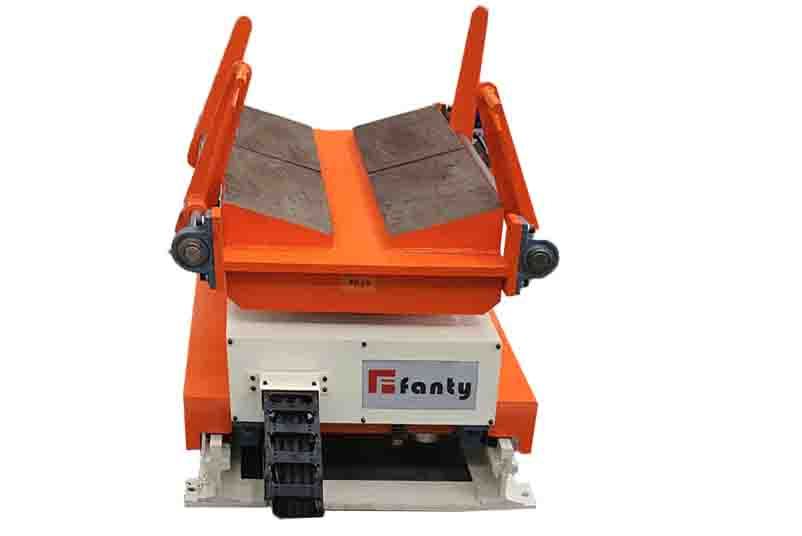
Lift Height and Reach: The Figures Buyers Get Wrong
Lift height is quoted as a stroke, but the number that matters is the height of the mandrel centreline.
Buyers compare stroke figures between suppliers and miss that a car with a longer stroke can still fall short when its collapsed height is higher.
Ask for three figures instead of one: collapsed height, maximum height, and the load the car can lift at maximum height. A car that lifts 15 tonnes at half stroke may only lift 10 at full.
Reach deserves the same treatment. Long reach at full load is a stability question, not a speed question, and it should be quoted with the load stated.
Measure the collapsed height on the actual floor, not from the drawing. A shallow pit or a raised plinth moves the figure by 100 mm and can invalidate an otherwise correct quotation.
Where the layout allows, moving the staging point closer is cheaper than buying a longer reach. Every 500 mm of extra reach costs capacity somewhere else in the rating.
When a Coil Car Is the Wrong Answer
A coil car is not always the right way to load a mandrel, and on some lines it is the wrong one.
Below roughly 3 tonne coils, a coil lift and turn unit or a simple loading ramp often does the job for less money and less floor space.
Where the line runs one coil size and changes it once a week, a floor-mounted ramp with a coil positioner is usually enough, and it removes a powered machine from the maintenance list.
A coil car also cannot fix a layout problem. If the staging area sits more than about 6 metres from the mandrel, the car cycle becomes the bottleneck and no capacity increase helps.
Finally, a car does nothing for handling inside the line. Damage between the car and the mandrel is a loading technique issue, and a bigger car will not correct it.
What to Write Into the Order
Four lines in the purchase order prevent most of the arguments that follow delivery.
State the maximum coil weight, the maximum outer diameter, and the mandrel centreline height. Add the required reach at full load.
Ask for the load chart rather than the headline rating. The chart shows what the car can lift at every reach and height, and it is the document that settles a dispute.
Require a factory load test at 110 per cent of rated capacity with the certificate supplied. That single test proves more than any drawing.
Confirm the power supply and the control interface at the same time. A car that cannot talk to the line control adds a manual step at every coil change, which is the cost that never appears on the quotation.
Ask for the maintenance manual and the spare parts list with the order. A car that cannot be repaired locally turns into a manual loading job within two years.
Six questions that come up whenever a coil car is being specified.
How much does a 15 tonne coil car cost?
Typically 15 to 25 per cent of the decoiler price on the same order. A lift and turn unit for 3 tonne coils usually lands below half of that.
What load margin should a coil car carry?
At least 20 per cent above the heaviest coil plus the saddle. On a 12 tonne coil that means a 14.4 tonne working load before rounding.
How high should a coil car lift?
To the mandrel centreline plus the radius of the largest coil outer diameter. On a 1,100 mm centreline and a 1,250 mm coil, that is about 1,750 mm.
Can one coil car serve two decoilers?
Yes, if travel between them stays under about 4 metres. Beyond that, the car cycle exceeds 90 seconds and two coils per hour becomes the practical ceiling.
How long does a coil change take with a coil car?
Allow 60 to 90 seconds from load to release. The lower figure assumes a pre-staged coil and no waiting for the operator.
Does a coil car need a special floor?
It needs a floor rated for the wheel load, which on a 15 tonne car is often 8 to 12 tonnes per wheel during a lift. Standard slab thickness may not be enough.
Where to go next
This article sizes the machine that carries the coil. What the mandrel itself can hold, and the four decisions that fix that, are set out in the guide library.
our coil line knowledge base