How Much Does It Cost to Relocate a Coil Line?
- Share
- publisher
- David Park - Senior Stamping Engineer, FANTY Machinery
- Issue Time
- Nov 11,2026
Summary
A 24-tonne coil line moved 600 km costs $38,000 to $62,000 once rigging, freight, foundations and re-commissioning are counted, and the crane quote is the smallest line in that stack. This guide prices all eight cost lines, names the four that always overrun, and runs the break-even arithmetic against buying a second machine. It also lists the three site conditions that make a move the wrong answer, plus the five records to take before dismantling starts.
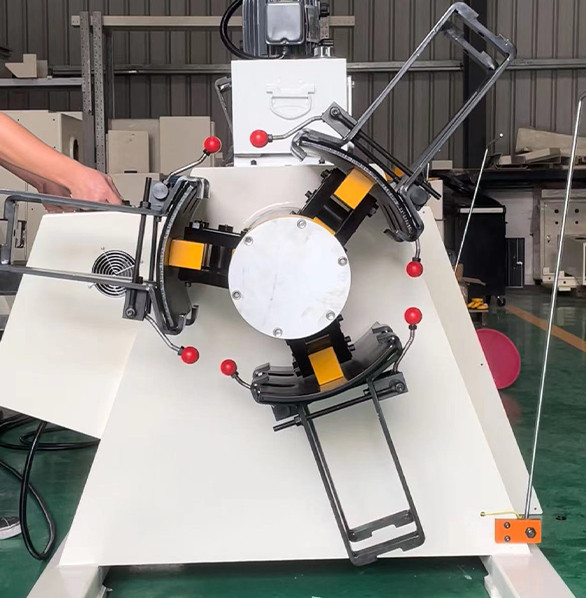
Relocating a 24-tonne coil line 600 km lands between $38,000 and $62,000 once rigging, freight, foundations and re-commissioning are counted. The crane quotation is the smallest line in that stack.
It is also the only line most buyers ask for first.
A move is a procurement decision dressed as a logistics job. It competes with a second machine, a lease and a rebuild, and it usually gets judged on the crane price alone.
What follows is the cost structure we see on real relocations, and the arithmetic that decides whether the move is worth doing.
How to Build the Estimate Before the Crane Arrives
A relocation budget has eight lines, and only two of them arrive as supplier quotations. Price all eight before you compare moving against buying.
Dismantling labour. Two fitters and one electrician for four to six days on a three-unit line. Cutting the anchor bolts, labelling every cable, bagging and tagging every fastener.
Rigging and crane hire. A 25-tonne mobile crane with an operator runs $1,400 to $2,200 a day in most markets. Two days covers loading and unloading at both ends.
Crating and protection. Export-grade crating for a decoiler frame and a control cabinet is $2,500 to $4,500. Shrink wrap and timber skids are cheaper and let sea air reach the electrics.
Freight. A 40-foot flat rack for the frames, plus a 20-foot container for the cabinets and loose parts. Road haulage inside one country is often the cheaper option.
Foundation work. New anchor pockets, non-shrink grout, and a slab that meets flatness. This is where a $3,000 line item becomes $11,000.
Electrical reconnection. Cable runs, a new isolator, and possibly a transformer tap change if the destination supply differs. Add $2,000 to $6,000.
Re-commissioning. Alignment, loop tuning, feed calibration, and a first-article run. Three to six days with the supplier's engineer on site.
Lost output. Multiply the days the line is down by the contribution margin per day. This line is usually larger than every other line combined.
Four Line Items That Always Come in Over Budget
Four items overrun on nearly every move we have been called in to fix. None of them is a surprise once it has happened, which is the frustrating part.
| Cost line | Typical budget | Where it bites you |
|---|---|---|
| Foundation and grout | $3,000 | Old pockets do not line up with the new layout; the slab needs levelling compound, not shims |
| Electrical reconnection | $2,500 | Destination supply differs in voltage or phase; the cabinet needs a new main breaker |
| Crating and sea protection | $2,000 | Frames arrive with surface rust and the cabinet with condensation damage |
| Re-alignment days | 2 days | Frame twist from transport turns into four days of shimming and a tracking complaint |
Foundation work is the one that catches everyone. A line that sat on a 250 mm slab in the old plant rarely finds the same slab at the new site.
Electrical reconnection is second. Motors rated for 380 V do not run cleanly on a 415 V supply without a transformer tap change, and the cabinet's main breaker may not be rated for the available fault current.
The crating line is easy to trim and expensive to get wrong. A decoiler mandrel shipped on a bare flat rack will take a set in the cantilever that no amount of shimming removes.
Re-alignment is the item that hides inside labour. Transport twists a fabricated frame by a few tenths of a millimetre over its length. That twist is invisible until strip starts tracking off centreline.

Relocate or Buy Second: The Break-Even Point
Take a 1,300 mm line with a 5-tonne decoiler capacity and a 300 kN press interface. A new equivalent from a European or Japanese builder is $180,000 to $240,000 landed.
The move, fully costed including twelve days of lost output at $4,200 a day, comes to roughly $88,000. On paper the move wins by a wide margin.
The comparison changes when the old line needs work to match the new job. Replacing a worn straightener head, adding a new control, or re-certifying the electrical panel can add $45,000.
At that point the gap narrows to $35,000 or so, and the decision turns on three questions rather than on price.
Those specification lines are priced one by one in the coil line guide library, which is where to test whether the old machine is short of a requirement or simply older than the job.
- Does the existing line still hold the tolerance the new part needs, or is that tolerance the reason it is being replaced?
- Will the destination building accept the frame footprint, floor loading and lifting height without modification?
- Is there a spare machine available while this one travels, or does the whole plant stop?
Where a spare exists, the move is almost always the cheaper route. Where it does not, the lost-output line usually decides the question on its own.
One more comparison worth running: a used machine bought at the destination and the old one sold where it stands. Two freight bills disappear and the net cash difference is often under $30,000.
Freight Damage Starts Before the Truck Leaves
Most transport damage is not caused by the road. It is caused by how the machine was supported when the road started moving.
Unsupported cantilever. A decoiler mandrel hanging free over a 1,300 mm coil is a lever with nothing under it. Every bump loads the mandrel bearing in a direction it never sees in service.
Frame twist from four-point lifting. Slings taken from two points instead of four put a diagonal load through the frame. The welds hold; the machined faces move.
Cabinet vibration. Drives, encoders and terminal blocks survive road freight if the cabinet is rigid. Mounted on a frame that flexes, they do not.
Hydraulic and pneumatic residue. Oil left in a cylinder and air left in a line both expand at altitude or in heat. Drain both, cap the ports, and label what was drained.
Sea freight adds humidity. A cabinet that crosses an ocean without desiccant packs arrives with corroded terminals that pass a visual inspection and fail on the first wet day.
Inspect on arrival in a fixed order: frame diagonals, machined mounting faces, mandrel runout, cabinet interior, then cable insulation. Record the numbers before anything is lifted off the trailer.

Cases Where Moving the Line Is the Wrong Call
Three situations make a move the expensive option even when the arithmetic above says otherwise.
The frame is older than its drawings. Machines past fifteen years often have no reliable drawing of the base, no lifting points marked, and welds repaired twice. You are quoting freight on an unknown.
The line is built into a pit. Extraction, pit walls and buried conduit all belong to the building. Removing the machine destroys the pit, and rebuilding it at the destination costs more than the machine is worth.
The destination standard differs. A line built to one electrical code and installed under another needs a panel rebuild and a new conformity file. That work is not logistics and should not sit in a logistics budget.
Where two of those three apply, price a new machine before you price the crane. The comparison is not close, and it saves a month of quotation work.
The Week Before Dismantling, in Order
Sequence matters more than speed. Doing these five things in order removes most of the re-alignment cost from the budget.
- Record the current alignment: mandrel axis to centreline, base level, and the pass line height. Those numbers are the acceptance target at the destination.
- Photograph every cable termination and every pipe run before a single wire is removed.
- Drain oil and air, cap the ports, and put the caps in a labelled bag bolted to the frame.
- Brace the mandrel and every cantilever with timber cut to fit, not with scrap wedged in place.
- Confirm the destination slab flatness and anchor pocket positions against the base drawing before the trailer is loaded.
The last item is the one that gets skipped. Checking a slab is cheap; discovering it after the machine is standing on it is not.
Machine base dimensions and anchor patterns for our builds sit on the specification pages in our coil handling equipment index, which is the drawing set to send to the destination plant.
How much does a 24-tonne coil line cost to move 600 km?
Between $38,000 and $62,000 all in, excluding lost output. Add roughly $4,000 for every extra 500 km once the line needs a flat rack rather than road haulage.
Does a moved line still hold ±0.05 mm after re-commissioning?
It can, if the frame is checked for twist before grouting and the alignment numbers recorded at the old site are used as the target. Most lines that lose accuracy lost it in transport, not in the move itself.
When is a second machine cheaper than moving one?
When the old line needs more than $45,000 of work to match the new part, or when downtime exceeds three weeks and the plant has no spare capacity. At that point the gap to a new machine is usually under $35,000.
What does 1 mm of frame twist cost after installation?
Two to four extra days of shimming and grout, plus a tracking complaint that returns every time the line runs wide coil. Twist under 0.3 mm across the base is normally absorbed during grouting.
Where to go next
A move is one option inside a larger purchase decision, and the cost of each specification line is what makes the comparison fair.
The coil line guide library maps each specification line to a machine price and a local landed cost, which is the right place to start before a relocation is quoted.