How Much Does It Cost to Run a Motorized Decoiler?
- Share
- publisher
- David Park - Senior Stamping Engineer, FANTY Machinery
- Issue Time
- Oct 30,2026
Summary
A maintenance manager asked why a 5.5 kW motorized decoiler showed 41,000 kWh a year on the meter. This splits the bill into payout energy, holding torque, hydraulics and control, works a two-shift year to about $1,650 of electricity, and then shows why that figure is the least important cost on the machine. It covers demand charges, marked inner wraps, mandrel wear and changeover labour, and ends with three clamp-meter readings that settle the question in one shift.
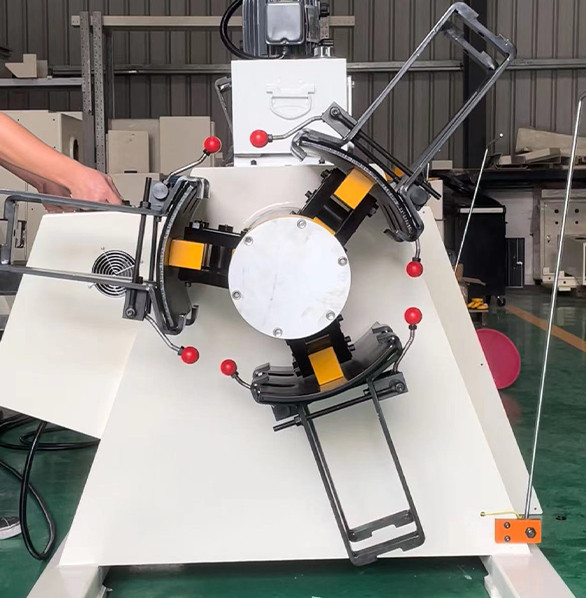
A maintenance manager asked a fair question about a 5.5 kW motorized decoiler: if the motor is 5.5 kW, why does the meter show 41,000 kWh a year?
The answer sits in duty cycle, brake losses and a hydraulic pack that runs when nobody is watching.
Running cost is the smallest number in a decoiler purchase and the easiest one to get wrong, because the nameplate is not the load.
On a two-shift plant, the electrical bill for a 5-tonne motorized uncoiler is usually $1,300 to $2,200 a year.
The cost that actually hurts is elsewhere, and it does not appear on any utility invoice.
What a Decoiler Motor Draws Across a Shift
A motorized decoiler is not a conveyor. It runs for a few seconds to pay out strip, then holds torque while the line pulls.
On a 5-tonne coil feeding a 42 SPM press at 320 mm pitch, the mandrel turns about 14 rpm and accelerates for 1.5 seconds per payout.
Duty cycle measured on a clamp meter is typically 25 to 35 percent of the shift. The rest is holding torque, braking and idle.
A pneumatic brake releases on air pressure; a magnetic brake holds on spring force. The magnetic type draws 0.4 to 0.8 kW whenever it is released.
Holding torque still draws current. A 5.5 kW motor at standstill with 40 percent rated torque pulls 1.4 to 1.8 kW continuously.
That standstill load is the reason the meter disagrees with the nameplate. The motor is working, just not turning.
Add the hydraulic pack if the mandrel expands hydraulically: a 2.2 kW pump that runs 8 to 12 percent of the time, plus a cooling fan.
A regenerative drive returns 8 to 12 percent of payout energy to the DC bus. It is common on European builds and optional on most Asian ones.
Nameplate ratings describe what a motor can do for a minute, not what it does across a year. That gap is why the first measurement surprises people.
Four Cost Buckets Behind the Nameplate
Split the annual bill into four buckets and the number becomes predictable. Each bucket behaves differently when the plant changes shift pattern.
Read the table as a forecast rather than a specification. Change the shift pattern and every share except payout energy moves with it.
| Bucket | Typical share | What drives it | Where it costs you |
|---|---|---|---|
| Payout energy | 45% | Coil weight, strip speed, duty cycle | Scales with output, not with shift length |
| Holding torque | 25% | Back tension setting, brake type | Paid every hour the line is powered, running or not |
| Hydraulic pack | 15% | Mandrel expansion, coil car | Leaks cost more than the pump |
| Control and cooling | 15% | VFD standby, cabinet fan, heater in winter | Constant, and invisible on most sub-meters |
The holding-torque bucket is the one worth attacking. A brake set to 60 percent of the tension the line needs wastes 20 percent of that bucket for nothing.
Set back tension from the strip, not from the motor rating. A 320 mm by 1.2 mm strip needs roughly 1.1 kN of tension, which is a fraction of what a 5.5 kW motor can hold.
On a single-shift plant the shares move. Holding torque and control climb to about 60 percent of the bill, because both are paid for hours when nothing is being produced.
Bucket shares also explain why a premium-efficiency motor rarely changes a ranking. It saves 2 to 4 percent of the payout bucket, which is $15 to $26 a year.

A Worked Year on a 5.5 kW Uncoiler
Take a plant running two shifts, 250 days, 4,000 productive hours, at $0.12 a kilowatt-hour.
Payout energy at 32 percent duty and 4.2 kW average draw is 5,376 kWh, or $645.
Holding torque at 1.6 kW for 4,000 hours is 6,400 kWh, or $768. This is the largest single line on the bill.
Hydraulic pack at 2.2 kW and 10 percent duty is 880 kWh, or $106. Control and cabinet cooling add about 1,100 kWh, or $132.
Total consumption is roughly 13,750 kWh and $1,650 a year, which works out to $0.41 an hour of production.
Consumables add another $600: brake pads every two years, hydraulic oil and filter annually, and mandrel wear segments on a coil that runs 20 changes a day.
So the honest running figure is about $2,250 a year, or $4.50 per tonne on a 500-tonne monthly throughput.
That is 1.5 percent of the machine price per year. No purchasing decision was ever won or lost on it.
Run the same calculation at 8,000 hours and the energy total doubles to about $3,300. The per-tonne figure falls, because coil tonnage doubles with it.
The Cost the Motor Rating Does Not Explain
Energy is the visible cost. The expensive ones are mechanical and commercial, and they do not scale with kilowatts.
Demand charges. A 5.5 kW motor starting across the line draws 30 to 45 kVA for a second. On a tariff with a demand charge, that spike can cost more per month than the energy.
Coil damage. A brake set too hard marks the inner wrap. One scrapped inner wrap on a 5-tonne coil is $1,800 of material, more than a year of electricity.
Mandrel wear. Segments that are not replaced score the coil bore and eventually slip. A segment set costs $900 and a mandrel rebuild costs $6,000.
Stops. Every unplanned stop on the decoiler stops the line behind it. At $180 a minute contribution, four stops a month of ten minutes is $86,000 a year.
None of these appear in a running-cost model built on the nameplate. A model that stops at kilowatt-hours will always rank machines by the wrong criterion.
It also misleads in the other direction: a 7.5 kW motor on a heavy duty uncoiler can use less energy than a 5.5 kW unit working at its limit all shift.
Motor sizing should follow coil weight and payout speed, not a wish to save $90 a year.
A model built on kilowatt-hours also ignores a damaged coil bore. That failure arrives as a line stop and a scrap claim, never as a meter reading.
A second blind spot is changeover labour. A manual mandrel with four wedge segments takes 6 to 9 minutes to expand and centre. A hydraulic one takes about 40 seconds.
Across 20 coil changes a day that gap is 2.4 hours of operator time, or $67 a shift at $28 an hour. It dwarfs the $1,650 electrical bill.
Coil car hydraulics belong in the same conversation. A car left idling with its pump running adds 0.9 kW for the whole shift.

What to Verify on the First Month of Bills
Put a clamp meter on the decoiler feed for one full shift before you accept any supplier's efficiency claim.
Record current in three states: payout, holding, and idle with the line stopped. The three numbers explain the whole annual bill.
If holding current is above 40 percent of rated, check the brake setting and the tension reference before blaming the motor.
If idle current is above 0.5 kW with the line stopped, the cabinet heater or the hydraulic pump is running when it should not.
Log each reading against coil weight and strip width. A decoiler that draws more on narrow coils is usually fighting a brake set for the widest one.
Three months of utility data settles the question. Take the kWh difference between a month with the line running and one without, then divide by productive hours.
- Payout current. Measured while the mandrel turns, with a full coil and a half coil, because torque falls as the coil unwinds.
- Holding current. Measured with the line stopped and tension applied. Anything above 40 percent of rated points at the brake.
- Idle current. Measured with the drive enabled and nothing moving. Cabinet heaters show up here in winter.
- Power factor. A lightly loaded motor at 0.6 pf is charged for current it does not use on most industrial tariffs.
Compare the measured figure against the quotation. A 20 percent gap is normal; a 60 percent gap means the duty cycle was quoted for a different line.
FANTY has built decoilers and uncoilers for plants in more than 60 countries, and the electrical data sheet is the first document we ask for when a customer reports high consumption.
Specifications for mandrel size, motor rating and brake type are listed in the coil handling equipment range.
If you are still choosing between drive types, the coil line guide library sets out how capacity, type and control interact before price enters the conversation.
Does a 5.5 kW decoiler really draw 13,750 kWh a year?
On a two-shift plant at 4,000 productive hours, yes, with about half of it consumed at standstill holding back tension rather than paying out strip.
How much does a brake set too hard add to the annual bill?
Roughly 1,300 kWh, or $155, plus the risk of marking the inner wrap. The material loss from one marked wrap is ten times the energy saving.
Is a 7.5 kW motor cheaper to run than a 5.5 kW one on the same coil?
Often yes. A motor running at 60 percent load is more efficient than one at 95 percent, and it does not heat the cabinet as much. Expect 4 to 7 percent lower consumption.
Where to go next
This article sits in the decoiler cluster, where capacity, drive type, mandrel and control are specified in that order.
If the running cost is settled and the specification is not, the pillar page walks the decision chain from coil weight to brake type.
Read the decoiler specification guide