How Much Does a Coil Line Cost Per Tonne of Output?
- Share
- publisher
- David Park - Senior Stamping Engineer, FANTY Machinery
- Issue Time
- Oct 29,2026
Summary
A purchasing manager with three quotations spread across $60,000 had no way to rank them, because every bid was priced per machine and none per tonne of steel. This builds the per-tonne number from four inputs, works a 1,200-tonne example to about $56 a tonne, and shows which specification lines move it most. It also sets out the three cases where the figure misleads, and what to add to each bid before comparing prices.
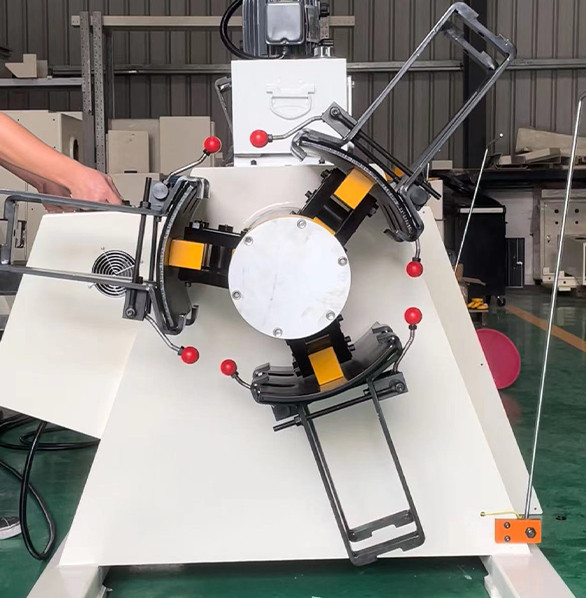
A purchasing manager in Ohio had three quotations on the desk, spread across $60,000, and no way to rank them. Every supplier had quoted a coil line that would run his part.
None had quoted the same amount of money per tonne of steel he would actually process.
He ran 1,200 tonnes a year through a 0.9 mm cold-rolled strip, 400 mm wide.
On that volume, the $60,000 spread was worth roughly $6 a tonne, and two of the three machines would have cost him more to own than the cheapest one.
Cost per tonne is the number that lets you compare a quotation against your own plant instead of against another quotation. It is not a metric the industry publishes, and it is not one your accountant will hand you.
It takes about twenty minutes to build, and it changes which machine you buy.
Why Cost Per Tonne Answers a Question Price Cannot
A machine price tells you what leaves your bank account once. It says nothing about what the machine costs while it sits there for eight years.
Two lines can differ by $60,000 at purchase and by $3 a tonne in ownership, in either direction. The cheaper one is often the more expensive one, because the saving was taken out of something that shows up monthly.
The denominator does the work. Divide every annual cost by the tonnes you process, and the machine's specifications stop being abstract.
A 1,600 mm line costs more per tonne than an 800 mm line at the same tonnage, because you paid for width you do not use.
This is also the number that survives a budget review. Nobody argues with $56 a tonne. Everybody argues with a $185,000 invoice.
Four Inputs You Can Read Off Your Own Books
You need annual tonnage, installed capital, annual running cost and the recovery period your finance team uses. Everything else is arithmetic.
- Annual tonnage. Take the real figure from the last twelve months, not the capacity of the press. A line sized for 3,000 tonnes that processes 900 is carrying three times the capital per tonne.
- Installed capital. Machine, freight, duty, foundation, electrical hook-up, rigging and commissioning. The invoice is usually 70 to 80 percent of the total, and the rest is where quotations quietly diverge.
- Annual running cost. Power, consumables, maintenance, spares, floor space and the labour hours the line consumes even when it is idle.
- Recovery period. Eight years is common for coil equipment in Europe, five in North America. The shorter the period, the more the capital line dominates and the more a price difference matters.
Do not include scrap in the capital line. Scrap belongs in the running cost, and it is usually the largest single element once the line is installed.
A Worked Example at 1,200 Tonnes a Year
The Ohio job: 0.9 mm by 400 mm cold-rolled steel, 1,200 tonnes a year, one shift, a $185,000 installed line and an eight-year recovery.
Capital recovery is $23,125 a year, which is $19.30 a tonne. Maintenance and spares run $4,500 a year, or $3.75 a tonne. Floor space is 45 m² at $90 a square metre, $4,050 a year and $3.40 a tonne.
Power is small on this size of line: an average draw of 13 kW over the hours the machine actually runs, about $0.65 a tonne. Labour is the second largest item, half an operator at $38,000 a year, $15.80 a tonne.
Scrap is the item that surprises people. At 1.5 percent of throughput and $900 a tonne for the strip, that is $16,200 a year, or $13.50 a tonne.
| Cost element | Per tonne | What moves it | Where it costs you |
|---|---|---|---|
| Capital recovery | $19.30 | Tonnage, recovery period, installed price | Falls slowly; a halved volume doubles it |
| Labour | $15.80 | Automation level, shift pattern | Stays fixed when the line is idle |
| Scrap | $13.50 | Feed accuracy, coil quality, die condition | Scales with material price, not with tonnage |
| Maintenance and spares | $3.75 | Duty cycle, strip cleanliness | Climbs after year four |
| Floor space | $3.40 | Layout, plant rent | Paid whether the line runs or not |
| Power | $0.65 | Line efficiency, motor sizing | Rarely worth optimising first |

Total: about $56 a tonne. Of that, $23 is capital and labour that does not move when tonnage moves, which is the part most buyers never model.
The sensitivity is brutal at low volume. Drop from 1,200 to 600 tonnes and capital recovery goes to $38.60 a tonne while maintenance and space stay put.
The same machine now costs $79 a tonne, and the cheapest quotation becomes the only defensible one.
Where the Spec Sheet Moves the Number Most
Four specification lines carry most of the per-tonne difference between two quotations for the same job. They are worth checking before you compare prices at all.
Strip width margin. Going from 800 mm to 1,300 mm adds $22,000 to $30,000 on a line of this size, which is $2.30 to $3.10 a tonne. It is worth it only if a named future part needs the width.
Coil capacity. A 5-tonne to 10-tonne jump adds $18,000 to $26,000, plus a coil car and a heavier foundation. It pays back through fewer coil changes, not through throughput.
Line speed. Doubling nameplate speed adds 25 to 35 percent to the price and almost nothing to output, because the press sets the cycle. Speed only converts to tonnes when the press can absorb it.
Automation level. Automatic coil loading, strip end welding and closed-loop feed monitoring each carry a price and each remove labour hours. At 1,200 tonnes the labour saving is real; at 400 tonnes it is not.
When the Per-Tonne Number Misleads You
The model has three blind spots, and all three show up in real plants.
It assumes the line is the constraint. If the press, the die or the paint line sets your output, a faster coil line adds capital without adding tonnes.
Run the calculation against the bottleneck, not against the machine you are buying.
It treats tonnage as uniform. A plant running forty small lots a month spends far more per tonne in changeover than the model's single average suggests. The error can be 20 percent on a mixed book.
It ignores option value. A line with width margin can take work the cheaper machine must refuse. That is a real return, and it does not appear in a per-tonne figure.
Use the number to rank machines that do the same job. Do not use it to decide whether the job is worth doing.
Reading a Quotation Against the Model
Put the quotation's scope next to the model line by line. Anything the supplier excludes becomes a cost you carry, and the exclusions are usually where the two cheapest bids differ.
What each model includes as standard, and what it charges as an option, is listed in the coil line equipment range — that list is the fastest way to spot a bid that looks cheap because it left something out.
- Foundation and anchor bolts. Often excluded, typically $6,000 to $14,000, and it is the item most often left out of a comparison.
- Electrical hook-up. Cable, panel, transformer capacity and the electrician's week. Budget 4 to 7 percent of the machine price.
- Freight and duty. On a $185,000 machine, ocean freight and inland haulage land between $4,000 and $9,000 depending on the route.
- Commissioning and training. Two engineers for five days is normal; ask whether travel and accommodation sit inside the quoted price.
Add those four to each bid before dividing by tonnage. A $12,000 gap in machine price frequently reverses once the scope is aligned.
Two questions do most of that work. Ask each supplier to list what is excluded from the price, and ask what the line draws in kVA so the electrical scope can be priced by the same contractor.
The wider mapping from specification line to landed cost is set out in the coil line guide library, including the ten-minute payback test for each option.
At what annual tonnage does a $185,000 line fall below $10 a tonne in capital cost?
About 2,300 tonnes a year on an eight-year recovery. Below 1,000 tonnes the capital line passes $23 a tonne and starts to dominate every other cost.
How much does 500 mm of extra strip width add per tonne?
Roughly $2.30 to $3.10 a tonne at 1,200 tonnes a year, because the width premium is $22,000 to $30,000 and the tonnage does not change.
Does a line running 30 percent faster cut cost per tonne by 30 percent?
No. Only the time-driven share moves, which is 15 to 20 percent of the total. The realistic saving is 5 to 6 percent, and only if the press can absorb the extra strokes.
What does 2 percent scrap cost per tonne at $900 strip?
$18 a tonne, which is nearly a third of the $56 total in the worked example. Feed accuracy is a cost item, not a quality preference.
Where to go next
This article sits in the buying cluster, where each specification line is priced against the tonnage it has to earn back.
If you are holding two quotations and the per-tonne gap is smaller than the scope gap, the pillar page will show you which line items to compare first.
Read the specification cost breakdown