How Much Roll Pressure Does an NC Servo Feeder Need?
- Share
- publisher
- David Park - Senior Stamping Engineer, FANTY Machinery
- Issue Time
- Sep 8,2026
Summary
How to set NC servo feeder roll pressure: the grip required for accurate feed, the signs of too much or too little pressure, and how to adjust for material.
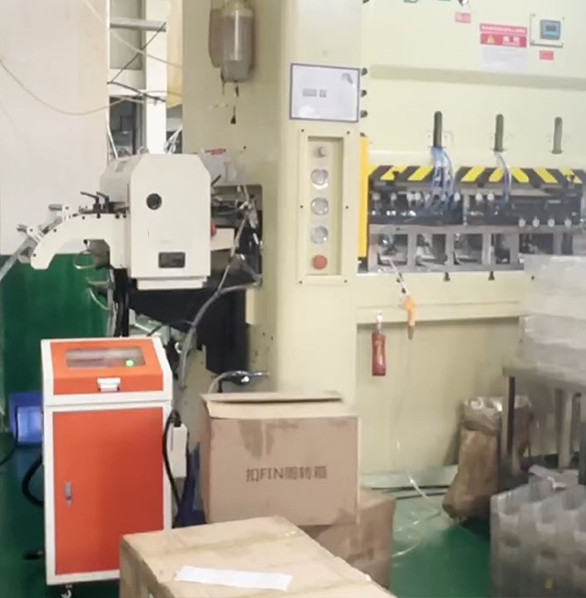
The feed rolls of an NC servo feeder grip the strip and move it a precise distance on every cycle, and the pressure between those rolls decides whether the grip is reliable. Too little pressure and the strip slips, the feed comes up short, and the die stamps in the wrong place. Too much pressure and the strip is marked, the rolls and bearings wear early, and the feeder strains against the material. Setting the roll pressure correctly is a balance that depends on the strip thickness, the material hardness, and the feed acceleration, and it is one of the adjustments that separates a feeder running at its rated accuracy from one that drifts. This guide explains how roll pressure works, how to find the right setting, and how to recognize when the pressure is wrong before it costs you parts.
The principle is simple: the rolls must generate enough friction to accelerate and stop the strip without slip, and no more. The art is in judging that minimum, which this guide turns into a repeatable procedure.
One more practical point: pressure should be checked after any change to the roll set or the roll surface. New rolls, resurfaced rolls, and newly coated rolls all have different surface characteristics, so the pressure that worked on the old roll surface may not be right for the new one. Whenever the rolls are changed, re-run the pressure procedure from the low end and confirm the pitch before returning to production. The fifteen minutes this takes protects both the new rolls and the first batch of parts, and it is the kind of step that experienced setup teams never skip.
What the Roll Pressure Is Doing
An NC servo feeder advances strip by clamping it between a fixed roll and a movable roll, then rotating the driven roll through the angle that corresponds to the required feed length. The strip moves because the friction between the rolls and the strip is strong enough to carry the strip with the roll surface. That friction is the product of the clamping force and the friction coefficient between the roll and the strip, which is why both the pressure and the roll surface condition matter.
During the feed stroke the strip is accelerated from rest to the feed speed and then decelerated to a stop, often several times per second at high press speed. The force needed to accelerate the strip is proportional to its mass and the acceleration rate, so a heavy wide strip fed at high acceleration demands more grip than a light narrow strip fed gently. The roll pressure must provide that grip, plus a margin for the strip not being perfectly uniform.
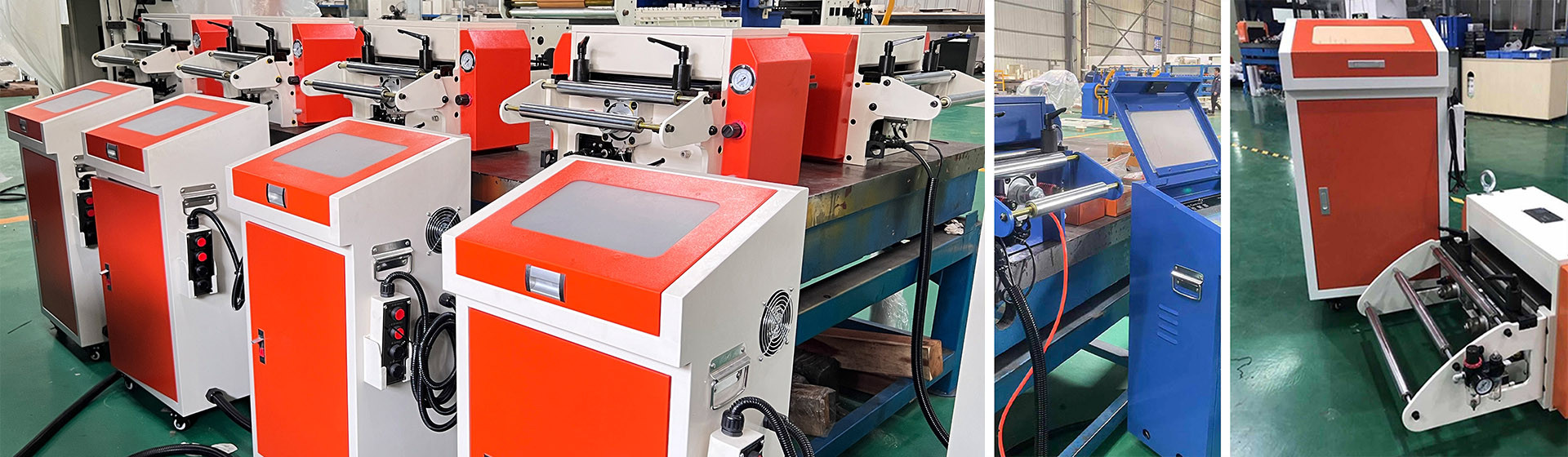 The production of NC servo feeder.
Signs the Pressure Is Wrong
The symptoms of incorrect pressure are distinct, and learning to read them lets you correct the setting before the die is affected.
| Symptom | Likely cause | Correction |
|---|---|---|
| Feed pitch error or short feed | Pressure too low; the strip slips | Increase the pressure in small steps |
| Strip marks or indentations | Pressure too high for the material | Reduce the pressure; check the roll surface |
| Rolls or bearings running hot | Pressure too high or misaligned rolls | Reduce pressure and check the roll alignment |
| Intermittent pitch drift with material changes | Pressure set for one material only | Adjust for the current material; save a recipe |
| Strip crushed at the entry | Pressure far too high on soft strip | Reduce substantially and reset for the material |
When a feeder suddenly starts showing pitch errors after running well, check the pressure before suspecting the electronics: a roll that has been resurfaced, a material batch with a different hardness, or an oilier strip all change the grip and need a pressure correction.
How to Find the Right Setting
Rather than guessing, use a systematic procedure to set the pressure for each material. The goal is the lowest pressure that feeds accurately at the required speed, which protects the strip and the machine while guaranteeing the pitch.
- Start low. Set the pressure at the low end of the recommended range for the strip thickness, per the machine manual.
- Run a test feed. Feed a set length at the production speed and measure the actual travel.
- Increase until accurate. If the feed is short, raise the pressure in small steps until the pitch is within tolerance.
- Confirm no marking. Inspect the strip surface for indentation and reduce the pressure if the strip is marked.
- Save the recipe. Store the pressure with the material in the feeder's recipe memory.
The correct setting is the lowest pressure that holds accuracy, not the highest. Many operators over-pressure out of caution, and the cost shows up as marked strip and worn rolls that they then blame on the material.
How Material Changes the Answer
The right pressure changes with the material in predictable ways, which is why the pressure is a recipe value rather than a fixed machine setting.
- Thin soft strip. Needs low pressure to avoid marking, but the light grip means the feed acceleration must be gentle enough to avoid slip.
- Thick heavy strip. Needs higher pressure to hold the greater mass during acceleration and deceleration.
- Oily strip. The oil lowers the friction coefficient, so the same grip needs more pressure or a coated roll.
- Hard or high-strength strip. Resists indentation, so it tolerates higher pressure, but it also transmits more load to the rolls and bearings.
If your plant runs a range of materials, the feeder's recipe memory becomes essential: each material stores its proven pressure, and the operator recalls the right value instead of re-finding it by trial on every setup.
Roll Surface Condition and Pressure
The roll pressure and the roll surface condition are two halves of the same grip equation. A smooth, glazed roll has a low friction coefficient and needs more pressure to grip, while a roll with the correct surface texture grips with less pressure. This is why roll maintenance is part of the pressure system: resurfacing the rolls restores the grip and lets the pressure return to a normal value.
Coated rolls add another dimension. A polyurethane-coated roll grips oily or smooth strip with less pressure than a steel roll, which protects soft strip from marking. If your feeder has coated rolls, follow the coating manufacturer's pressure guidance rather than the steel-roll values, because over-pressuring a coated roll damages the coating and shortens its life.
Frequently Asked Questions
What happens if the roll pressure is too low?
The strip slips during the feed stroke, producing a short feed, a pitch error alarm, and parts stamped in the wrong position. The slip also wears the strip surface unevenly and can damage the die if a mis-fed part reaches the stations.
What happens if the roll pressure is too high?
The strip is marked or indented, the rolls and bearings wear faster, the feeder draws more power, and soft materials can be crushed at the entry. High pressure does not improve accuracy once the grip is sufficient; it only adds damage.
How do I know the pressure is right?
The feeder holds the feed pitch within tolerance at production speed, the strip shows no fresh marks from the rolls, and the rolls and bearings run at normal temperature. These three conditions together confirm the setting.
Should the pressure change with feed speed?
Indirectly yes. Higher feed acceleration demands more grip, so a feeder running a very fast feed may need more pressure than the same strip at a slower feed. Set the pressure at the fastest feed the job uses.
Can roll pressure correct an oily strip slippage problem?
Increasing pressure helps up to a point, but on heavily oiled strip the better solutions are a wiper to remove the oil or a coated roll that grips through the film. Relying on pressure alone overworks the rolls and marks the strip.
Set Your Feeder Up for Reliable Grip
FANTY NC servo feeders provide precise roll pressure adjustment and recipe storage for every material you run. If you are fighting feed slips or strip marks, send us your material and current symptoms and we will recommend the pressure and roll setup that holds accuracy cleanly.
Get a Feed Grip Recommendation