How to Avoid NC Straightener Feeder Buying Mistakes?
- Share
- publisher
- David Park - Senior Stamping Engineer, FANTY Machinery
- Issue Time
- Aug 21,2026
Summary
Learn the five most common NC straightener feeder buying mistakes, what they really cost, and how to avoid each one with a practical checklist from FANTY.
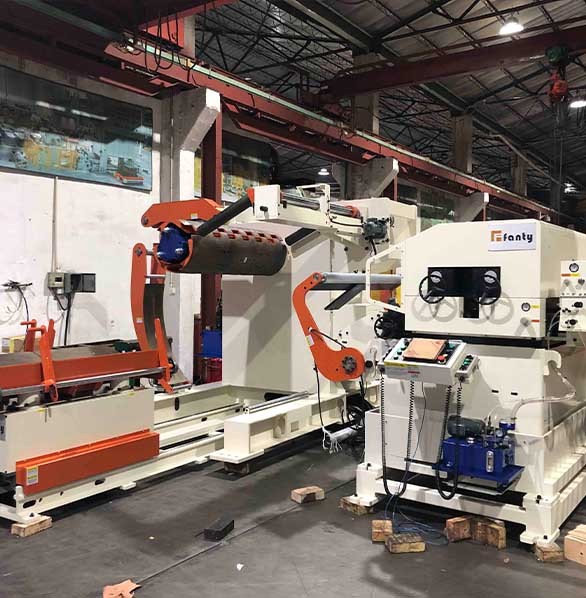
Buying an NC straightener feeder is one of the biggest capital decisions a stamping workshop makes, and yet most purchasing mistakes happen long before the machine arrives on your floor.
Over twelve years of building 3-in-1 decoiler straightener feeder systems for press shops across more than sixty countries, FANTY Machinery has watched the same five or six errors cost buyers tens of thousands of dollars in rework, downtime, and mismatched equipment.
The good news is that every one of these mistakes is avoidable if you know what to check before you sign.
This guide walks through the most common NC straightener feeder buying mistakes, what they really cost you, and how to sidestep each one with a simple checklist that takes an afternoon to complete but saves you years of regret.
Mistake 1: Sizing the Machine by Guesswork Instead of Data
The most expensive mistake we see is a buyer who orders an NC straightener feeder based on the old machine's nameplate or a vague recollection of coil dimensions.
Before you contact any supplier, spend an hour filling in a specification sheet with your actual numbers: the widest and narrowest coil you run, the thickest and thinnest material, the tensile strength range, the longest feed length your dies require, and the target strokes per minute.
Send that data to the supplier and ask them to confirm the model they recommend and why. A reputable manufacturer will ask questions back; a salesperson who quotes immediately without asking about your material is a red flag.
When you choose an NC straightener feeder from FANTY, for example, our engineers request your coil schedule precisely because a correctly sized machine delivers ±0.05 mm feeding accuracy at 200 SPM, while an oversized one delivers neither efficiency nor precision.
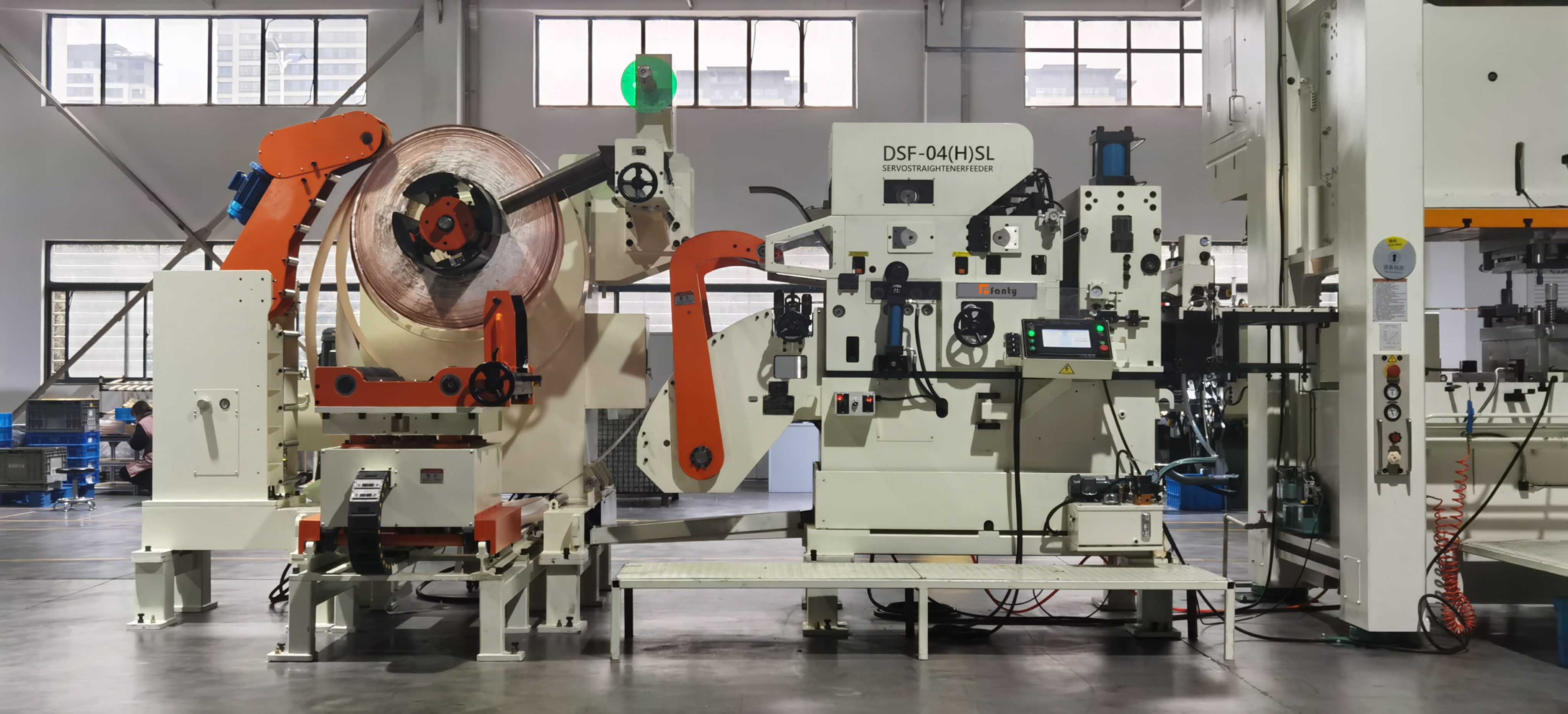
Mistake 2: Judging Quality by the Price Tag Alone
In every industry there is a price at which quality becomes impossible, and coil feeding equipment is no exception.
Instead of comparing price alone, compare the specification sheet line by line. Ask about the servo motor brand, the controller brand, the roll material and hardness, the frame construction, the thickness of the side plates, and the warranty terms.
Ask where the machine is built and who answers the phone when something fails. FANTY manufactures its own frames, straightening rolls, and hydraulic systems in a 45,000 square meter facility with 370 staff and more than 80 R&D engineers, which is how we control quality and keep lead times honest.
CE certification and a documented testing procedure are baseline requirements, not luxuries.
Mistake 3: Ignoring Changeover and Setup Time
Many buyers calculate the speed of the machine but forget the time spent between coils.
Related to changeover is operator training. If the control interface is so complicated that only one person can run it, your line is hostage to that person's schedule. Choose a controller with a clear, logical layout and make sure the supplier provides documentation and video training in your language.
In our experience with 200+ active line installations, the shops that win are the ones where every shift can operate the NC straightener feeder competently, not just the day shift.
| Common Buying Mistake | Real-World Cost | How to Avoid It |
|---|---|---|
| Sizing by guesswork | Wrong capacity, scrap, rework | Send a full coil schedule to the supplier |
| Choosing the cheapest quote | Premature failures, downtime | Compare component brands and build quality |
| Ignoring changeover time | Lost production between batches | Check motorized adjustment and recipe storage |
| Skipping the site survey | Installation problems, extra cost | Verify space, power, air, and foundation |
| No service agreement | Long waits for spare parts | Confirm spare parts stock and response time |
| Overlooking safety features | Injuries, regulatory fines | Check guards, interlocks, and CE compliance |
Mistake 4: Buying Without a Site Survey
An NC straightener feeder is a heavy, precise machine, and it cannot perform if the floor, power supply, and layout are wrong.
Mistake 5: Treating After-Sales Support as an Afterthought
The machine is the product, but the supplier is the partner. When your NC straightener feeder stops at 9 pm on a Friday, the question that matters is not how good the brochure looked but who answers and how fast the spare part arrives.
- Fill in a complete coil and job specification before contacting suppliers.
- Compare component brands, build quality, and warranty terms, not just prices.
- Verify changeover time, recipe storage, and how easy the controller is to learn.
- Walk the installation site and confirm power, space, air, and material flow.
- Ask about spare parts stock, delivery times, and remote technical support.
- Check CE certification, safety guards, and interlocks as non-negotiables.
Buyer's FAQ: Questions Every Buyer Should Ask
How do I know the NC straightener feeder is correctly sized?
Send the supplier your full coil schedule: coil width range, material thickness range, tensile strength, longest feed length, and target SPM. A correct size delivers stable ±0.05 mm feeding accuracy; an oversized unit wastes money and an undersized unit causes jams and scrap.
What components determine the quality of an NC straightener feeder?
The servo motor and controller brand, the hardness and surface finish of the straightening rolls, the frame and side plate construction, the bearings, and the quality of the electrical wiring. Ask for the brands by name before comparing quotes.
Should I buy a 3-in-1 decoiler straightener feeder or separate units?
A 3-in-1 machine saves floor space and shortens the material path, which reduces alignment issues and changeover time, and is ideal for thin to medium material. Separate units give more flexibility for very heavy coils or unusual layouts. Tell your supplier your material range and let them recommend the configuration.
What after-sales support should I require?
Ask for the spare parts warehouse location, typical delivery times, remote troubleshooting by video, installation guidance, and a documented spare parts list. Suppliers with many installations, like FANTY with 200+ active lines in 60+ countries, can usually respond fastest.
Related reading
- how much floor space a coil line needs
- how to select the right model
- what each specification line really costs
Part of the the coil line guide library — the full library of coil handling, straightening and feeding guides from FANTY.
Ready to Buy an NC Straightener Feeder Without the Guesswork?
Talk to our engineers with your coil schedule and get a correctly sized, CE-certified line recommendation with honest lead times.
Request a Free Quote