How to Buy a 3-in-1 Decoiler Straightener Feeder Wisely?
- Share
- publisher
- David Park - Senior Stamping Engineer, FANTY Machinery
- Issue Time
- Aug 10,2026
Summary
A practical buyer's guide to choosing a 3-in-1 decoiler straightener feeder: defining real requirements, checking build quality, evaluating total cost and comparing suppliers before you sign.
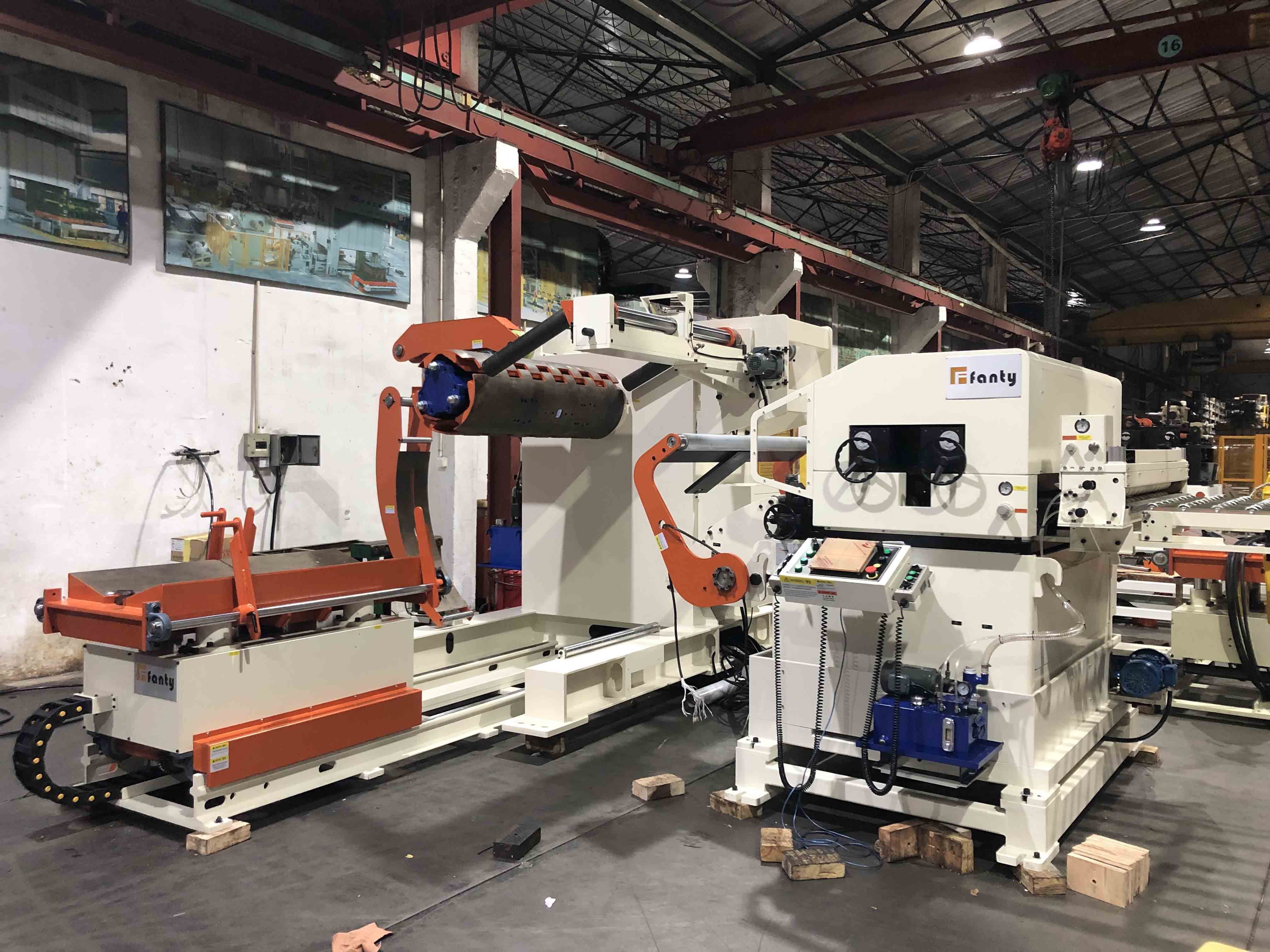
Buying a 3-in-1 decoiler straightener feeder is one of the biggest capital decisions a stamping shop can make. Get the specification right and the machine pays for itself through fewer rejects, faster changeovers and lower energy bills. Get it wrong and you live with a line that never quite matches the press.
This buyer's guide walks through the exact steps that FANTY's engineers use when they help customers select an NC straightener feeder system, from defining real process requirements to comparing quotations on an apples-to-apples basis.
Before you sign anything, take ten minutes to review the complete NC servo feeder and coil feeding product range so you can see the machines behind the specifications.

Why a 3-in-1 Design Beats Separate Machines
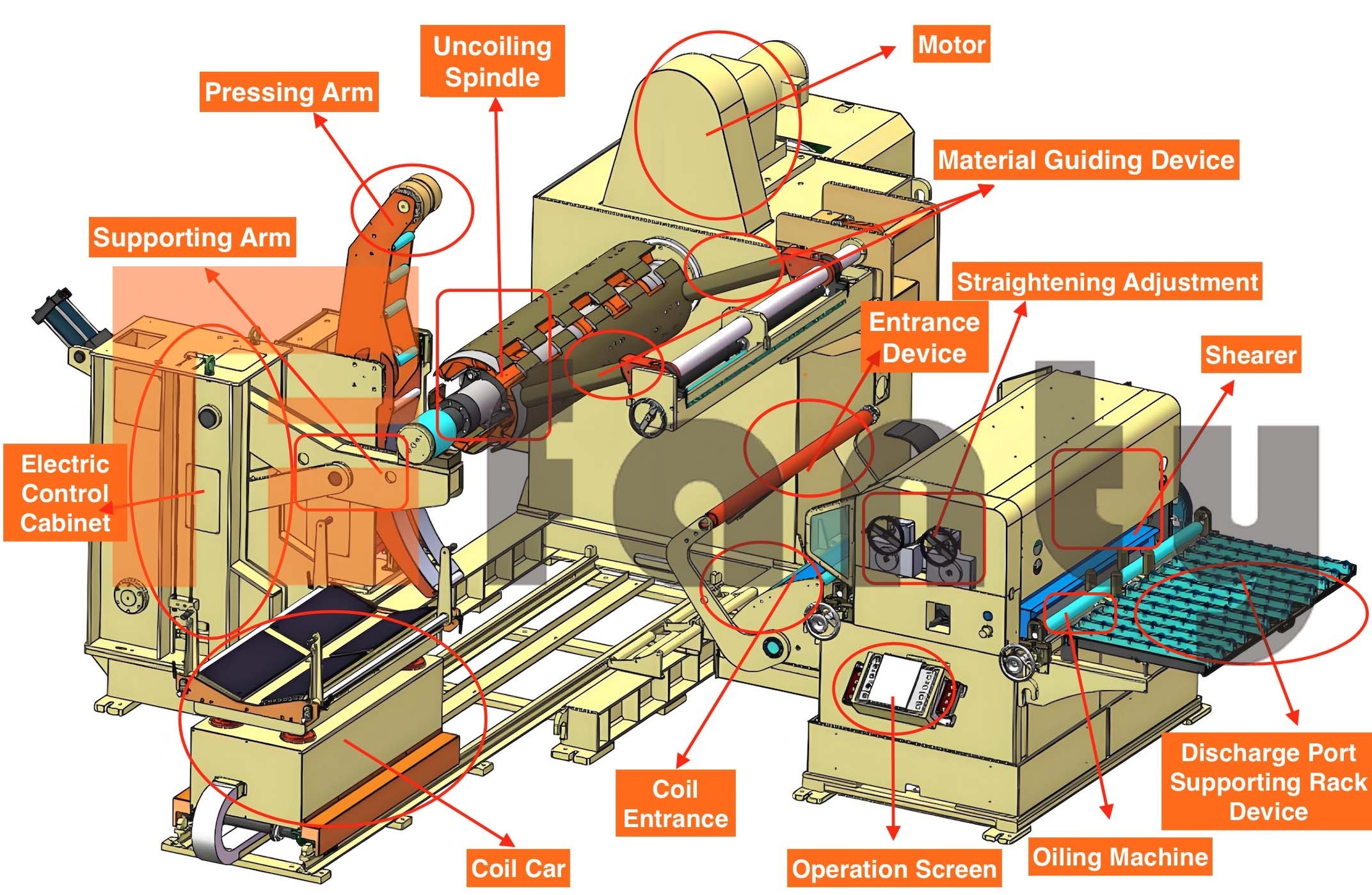
A conventional coil line stacks three separate units: a decoiler, a straightener and a feeder, each with its own motor, its own control cabinet and its own alignment problem. The 3-in-1 decoiler straightener feeder compresses all three functions into one compact frame with a shared control system.
That single change eliminates the main source of misalignment in older lines: the strip path between independent machines.
When the decoiling, straightening and feeding axes are integrated, the strip centerline stays stable from coil to die, which directly improves feeding accuracy and reduces the chance of cross-bowed or twisted material reaching the die area.
The mechanical integration also shrinks the floor footprint by roughly 40 percent compared with three separate units. In a busy press shop where every square meter carries a cost, that saving matters.
Installation is faster too, because the machine arrives as one unit with the electrical wiring already tested at the factory.
FANTY has delivered more than 200 integrated lines to stamping plants in over 60 countries, and the most common reason customers move from separate machines to a 3-in-1 NC straightener feeder is exactly this simplification of the material path and the control logic.
Define Your Real Requirements First
Every serious equipment purchase starts with a specification sheet, and an NC straightener feeder purchase is no different. The trap is that many buyers copy a competitor's specification without checking whether it matches their own press, die and material program.
Work through the following parameters before you invite quotations, because they determine the frame size, the servo torque and the straightening roll configuration you actually need.
| Your Process Parameter | What It Controls on the Machine | Why It Matters |
|---|---|---|
| Coil width and thickness range | Roll width, frame rigidity, gap adjustment | Undersized rolls cause edge marking; oversized rolls waste energy |
| Maximum coil weight and OD | Decoiler expansion range and mandrel motor | An overloaded mandrel slips and damages the coil inner wrap |
| Material grade and yield strength | Number of straightening rolls and roll pitch | High-strength steel needs more work rolls to flatten properly |
| Feed length per stroke | Servo motor size, gripper stroke, pitch resolution | Long pitches demand higher torque and stiffer gearing |
| Press speed and strokes per minute | Servo response time and acceleration curve | The feeder must track the press or synchronize via signal |
| Required accuracy (±0.05 mm is typical) | Encoder resolution and feedback loop tuning | Tolerance budget decides closed-loop control design |
Fill the table honestly, including the worst-case material you plan to run, not just the most common one. A machine sized for the average strip will fail on the difficult coil, and retrofitting a larger NC servo feeder later costs far more than buying the right size now.
FANTY's 80-plus R&D engineers routinely review customer material lists before proposing a configuration, because the coil feeding line is only as good as the specification it was built from.
Quality Indicators That Separate Good Machines from Cheap Ones
Two machines can look identical in a brochure and behave completely differently on the shop floor. When you inspect an NC straightener feeder, look past the paint and check the components that determine long-term reliability:
- Gearbox quality. A cast-iron gearbox with hardened and ground gears survives years of start-stop cycling; a light aluminum housing with sintered gears will wear and generate backlash that destroys feeding accuracy.
- Servo drive brand. Reputable suppliers fit recognized servo drives with configurable parameters and diagnostic history.
A proprietary, non-serviceable drive locks you into one vendor for life. - Frame rigidity. Stress-relieved, thick-walled frames resist twisting under full coil load.
You can test this by pressing on the open side of the frame during a run and watching the feed accuracy. - Documentation and certification. CE certification, wiring diagrams, torque tables and a maintenance manual are not optional extras.
They prove the machine was engineered, not assembled by guesswork.
These checks matter more than the brand name on the machine.
Look Beyond the Quotation Price
The purchase price of an NC straightener feeder is typically less than a third of its five-year total cost of ownership. Energy consumption, spare parts, downtime and operator training usually dwarf the invoice.
Ask every supplier for the same five numbers: delivery lead time, installation and commissioning hours, standard spare parts list with prices, mean time between failures on the servo axis, and the response time for remote diagnostics.
FANTY provides a spare parts recommendation list with every machine and keeps an engineering team available for remote support, which is one reason its integrated lines stay productive for years after commissioning.
How to Compare Supplier Capability
The supplier's engineering depth determines how well the machine fits your process.
Twelve years of stamping line experience means FANTY has seen the edge cases: thin aluminum that birdcages on the mandrel, high-strength steel that springs back through the straightener, and presses whose synchronization signals are noisy.
When you buy from a company with 80-plus R&D engineers and more than 200 active line installations, you are buying the accumulated fixes to those problems, not just a machine.
Final Checklist Before You Sign
- Confirm the machine is sized for your worst-case coil, not your average coil.
- Verify the straightening roll count and roll pitch suit your material grades.
- Ask how the NC servo feeder synchronizes with your press and whether die protection signals are supported.
- Get the spare parts list and confirm lead times for the servo motor and drive.
- Request a factory test report or a witnessed test before shipment.
- Confirm CE certification and documentation are included in the price.
Frequently Asked Questions
How much space do I need for a 3-in-1 decoiler straightener feeder?
An integrated unit typically needs about 40 percent less floor space than separate decoiler, straightener and feeder machines. A standard line for 1.5 to 3.2 mm material runs roughly 4.5 to 6 meters long including the coil loading area, but the exact footprint depends on maximum coil weight and width. Ask the supplier for a dimension drawing with the coil at maximum diameter before you lay out the press shop.
Can the same NC straightener feeder run different material grades?
Yes, within the machine's specified range. The straightening roll gap and the pinch pressure are adjustable, and servo-driven feeders store multiple material programs. Changing from aluminum to high-strength steel normally means loading a stored recipe rather than re-tuning the line. Make sure the machine you buy has enough straightening work rolls for your hardest material.
How do I know if a supplier is a real manufacturer?
Ask for a factory tour, a test bench demonstration and a production floor video. Check the physical address, ask about headcount and R&D team size, and request references from customers running lines similar to yours.
FANTY's 45,000 square meter plant with 370 staff and 80-plus R&D engineers is easy to verify because its reference installations span more than 60 countries.
Is a 3-in-1 machine harder to maintain than separate units?
Generally easier, not harder. One control cabinet, one set of electrical drawings and one service contact replace three separate maintenance programs. The components that need attention are the same: straightening rolls, servo drive, gearbox oil and gripper wear parts. Fewer machines also means fewer failure interfaces and simpler troubleshooting for your maintenance team.
Related reading
Part of the the coil line guide library — the full library of coil handling, straightening and feeding guides from FANTY.
Ready to Choose the Right NC Straightener Feeder?
Send us your coil specifications, press details and target accuracy, and our stamping engineers will recommend the right 3-in-1 decoiler straightener feeder configuration with a firm quotation.
Request a Free Quotation