How to Choose the Best NC Straightener Feeder for Stamping?
- Share
- publisher
- FANTY
- Issue Time
- Jul 22,2026
Summary
A practical buyer's guide to selecting an NC straightener feeder: eight evaluation steps, ten specs that actually matter, sample-trial checklist, and TCO math.
NC straightener feeder buyers face dozens of models, prices, and specifications every year, yet most purchasing decisions still come down to a handful of practical questions: Will it actually hit the ±0.05 mm feeding accuracy the catalog claims? Will the control system survive a 16-hour, two-shift production day? Will the builder still answer the phone a year after the deposit clears? If you are evaluating a new NC straightener feeder for a progressive die line, a transfer press, or a heavy-gauge blanking cell, the guide below walks through the eight evaluation criteria that experienced stamping buyers use to separate marketing copy from real-world performance. FANTY has built NC feeders, servo feeders, and complete coil handling lines for more than twelve years, runs 200+ active line installations across 60+ countries, and supports every unit from a 45,000 m² facility backed by 370 factory staff and 80+ dedicated R&D engineers. The advice below is the same checklist our inside-sales team uses when they sit on the buyer's side of the table.
Choosing the right NC straightener feeder is not about finding the cheapest machine with the longest spec sheet. It is about matching the feeder's mechanical, electronic, and service characteristics to your actual coil, tooling, and takt-time requirements. A mismatch on any one of those three pillars shows up on the floor as scrap, downtime, or a quality claim from your customer.
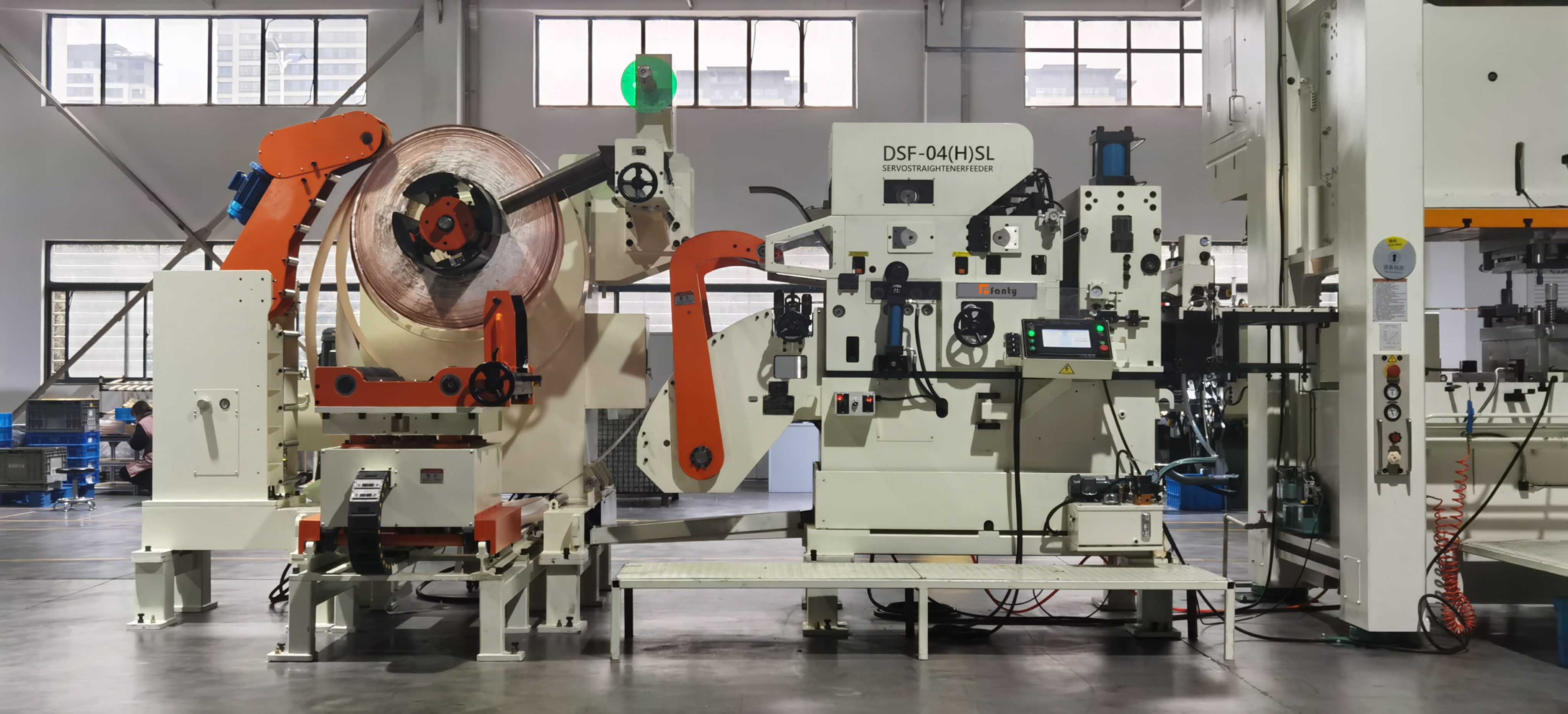
Modern NC straightener feeder HMI panel for a 200 SPM high-speed stamping line.
What Is an NC Straightener Feeder and Why Do You Need One?
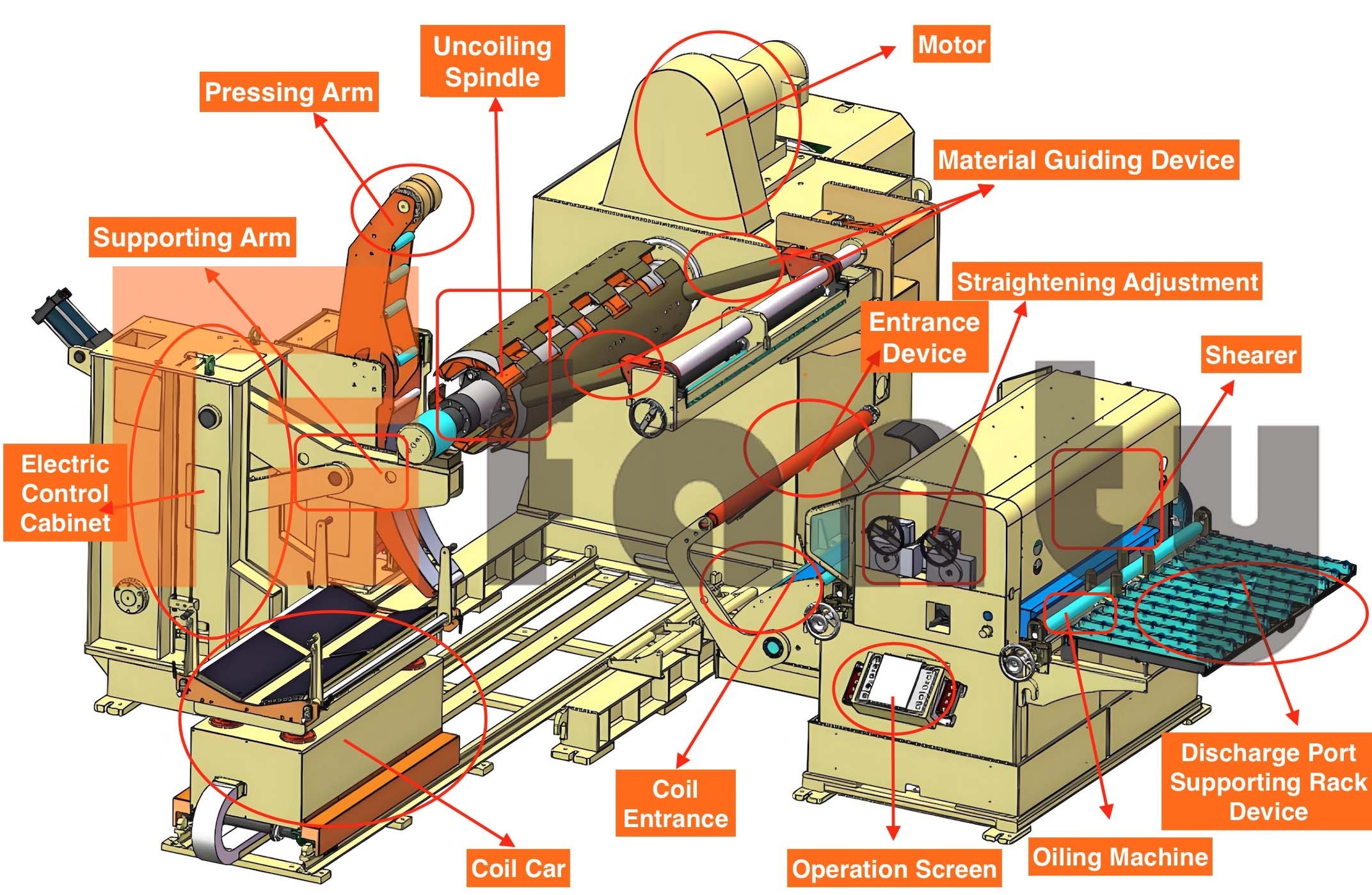
An NC straightener feeder is a combined unit that unwinds (decoils) a coil, removes the coil-set memory so the strip becomes flat, and then indexes the strip into a press with programmable length and speed. Compared with a traditional pneumatic or roller feeder, an NC unit uses a servo motor and a closed-loop encoder to achieve a positional accuracy of ±0.05 mm at feed lengths up to 9999.99 mm. For stamping buyers, that translates directly into three things you can take to the bank:
- Lower scrap rate. Precise feed length keeps the progressive die in the correct window, so each part is stamped where the tooling expects it to be.
- Faster setup changeover. Recipe storage on the HMI lets the operator recall a saved job in under a minute instead of cranking a mechanical cam.
- Higher press uptime. Servo-driven motion avoids the dwell-and-release pattern of pneumatic feeders, which is the main cause of micro-stops on a high-speed line.
Most modern automotive, appliance, and electrical-steel stamping cells now expect at least one NC straightener feeder on the line, and many run two in parallel for redundant capacity. If you are still using a mechanical cam or pneumatic feeder on a press above 80 SPM, you are paying a hidden tax in scrap, changeover time, and operator attention.
How Do You Evaluate an NC Straightener Feeder Step by Step?
Below is the eight-step evaluation flow that experienced stamping buyers use. Skipping a step is how a $40,000 machine turns into a six-month headache.
Map the Coil and the Die
Document material grade, thickness range, width, coil OD/ID, and the longest feed stroke the die needs. Without these numbers you cannot verify any spec on the data sheet.
Verify Feeding Accuracy
Ask for a third-party test report of the actual feed-length repeatability at your worst-case stroke, not the catalog headline number.
Check Straightener Geometry
Match the work-roll diameter, roll count, and adjustable angle to your material yield strength. A unit that straightens 0.5 mm mild steel may fail on 0.8 mm high-tensile.
Audit the Servo and Drive
Confirm the servo motor brand, drive brand, encoder resolution, and whether the cabinet is climate-controlled. Mismatched servo brands are the #1 cause of field failures.
Review Safety and Compliance
CE marking, lock-out electrical design, light curtains, and pinch-point guarding are not optional in EU and most APAC plants. Ask for the Declaration of Conformity.
Inspect Build Quality
Welded steel thickness, paint process, cable management, and connector brands tell you whether the machine was built for two years or twelve.
Run a Sample Trial
Any serious builder will run your coil and your die on their floor or send a video of the same. If they refuse, walk away.
Lock Down After-Sales Support
Confirm spare-parts stock, response SLA, on-site engineer availability, and remote-diagnostic capability before you wire the deposit.
Which Specs Actually Matter When Comparing NC Straightener Feeder Quotes?
Two quotes can look identical on paper and still differ by 30% on the floor. The table below ranks the specifications by their real impact on your running cost, not their prominence on the brochure.
| Spec | Why It Matters | What to Ask For |
|---|---|---|
| Feed length range | Covers short indexing, long blanking, and transfer strokes on the same line. | 0.1 mm – 9999.99 mm with 0.01 mm resolution. |
| Feeding accuracy | Determines scrap rate at high speed. | Independent test report, not just catalog claim. |
| Maximum feed speed | Matches the press SPM and avoids the feeder being the bottleneck. | Confirmed at full payload, not no-load. |
| Straightener roll count & diameter | Drives ability to flatten high-tensile and stainless material. | Roll layout drawing + hardness spec. |
| Servo motor & drive brand | Service network and spare-part availability. | Yaskawa, Mitsubishi, Panasonic, or Delta are industry standards. |
| Encoder resolution | Higher resolution = tighter closed-loop control. | 17-bit or 23-bit absolute encoder. |
| Maximum coil weight & width | Limits how long the line can run unattended. | Match to your heaviest coil, not your average. |
| Control system | Eases operator training and recipe management. | PLC + 10-inch HMI with multi-language UI. |
| Compliance | Required for import, insurance, and customer audits. | CE Declaration of Conformity, not a sticker. |
| Warranty & SLA | Defines your real risk after commissioning. | 12-month whole-machine warranty + 24-hour response. |
How Does the Servo Motor Drive the NC Straightener Feeder's Accuracy?
The accuracy of an NC straightener feeder comes from the closed-loop interaction between a brushless servo motor, a high-resolution encoder, and a controller that re-computes the position every millisecond. When the operator enters a feed length of 87.50 mm on the HMI, the controller converts that distance into motor pulses, accelerates the strip to the correct velocity profile, and verifies the actual position through the encoder before the press top-dead-center arrives. If the actual position is even 0.03 mm off, the controller auto-corrects on the next cycle. This feedback loop is what gives the FANTY NCT-series a tested repeatability of ±0.05 mm at 200 SPM on a 0.6 mm cold-rolled coil, a figure that pneumatic and mechanical-cam feeders simply cannot approach.
- The HMI receives the feed-length recipe from the operator.
- The PLC converts the recipe into pulse counts and acceleration curves.
- The servo drive energizes the motor with the precise current profile.
- The encoder returns the actual shaft position at 1000 Hz or higher.
- The PLC compares actual to target and updates the next cycle's profile.
- The press receives a hard-wired "in-position" signal before it strokes.
This is also why the servo brand matters: a generic servo with a 13-bit encoder will lose precision at high speed, while a Yaskawa Sigma-7 with a 24-bit encoder will hold the same recipe across millions of cycles. Always ask the builder to name the servo brand and the encoder resolution in writing.
Servo motor and drive cabinet inside a high-speed NC straightener feeder for stamping automation.
What Build-Quality and Safety Features Should a Serious NC Straightener Feeder Have?
Once you have narrowed the field to two or three builders, the next differentiator is build quality. Five physical details separate a 5-year machine from a 15-year machine.
Welded Steel Frame
Look for normalized steel plate, not cold-rolled sheet. A normalized frame is stress-relieved after welding so it does not warp during shipping or after years of vibration.
Schneider or Eaton Electrical
Main breaker, contactors, and relays should be branded components you can source locally. No-name breakers fail within two years and cause hours of troubleshooting.
Two-Coat Industrial Paint
Epoxy primer plus polyurethane top coat. Single-coat paint fades and chips within a year on a hot stamping floor.
CE & Lock-out Compliance
Main isolator with padlock, safety relay on every guard, and a light-curtain interface on the straightener entry. CE is mandatory for European export and most global OEMs.
Cable Management
Cables in cable trays, not zip-tied to the frame. Drag-chain rated cables on the moving head. This is a 30-minute check that prevents a 3-day failure.
Diagnostic HMI
Live servo temperature, encoder error count, and last-100-fault log on the HMI. If the screen only shows set/recipe, the builder cut corners.
Why Does the Builder's Manufacturing Footprint Matter?
An NC straightener feeder is a 3–8 ton assembly of welded steel, precision rollers, servo electronics, and pneumatic logic. The factory that builds it determines how long it lasts, how fast you get spare parts, and how quickly an engineer can land on your floor if something goes wrong. FANTY's 45,000 m² factory in Dongguan houses 370 staff, 80+ R&D engineers, and a dedicated coil-handling line with more than 200 active line installations across 60+ countries. That footprint is what allows us to ship a custom straightener in 25 working days, hold 12 months of spare-parts inventory, and dispatch a commissioning engineer inside 72 hours for emergency calls in Asia, Europe, and the Americas.
Smaller trading companies can sometimes quote a lower number, but they own no factory, stock no parts, and rely on a sub-contracted engineer when something breaks. The total cost of ownership over five years is almost always higher with the trading-company route once you factor in downtime and freight.
How Do You Run a Fair Sample Trial on an NC Straightener Feeder?
A sample trial is the single most reliable way to de-risk a feeder purchase. Done right, it answers 80% of your technical questions in a single day. Use the checklist below to run the trial fairly.
Send Real Coil
Send 50 kg of your actual production coil, not a substitute. Material memory and surface finish affect straightening more than any spec sheet.
Bring Your Die or a Sample Die
If your die is too valuable to ship, ask the builder to use a sample die with the same feed length and pitch. The goal is to verify the stroke, not the part.
Measure Three Numbers
First-piece accuracy, repeatability over 200 strokes, and scrap rate at full SPM. Anything else is theatre.
Record Everything
Video the trial, including the HMI screen. Reference numbers on a brochure mean nothing without the video to back them up.
Test the HMI Yourself
Your actual operator should change a recipe, jog the feeder, and recover from a fault. If the HMI is hard to learn, training will cost you weeks.
Get a Written Report
Ask for a one-page trial report signed by the builder's engineer. The report becomes part of the contract and protects you if the line underperforms later.
What Is the Real Total Cost of Owning an NC Straightener Feeder?
The sticker price is roughly 55–65% of what a feeder actually costs over a ten-year horizon. The rest is hidden in commissioning, training, spare parts, energy, and downtime. A serious buyer's calculation should include the following cost lines:
- Purchase price. Machine, freight, insurance, and import duty.
- Installation & commissioning. Including civil work, electrical hookup, and the builder's on-site engineer.
- Operator training. Three shifts, three days each, plus refresher training after six months.
- Spare-parts kit. Servo fuses, encoder cables, proximity sensors, belts, and a spare HMI touch screen.
- Energy. Servo feeders draw 2–6 kW continuously. A more efficient drive saves $400–$900 per year per line.
- Downtime cost. Even a 1% scrap rate on a $0.40 part at 200 SPM costs $80 per shift in raw material alone.
- Disposal or resale. A well-built NC feeder still has 40–60% residual value after ten years.
When you compare two quotes, add the lines above to each number and then compare the totals. The "expensive" quote often becomes the cheaper one.
Complete coil-feed stamping line with NC straightener feeder and decoiler installed on a shop floor.
Frequently Asked Questions About NC Straightener Feeders
What is the difference between an NC feeder and a servo feeder?
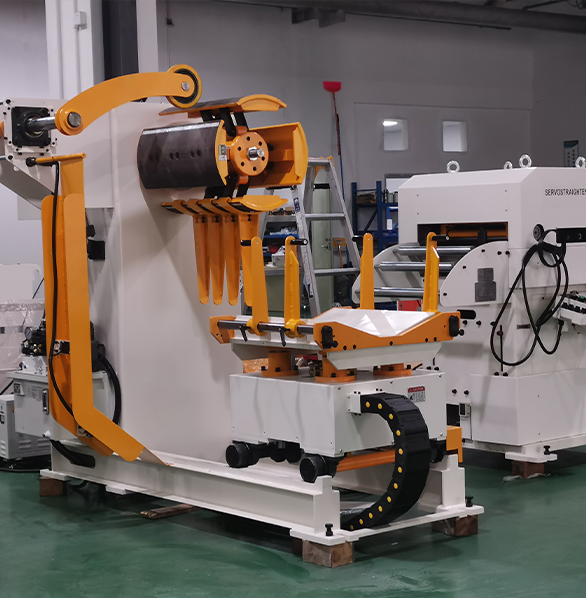
Both use a servo motor for the feed stroke. The label "NC" usually means the unit also includes a straightener head and a decoiler in a single frame, while a "servo feeder" sometimes refers to a stand-alone feed head. In practice, the terms are used interchangeably, but a true NC straightener feeder is a 3-in-1 coil-handling machine.
Can one NC straightener feeder serve two presses?
Yes, with a toggle or dual-track discharge, but only if both presses run the same recipe. For different parts, two dedicated feeders are more reliable and avoid cross-contamination of the schedule.
How long does installation take?
For a 3-in-1 unit, expect 3–5 days for mechanical install, 2 days for electrical and HMI, and 2 days for trial run and operator training. FANTY ships a two-engineer team for the commissioning week and a third engineer on call remotely.
What thickness range can an NC straightener feeder handle?
Standard models cover 0.3–3.2 mm with the standard straightener head. Heavy-gauge units go up to 6.0 mm, and ultra-thin units down to 0.1 mm. Always match the model to the thickest and highest-tensile material you plan to run.
Do I need CE marking to import into Europe?
Yes. CE marking is mandatory for any machine entering the EU, and most North American and APAC OEMs also require CE compliance for their supplier audits. Ask the builder for the Declaration of Conformity and the technical file before you place the order.
How quickly can I get spare parts?
FANTY stocks a full spare-parts inventory in Dongguan and ships most wear items within 48 hours by air. Servo drives and motors are stocked as complete assemblies so a swap takes 30 minutes instead of 8 hours of board-level repair.
Your NC Straightener Feeder Buyer's Checklist
Before you sign the purchase order, walk through the list below with your engineering, quality, and procurement teams. If any answer is missing, pause the order and request clarification from the builder.
- The feeder's published accuracy has been verified by an independent report on your material.
- The straightener geometry matches your thickest, highest-tensile coil.
- The servo brand, drive brand, and encoder resolution are named in the quote.
- The control system supports your existing press signal interface and recipe database.
- CE Declaration of Conformity is included in the quote and listed in the technical file.
- A sample trial on your coil and die has been recorded and signed off.
- The builder confirms a 12-month warranty, 24-hour response SLA, and on-site engineer availability.
- Total cost of ownership has been calculated for a 10-year horizon, not just the sticker price.
- Operator training for three shifts has been quoted and scheduled.
- Spare-parts kit and a remote-diagnostic contract are included in the order.
Ready to Specify an NC Straightener Feeder for Your Line?
Send us your coil dimensions, feed length, and target SPM. FANTY's application engineers will return a tailored configuration, a fixed-price quote, and a sample-trial plan within one working day.
Request a Free Quote & Sample Trial