How to Choose the Right Coil Width for a Decoiler?
- Share
- publisher
- David Park - Senior Stamping Engineer, FANTY Machinery
- Issue Time
- Aug 14,2026
Summary
Learn how decoiler coil width capacity is rated, why oversizing and undersizing both cost money, and the calculation method to size a decoiler correctly for your coil range.
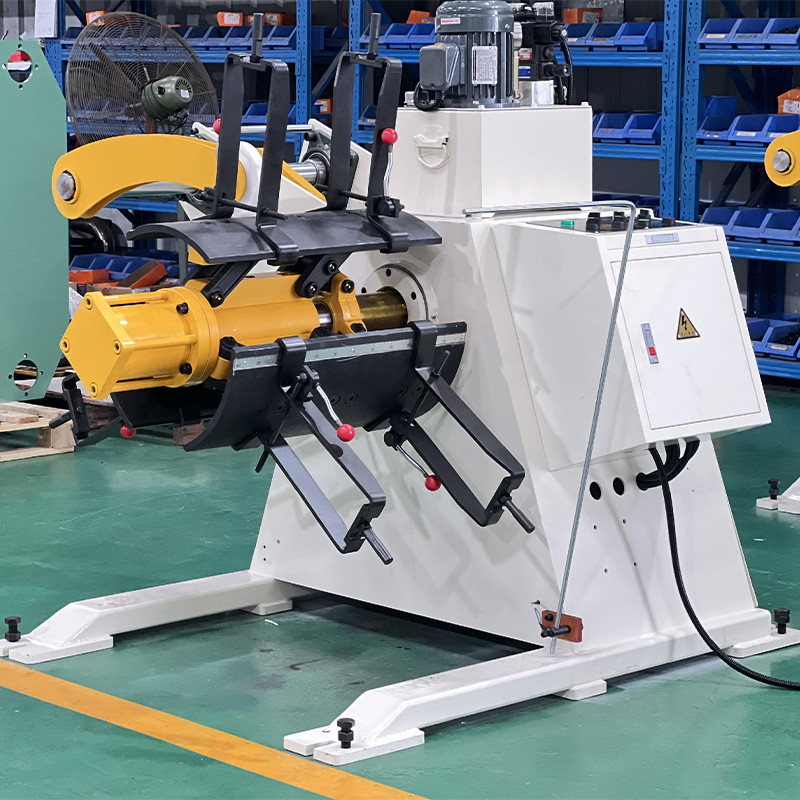
Choosing the right coil width capacity for a decoiler is one of the most important decisions in building a stamping or roll-forming line, and it is also one of the most misunderstood.
Buyers often pick a machine based on today's largest coil and then find themselves constrained a year later when the product mix changes. An NC Straightener Feeder system is only as good as the decoiler that feeds it, so getting the width capacity right protects your entire investment.
This guide explains how decoiler width capacity is rated, why oversizing and undersizing are both costly, and the practical method FANTY Machinery, with 12 years of coil-processing experience and more than 200 installed lines, uses to help customers select the right capacity the first time.
How Coil Width Capacity Is Actually Rated
Decoiler width capacity is the maximum coil width the machine can support safely, and it is not a single number. Every decoiler has both a width rating and a weight rating, and the two interact.
Manufacturers rate width in two ways. The first is the physical mandrel width, which is the maximum coil width that can physically slide onto the expanded mandrel. The second is the recommended working width, which is the range over which the machine feeds the strip straight and stable.
These are different numbers, and a quality supplier, such as FANTY with its CE-certified engineering team, will quote both. When you compare decoilers, ask for the recommended working width, not just the mandrel width, because that is the number that matters in production.
It is also important to understand the relationship between width and strip behavior. Narrow coils are easy to guide because they sit in the middle of the mandrel with plenty of support.
Wide coils, especially wide thin-gauge coils, are harder to control because the strip wants to wander, telescope, or buckle at the edges. The decoiler must have the rigidity to hold the coil square and the guidance to keep the strip centered as it pays out.
A machine that is barely wide enough for your coil will struggle at the edges of its rating, which is why buying right at the maximum is never a good idea.
Why Oversizing Is More Expensive Than You Think
The instinct of many buyers is to oversize everything to be safe, but an oversized decoiler creates real costs. The first is capital cost: a larger machine costs more to build, more to ship, and more to install. The second is floor space, which is valuable in any shop.
Oversizing also affects feed quality. A decoiler that is much wider than the coil leaves the coil unsupported across the middle of the mandrel, and with a narrow coil the strip may not track straight because the guiding surfaces are far from the strip edges.
Many operators who oversize find they need additional side guides or spacers to center narrow coils, which adds setup time and defeats the purpose of the purchase. In short, a machine that is too big is not neutral; it actively hurts productivity on narrow coils.
The cost of oversizing becomes especially visible in an integrated 3-in-1 decoiler straightener feeder, where the decoiler, straightener, and feeder are sized as a matched set.
If the decoiler is oversized relative to the straightener and feeder, the whole unit is larger, heavier, and more expensive than necessary, and the extra capacity is never used.
FANTY's engineers size the three modules together so that the integrated machine is balanced: the decoiler width, the straightener roll width, and the feeder roller width all match the coil range you actually run.
The Real Cost of Undersizing
Undersizing is the opposite error, and it can be even more expensive because it caps your business. If you buy a decoiler for 400 mm coils and a customer asks for a part made from 500 mm strip, you cannot run the job at all, or you must buy a second machine.
Undersizing also shows up in subtle ways at the top of the rating. A decoiler run at its maximum width and weight every day wears faster, runs hotter, and drifts out of alignment sooner than one run comfortably within its range.
The expansion segments, the support arms, and the bearings all see higher stress, and the result is more maintenance and shorter machine life. A machine that is run at 85 percent of its rating will outlast the same machine run at 100 percent by a wide margin.
There is also the safety dimension. A coil that is too wide for the mandrel can overhang the support, and if the coil shifts during payout, the result can be a damaged coil, a damaged machine, or an injury.
Decoiler safety is not just about guards and interlocks; it is fundamentally about matching the machine to the work.
A machine sized correctly for the coil range is inherently safer than one pushed beyond its design point, and CE-certified suppliers like FANTY design both the structure and the safety devices around the rated coil range.
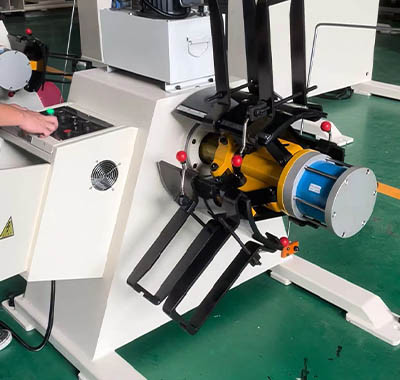
Matching decoiler width capacity to your real coil range protects both productivity and safety.
How to Calculate Your Real Coil Width Requirement
Instead of guessing, calculate the requirement from your actual part program. List every part you currently make and every part you realistically expect to make in the next five years.
The five-year horizon matters more than most buyers expect. Shops that plan only around current orders repeatedly find themselves buying a second decoiler when a new customer brings a wider part.
Because a decoiler is a long-life asset, typically fifteen to twenty years with proper maintenance, sizing it for the future product mix costs very little today and saves a great deal later.
The additional cost of moving from 400 mm to 500 mm capacity is usually a small fraction of the cost of a second machine and the extra floor space it needs.
You should also consider the coil weight that comes with the width. Wider coils are heavier at the same gauge, so the width decision drives the weight decision. A 400 mm wide coil of 1.0 mm steel weighs a fraction of a 600 mm wide coil of 3.0 mm steel.
When you specify the decoiler, give the supplier the full range of coil dimensions and weights, not just the maximum width, so the engineer can verify the structure, the bearings, and the expansion system together.
FANTY's sales engineers use a standard coil specification sheet that captures inner diameter, outer diameter, width, and weight for exactly this reason.
Five Rules for Selecting Decoiler Width Capacity
- Size for the widest part, not the most common part: the machine must handle the largest coil in your program comfortably, because that is where the stress is highest.
- Add ten to fifteen percent margin: never run a decoiler at its absolute maximum width; the margin protects the machine, the coil, and your operators.
- Match width to weight: verify the decoiler supports the coil weight at the chosen width, because the two ratings interact at the extreme of the envelope.
- Think in five-year increments: if there is a realistic chance of wider parts, buy the wider machine now and avoid a second purchase later.
- Ask for the working width, not just the mandrel width: the recommended working range, not the physical limit, is the number that governs production quality.
Width Capacity in the Context of a Complete Line
The decoiler width decision should never be made in isolation, because the decoiler feeds the rest of the line. In a complete system with an NC Straightener Feeder, the straightening rolls and the feeding rollers must be at least as wide as the decoiler's working width, otherwise the wide strip cannot be straightened or fed. When the widths are mismatched, the strip edges can miss the roller surfaces, producing poor straightening and inconsistent feeding. A matched set, where every module covers the same coil width range, is the only configuration that performs reliably.
This is where the 3-in-1 decoiler straightener feeder design has a structural advantage. Because the decoiler, straightener, and feeder share one frame and are engineered as a single machine, the widths are matched by design and cannot be mismatched by mistake.
The operator also handles one machine instead of three, which reduces setup time and the chance of configuration errors. For shops that process a defined coil width range, this integrated approach simplifies both selection and daily operation.
One more consideration is future flexibility: can the decoiler width be adjusted later? Some decoilers allow the support arms or side guides to be repositioned for different coil widths within the rating, which adds flexibility for narrow coils on a wide machine.
This is useful when your program includes both narrow and wide parts. However, the physical mandrel width is fixed, so the maximum coil width is fixed at purchase.
That is why the maximum matters more than the flexibility features: you can always handle narrower, but you can never handle wider than the machine you bought.
Frequently Asked Questions About Decoiler Width Capacity
What happens if I run a coil slightly wider than the decoiler rating?
Running beyond the rating overstresses the mandrel, bearings, and support structure, and the strip may not track straight because the guiding surfaces are outside the working range. It also compromises safety. Never exceed the manufacturer's rated width; choose a larger machine if wider coils are part of your plan.
Is a wider decoiler always better?
No. An oversized decoiler costs more, takes more floor space, and can feed narrow coils poorly because the coil is unsupported in the middle. The best machine matches your real coil range plus a sensible margin, not the largest machine the supplier offers.
How much margin should I add to my maximum coil width?
Ten to fifteen percent above your current maximum developed strip width is a good starting point, especially if the product mix may change. For the same reason, review your five-year plan before finalizing the specification, because the physical width limit cannot be changed after purchase.
Does coil width capacity affect the price of a 3-in-1 decoiler straightener feeder?
Yes. The decoiler width drives the width of the straightener and feeder as well, so a wider integrated machine costs more across all three modules. Sizing the machine to your real requirements, with a reasonable margin, gives the best value without paying for unused capacity.
Related reading
- what causes coil telescoping
- how much coil weight a decoiler handles
- how to specify a decoiler for a coil line
Part of the the coil line guide library — the full library of coil handling, straightening and feeding guides from FANTY.
Need help matching a decoiler to your coil range?
FANTY Machinery's engineers will review your current and planned parts, calculate the required coil width and weight capacity, and recommend the right decoiler or 3-in-1 decoiler straightener feeder for your line, backed by 12 years of experience and CE-certified quality.
Get a Sizing Recommendation