How to Choose the Right Lubricant for High-Speed Stamping?
- Share
- publisher
- David Park - Senior Stamping Engineer, FANTY Machinery
- Issue Time
- Sep 5,2026
Summary
How to choose a stamping lubricant for high-speed progressive dies: viscosity, additives, application method, and how the lubricant interacts with the coil line.
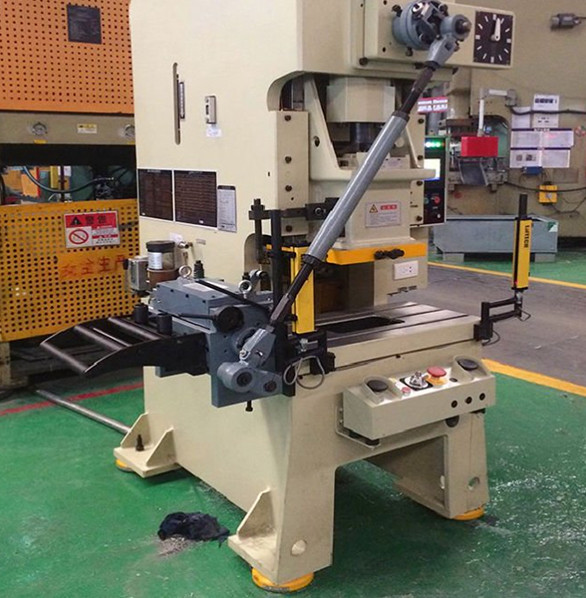
Lubricant is the cheapest component on a high-speed stamping line and the one most often chosen by habit. The same oil that worked on a slow blanking job can fail within an hour on a progressive die running at 200 strokes per minute, and the failure shows up as galling, die wear, part scoring, or a seized pilot.
Choosing the right stamping lubricant is a technical decision that depends on the material, the die geometry, the speed, and the downstream cleaning process, and getting it right extends die life by a measurable margin.
This guide explains the factors that drive the choice, the differences between the main lubricant types, and how the lubricant interacts with the strip before it ever reaches the die.
The context matters: on a modern line the strip passes through an NC servo feeder and straightener before the die, and lubricant applied upstream must survive that journey without contaminating the feeder rolls or changing the strip's friction. That link between lubrication and the coil line is where many plants create problems without realizing it.
What the Lubricant Must Do at High Speed
Inside a high-speed die, the lubricant works under extreme conditions: high pressure at the punch tip, high sliding speed at the draw radius, and temperatures that spike in a fraction of a second.
- Separate the surfaces. A continuous film prevents metal-to-metal contact between the punch and the strip.
- Carry heat away. The fluid flushes friction heat from the cutting edge and the draw radius.
- Wash away fines. Small particles of strip material are carried out of the die instead of embedding in the surface.
- Protect the part. A corrosion inhibitor keeps stamped parts clean between the press and the next process.
A lubricant that fails at any one of these jobs produces a signature symptom: galling on the punch, wear rings in the die, or parts that arrive at the washer already rusted.
high-speed stamping line.Oil, Emulsion, or Dry Film: The Main Families
Stamping lubricants fall into three broad families, and the right family depends on the operation and the downstream process.
| Type | Strength | Best for | Watch out for |
|---|---|---|---|
| Neat oil (pure, no water) | High film strength | Heavy draws, high-strength steel, thick strip | Cleaning cost, fire risk if misted, odor |
| Soluble oil / emulsion | Moderate, good cooling | Light to medium stamping, high-speed light work | Emulsion stability, bacteria, disposal |
| Synthetic water-based | Good cooling, clean | High-speed light stamping, clean-room parts | Lower extreme-pressure limit than neat oil |
| Dry film / vanishing oil | Leaves little residue | Parts that skip washing, electrical contacts | Cost per part, may need reapplication |
Within each family, the two numbers on the data sheet that matter most are the viscosity and the extreme-pressure additive package. Viscosity controls how easily the fluid spreads and how thick the film stays at the contact; too thin and it squeezes out, too thick and it causes drag and cleaning problems.
The extreme-pressure additives, usually sulfur, chlorine, or phosphorus compounds, react with the metal surface under high pressure to form a sacrificial layer that prevents welding. For high-speed progressive work on carbon steel, a lubricant with a well-designed extreme-pressure package is almost always required.
Material Changes the Answer
The same die running the same speed can need a different lubricant when the material changes, because the difficulty of the operation scales with the material's strength and work-hardening behavior.
Mild steel and aluminum are forgiving; a moderate emulsion often suffices for light work. High-strength steel and stainless work-harden quickly and generate more heat and pressure at the shear zone, so they demand a higher film strength, usually a neat oil or a heavily additized product.
Copper and brass need lubricants free of sulfur and chlorine, which stain those metals. Galvanized and pre-painted strip need a lubricant that will not attack the coating.
Electrical steel for motor laminations needs a vanishing oil that leaves no residue, because any film left between laminations hurts the magnetic circuit. Before you standardize on one drum of oil for the whole shop, confirm that it is compatible with every material you actually run.
How to Apply It on a Coil-Fed Line
On a coil-fed line the lubricant can be applied in several places, and each has consequences for the machine and the process.
- Before the feeder. Applying upstream lets the lubricant spread evenly, but excess oil reaches the feeder rolls and the straightener, where it can cause the strip to slip or attract dirt.
- At the die entry. The most common method: a roller coater or spray bar just before the die applies a controlled film exactly where it is needed.
- Inside the die. Through-die lubrication via spray nozzles or an oiler unit reaches the specific stations that need it, at the cost of more complexity.
- On the strip edges. For trimming and slitting stations, edge application concentrates the lubricant where the shear happens.
The controlled-film approach at the die entry is usually the best balance. The strip arrives at the NC servo feeder clean, the feeder rolls grip reliably, and the lubricant is applied only where the die needs it, which also minimizes how much must be cleaned off the parts later.
If you apply upstream, work with the feeder builder on roll materials and wiper settings that tolerate the lubricant.
Ten Signs Your Lubricant Is Wrong
Change the lubricant when you see these symptoms, and change it before the die is damaged, not after.
- Galling or pickup on the punch tip
- Scoring lines on the part surface
- Burr growth that was not there before
- Rust on parts waiting between processes
- Die temperature climbing shift after shift
- Strip slipping in the feeder (oil on the rolls)
- Staining or etching on aluminum or brass
- Wash system struggling to clean the parts
- Unusual smell or separation in the emulsion tank
- Die life dropping for no mechanical reason
Any two of these together is a strong signal to review the lubricant specification with your supplier, ideally with the die and material data in hand.
Frequently Asked Questions
Can I use the same lubricant for stamping and for the feeder?
No. The feeder rolls need the strip dry or lightly oiled for reliable grip, while the die needs a lubricant film. Applying a heavy stamping oil before the feeder causes slipping and pitch errors. Keep the strip clean until the die entry and apply the stamping lubricant there.
How often should I change the lubricant in a recirculating system?
It depends on the system and the dirt load. Monitor the oil for particles, water, and additive depletion, and follow the supplier's recommended interval. A recirculating system on a busy line is typically refreshed or replaced on a schedule measured in weeks, not months.
Is more lubricant always better?
No. Excess lubricant creates drag, attracts dirt, increases cleaning cost, and can reach the feeder rolls. Apply the minimum controlled film that keeps the die cool and separated, and adjust from there based on the part quality.
Why does my aluminum part stain even with a so-called aluminum-safe oil?
Staining is often caused by additives reacting with the metal over time, or by the part sitting too long before washing. Check the lubricant's compatibility statement for your alloy, reduce the time between stamping and washing, and confirm the wash chemistry matches the lubricant.
Does the straightener affect the lubricant?
The straightener works on the dry strip and can mark or smear any oil film on the strip surface as the strip bends over the rolls. For this reason, apply the lubricant after the straightener, at the die entry, rather than on the coil before straightening.
Related reading
Part of the the coil line guide library — the full library of coil handling, straightening and feeding guides from FANTY.
Set Up Your Coil Line for Clean, Consistent Lubrication
FANTY engineers can advise on where to place the lubricant applicator on your line so the NC servo feeder and straightener stay clean and the die gets the film it needs. Send us your material, die type, and press speed for a process recommendation.
Discuss Your Stamping Process