How to Compare Coil Line Quotes Line by Line
- Share
- publisher
- David Park - Senior Stamping Engineer, FANTY Machinery
- Issue Time
- Nov 27,2026
Summary
Two quotes for the same 800 mm coil line, 27,400 USD apart, described the same machine on page one and two different machines on page four. This guide gives the reading order: frame steel and roll set first, then the seven lines that carry the real difference, then the non-money numbers such as delivery and spares lead time. It also names the four traps that make a line-by-line comparison lie, and the three clauses worth leaving open at signature.
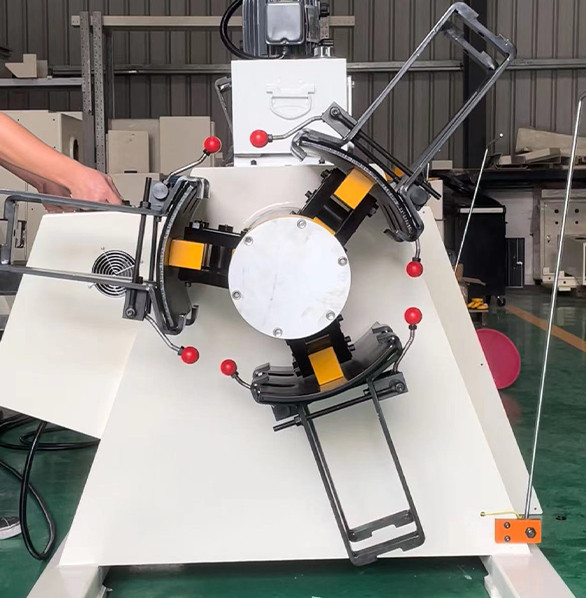
Two quotes for the same 800 mm coil line arrived on the same desk. One read 187,400 USD, the other 214,800 USD, and both listed a 30 tonne decoiler, a six-roll straightener and a 300 mm servo feed.
On page one they described the same machine. On page four they described two different machines, and the cheaper one was carrying about 60,000 USD of cost that nobody had priced.
Reading a coil line quote line by line is a two-hour job. Skipping it is a five-year job.
Frame and roll options for each model are listed in the coil line product index.
Read the Frame and the Roll Set First
The first page of every quote shows capacity. Capacity is the cheapest thing to specify and the least useful thing to compare.
A 30 tonne decoiler is a rating, not a description. Two 30 tonne frames can differ by 1,900 kg of steel and by how they behave at 1,400 mm coil diameter.
Ask for the frame mass and the plate thickness at the mandrel bearing housing. A 12 mm housing and a 20 mm housing both pass a 30 tonne test and behave differently after two years at 60 strokes a minute.
Roll count comes second. Six rolls and nine rolls are both sold as multi-roll straighteners. On 1.2 mm HSLA 340, the six-roll machine leaves 0.4 mm of bow that the nine-roll machine removes.
Roll diameter matters more than most buyers expect. A 60 mm roll deflects under load on a 1,250 mm wide machine. The same frame with 75 mm rolls does not, and the price difference sits under 3 percent.
Roll material is where quotes diverge quietly. GCr15 at HRC 60 and 9Cr2Mo at HRC 62 read the same in a specification sheet and last 18 months apart on galvanized strip.
None of this appears on the comparison page. All of it appears in the drawing package, and a supplier who will not send the drawing package is answering the question anyway.
Seven Lines That Move the Price 30 Percent
Each row below is a line item that appears in both quotes under the same name with different content. This is the reading order that finds the gap fastest.
| Quote Line | What the Cheap Version Actually Is | Where It Costs You |
|---|---|---|
| Frame | 12 mm plate at the mandrel housing, 1,900 kg lighter | Weld cracks at the bearing after three to four years of two-shift running |
| Roll set | Six rolls at 60 mm diameter, GCr15 at HRC 58 | 0.4 mm bow on HSLA at 1.2 mm; regrinding due at 14 months instead of 24 |
| Servo feed | Single drive, two axes, 3.5 kW | Will not hold 0.05 mm on a 400 mm pitch above 60 strokes a minute |
| Control | Third-party PLC with no recipe memory | Die change runs 35 minutes instead of 12, twice a shift |
| Guarding and CE file | Polycarbonate panels, declaration of conformity only | Fails a customer safety audit; retrofit quoted at 9,000 USD |
| Commissioning | Three days, buyer supplies the crew | Line runs but never reaches rated speed, and the gap is blamed on the die |
| Spares | Priced on request, no shelf commitment | Eight-week lead time on a 40 USD friction disc that stops the line |
The pattern holds across most comparisons: the cheap version is not a cheaper machine. It is the same machine with fewer of the parts that fail.
On this job the 27,400 USD gap broke down as 6,800 USD of frame steel, 4,500 USD of roll count, 9,200 USD of servo drives and 6,900 USD of guarding and documentation.
Only the last of those four is visible on page one, which is why buyers who negotiate the total rather than the lines usually win 3 percent and lose 30.
Compare the Numbers That Are Not Money
Delivery, warranty response and spares lead time belong in the same table as price, because they are the same purchase.
A quote offering 14 weeks delivery and a 72-hour warranty response is a different product from one offering 20 weeks and a 24-hour response backed by a regional wear part stock.
Ask what is on the shelf and where it sits. A straightener roll that ships in eight weeks is a stopped line. The same roll held in a regional warehouse is a two-day repair.
Factory acceptance testing is the third non-money line. A witnessed FAT costs two flights and two days, and it is the only point in the purchase where a machine can be rejected cheaply.
Training days and documentation language are usually free to ask for at quotation and expensive to add after the purchase order. Ask for both in writing, in the quote, before you compare totals.
Where a Line-by-Line Comparison Misleads You
Four things break the method, and every one of them has cost a buyer real money.
Currency and tariff lines. A quote in euros and a quote in dollars are not comparable without a rate clause, and a wrong HS code can move duty by 4 points on the whole machine value.
Local fabrication. Some suppliers build the frame locally to save freight.
That changes the steel grade and the welding procedure without changing the price line, and the certificate that arrives does not match the drawing you approved.
The part number behind the brand. Two quotes can both say Yaskawa servo and mean different series with different torque curves, different encoder resolution and different spare availability.
Freight terms. A CIF quote and an FOB quote sit 6,000 to 11,000 USD apart on a 40-foot container. Comparing them head to head compares two prices for two different risks.
The method also fails when the two machines are not for the same job. A quote built around 1,250 mm strip looks expensive beside one built for 600 mm until the first wide coil arrives.
And it fails completely on a single-part line running one material at one thickness. There the extra roll set and the second servo axis buy nothing, and the cheaper quote is the correct quote.
That is the honest limit of this exercise. It tells you what each line buys. It does not tell you which lines your own part mix needs, and no supplier will tell you either.
Questions That Force a Straight Answer
Send these five in one email and ask for answers in the same order and the same units. A supplier who answers four of five has told you which one is weak.
- Frame mass and plate thickness at the mandrel housing. Both numbers, in kilograms and millimetres, not as a tonnage rating.
- Roll count, roll diameter, material and hardness. Hardness in HRC, with the hardening depth if the rolls are induction hardened.
- Servo drive model, axis count and continuous torque. A model number that can be looked up beats a kilowatt figure every time.
- Guarding standard and the CE documentation list. Name the standard, then list the documents. Two different promises.
- Wear part price list valid for five years. A supplier who refuses expects to recover margin there, and now you know where.
The fifth question is the most informative of the set. It costs the supplier nothing to answer and it exposes the commercial model behind the quote.

What to Leave Open in the Contract
Do not close every line at signature. Three items are better held open with a defined mechanism, and holding them costs nothing.
First, the acceptance criterion at FAT. Write a feed accuracy figure and a flatness figure with a material and a speed attached, not a phrase like to the buyer's satisfaction.
Second, the commissioning window and the day rate for overrun. A five-day window billed at 1,800 to 2,500 USD a day is cheap insurance, and commissioning overruns more often than it runs short.
Third, the spares list. Agree the six parts to be held and the price of each, then let the supplier decide how to stock them.
Everything else, from guarding style to HMI language, is worth settling before the frame is welded. It is a drawing change then and a service visit afterwards.
A buyer who reads seven lines and writes three clauses usually pays the higher price and still comes out ahead. The gap is in the parts that fail, not in the parts that are quoted.
The reverse is also true, and it is the part most buyers miss: paying for a nine-roll head on a line that runs one gauge of mild steel is a spec you will never use.
What each specification line really costs works that side of the ledger, and it is worth reading before you ask for the ninth roll.
For the mechanics of the purchase itself, from inspection to shipping terms, send the drawing package and the part mix rather than a capacity list.
A supplier quoting from a part mix prices the machine you actually need.
How far apart can two quotes for the same coil line be?
Fifteen to thirty percent on a line of 150,000 to 250,000 USD. Below 10 percent the difference is usually commercial; above 25 percent it is structural.
Should a quote for a 6-roll straightener include 1 roll set or 2?
One set is standard. A second set costs 4,500 to 7,000 USD and cuts a roll change from five days to one, which pays back at four changes a year.
What does day 6 cost when commissioning is quoted at 5 days?
1,800 to 2,500 USD including the engineer, plus travel. Budget two extra days on any first installation.
Is a two-axis servo feed enough for 0.05 mm accuracy?
Up to about 60 strokes a minute on a 400 mm pitch, yes. Above that the second axis and the higher-resolution encoder are what hold the number.
Where to go next
Quote reading sits at the front of a longer decision chain: what each line buys, what it costs to own, and which specifications you can safely drop.
The cluster covers that chain from the first enquiry to the fifth year of spares.
Read the specification cost guide