How to Feed Two-Strand Coil Into a Straightener Feeder?
- Share
- publisher
- David Park - Senior Stamping Engineer, FANTY Machinery
- Issue Time
- Oct 14,2026
Summary
A two-out die fed from a pre-slit two-strand coil doubles output on paper and creates a new set of setup problems on the floor. This is the six-step sequence from die to mandrel, the roll and guide settings that differ from single-strip work, and the four limits that make a two-strand job the wrong choice.
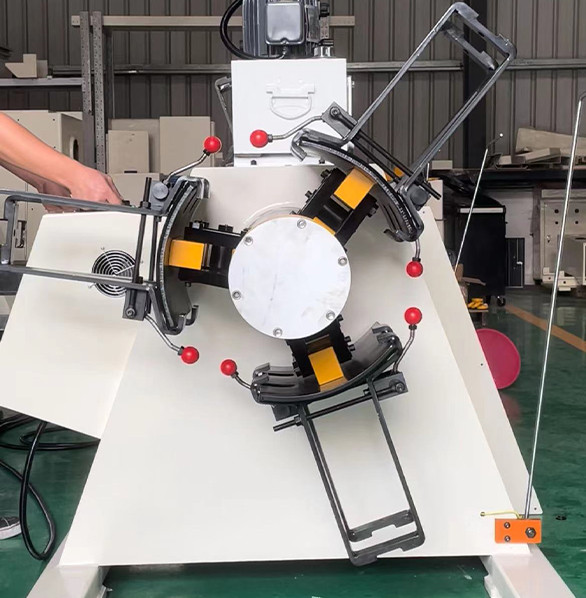
A two-strand coil looks like a shortcut and behaves like a second machine.
The slitter leaves two strips separated by a few millimetres, the rewinder closes them into one coil, and the straightener feeder has to feed both into a two-out die as if they were one body of metal.
Get the setup right and output doubles. Get it wrong and the die absorbs the difference.
Why a Two-Strand Coil Changes the Whole Setup
Two strands wound together are not the same as one strip of double width. The gap between them removes the continuous sheet that normally carries bending stress across the strip.
That matters at every roll. A straightener roll presses on two separate ribbons instead of one plate, so each strand bends independently and the roll sees two reaction points rather than a uniform load.
If the strands sit at different heights in the roll gap, one straightens and the other is over-rolled. The part that gets over-rolled comes out with a bow the die cannot correct.
Most of the work therefore happens before the first stroke, in how the coil was slit and how the strand gap is controlled at the mandrel.
Everything below assumes a 3-in-1 NC straightener feeder with a 7-roll head, 60 mm rolls and a two-out die on a 200 SPM press. Change the roll diameter and the numbers move, but the order of the setup does not.

Check the Strand Gap Before the Coil Reaches the Mandrel
Two numbers decide whether the job is straightforward. The first is the gap between strands, measured after rewinding rather than at the slitter.
A gap of 3 to 5 mm on 1.0 mm CR4 is workable. Once the gap opens past about 8 mm, the strands start to behave as separate coils and the entry guide has nothing to register against.
The second number is strand width consistency. On a 250 mm nominal strand, a variation of more than 0.5 mm end to end will show up as a sideways drift after the straightener.
Check both with the coil on the mandrel, under back tension, at three points along the coil. Measurements taken on a slack coil are optimistic.
Set the Straightener for Two Strands, Not One
The straightener settings that suit a solid strip of the same total width will mark and bow a two-strand coil. The table below is the practical difference.
| Setup Choice | What It Gives the Run | Where It Costs You |
|---|---|---|
| Rolls spanning both strands with a gap in the middle | Lowest tooling cost; works on 3 mm gaps | Rolls deflect more between supports; flatness suffers on heavy gauge |
| Centre separator disc in the entry guide | Holds strand spacing stable through the run | Adds a wear part and a setting that has to be checked each coil |
| Separate guide set per strand | Independent edge control; good for wide gaps | More setup time and a wider guide block than the line may allow |
| Pre-slit two-strand coil instead of two single coils | One threading operation, one coil change | Slitting and rewinding cost, and the two strands cannot differ in thickness |
Roll diameter matters more than roll count here. A 60 mm roll bridging an 8 mm gap deflects noticeably under 1.5 mm strip at full penetration, while a 75 mm roll on the same job holds its line.
Keep the penetration shallower than you would on a solid strip of equal total width. Two ribbons need less bending to reach the same surface flatness, and over-penetration is the fastest way to mark the top strand.
Guide the Strands Without Pinching Either One
Entry guides on a two-strand line have one job: hold the outer edges and let the inner edges float. Pinch the inner edges and the strands splay; leave both edges free and the pair walks sideways.
Set the outer guides to the narrowest strand plus 0.3 mm per side. That tolerance is tight enough to control drift and loose enough to survive a coil with slightly varying width.
Back tension is the second control. Two strands paying off one mandrel can carry different tension if the coil was rewound unevenly. A dancer or loop sensor set for the tighter strand will starve the looser one.
On a 200 SPM line with a 7-roll head, the loop should be deep enough to absorb the tension difference over one revolution of the coil. Roughly 400 mm of loop on a 5-tonne coil is a reasonable starting point.
Six Setup Steps From Coil to First-Off Part
The sequence below runs downstream to upstream. Reversing it is the single most common cause of a two-strand job that will not settle.
- Set the die and confirm both pilots engage before touching the feeder
- Establish the pass line height at the die entry, then work back to the feeder
- Set the straightener roll gap with both strands in the rolls, never on one
- Centre the centre separator, then close the outer guides to 0.3 mm per side
- Run one full coil at reduced speed and record feed length on both strands
- Raise to 200 SPM only after both strands hold length within ±0.05 mm
Record the guide positions and the loop depth on the setup sheet. The second run of the same job should take a third of the time of the first.
Two-strand feeding raises questions that a single-strip line never does. These are the ones that come up most often from plants already running the job.
Can a straightener feeder handle a 10 mm gap between strands?
It can feed them, but flatness becomes unreliable. Past roughly 8 mm the strands stop acting as one body and you should treat the job as two independent feeds.
Should the first two-strand coil run at 100 SPM?
Half speed, so about 100 SPM on a 200 SPM line. One coil at half speed is usually enough to expose a guide or loop problem before the die does.
Do both strands need to sit within 0.1 mm of each other?
Yes on a shared straightener head. A 0.1 mm difference between strands is enough to send one of them through over-rolled while the other stays bowed.
How often should the centre separator be checked?
Every coil change, and again after the first 500 strokes of a new coil. It moves more than most operators expect in the first hour of a run.
What a Two-Strand Line Cannot Do
This setup is worth having, and it is not universal. Four limits are worth stating plainly before a plant commits to it.
It cannot correct a bad slit. If the slitter left a burr on the inner edge, that burr will mark the roll face and eventually transfer to the part. The straightener is downstream of the problem.
It cannot feed strands of different length per stroke. Both strands advance by the same feed length, so a die that needs different advance on each side is the wrong candidate.
It cannot hide a cambered strand. Two cambered ribbons wound together will drift in opposite directions and the guides will fight each other all shift.
It cannot use the same penetration settings as solid strip. Copying a single-strip recipe onto a two-strand coil is the fastest route to a marked top face.
The plants that get the most from two-strand feeding treat it as a different process, not a variation of the single-strip one.
That mindset is why our own engineering group, drawn from more than 80 R&D engineers, treats each two-strand enquiry as a fresh setup study rather than a catalogue selection.
Where the Setup Drifts Over a Full Coil
Two-strand jobs rarely fail at the start. They fail at 70% of coil depth, when the coil diameter has fallen and the payoff geometry has changed.
As the coil unwinds, back tension rises for the same brake setting. The tighter strand takes more of the increase and the looser one starts to lift off the roll face.
The symptom is a feed length that creeps up by 0.1 to 0.2 mm over the last third of the coil. It is easy to blame the servo, and the servo is almost never the cause.
Two fixes work. Either trim the brake to hold tension roughly constant across the coil, or deepen the loop so the tension change is absorbed before it reaches the feed rolls.
The first is cheaper; the second is more robust on coils with uneven winding.
A second drift source shows up on longer runs. The strand gap itself changes as the coil unwinds, because the two ribbons relax against each other differently once the winding tension comes off.
On a coil rewound at low tension, the gap can close by 1 to 2 mm over the first third of the coil. A centre separator set on a fresh coil will start to bind.
Check the gap again at half coil depth. A separator that needs re-setting there is telling you the rewinder tension was too low, which is a slitting problem rather than a line problem.
Where the gap holds steady across the full coil, the setup tends to hold for the whole run with no adjustment at all.
Where to go next
Feeding accuracy on a coil line is an error budget, not a single number. The breakdown from decoiler to die, including where two-strand feeding adds its own term, is in our coil line knowledge base.
The Coil Line Guide Library