How to Finance an NC Straightener Feeder Purchase?
- Share
- publisher
- David Park - Senior Stamping Engineer, FANTY Machinery
- Issue Time
- Sep 5,2026
Summary
Financing options for an NC Straightener Feeder: cash, bank loans, equipment leasing, and supplier terms, with a cost comparison and payback calculation method.
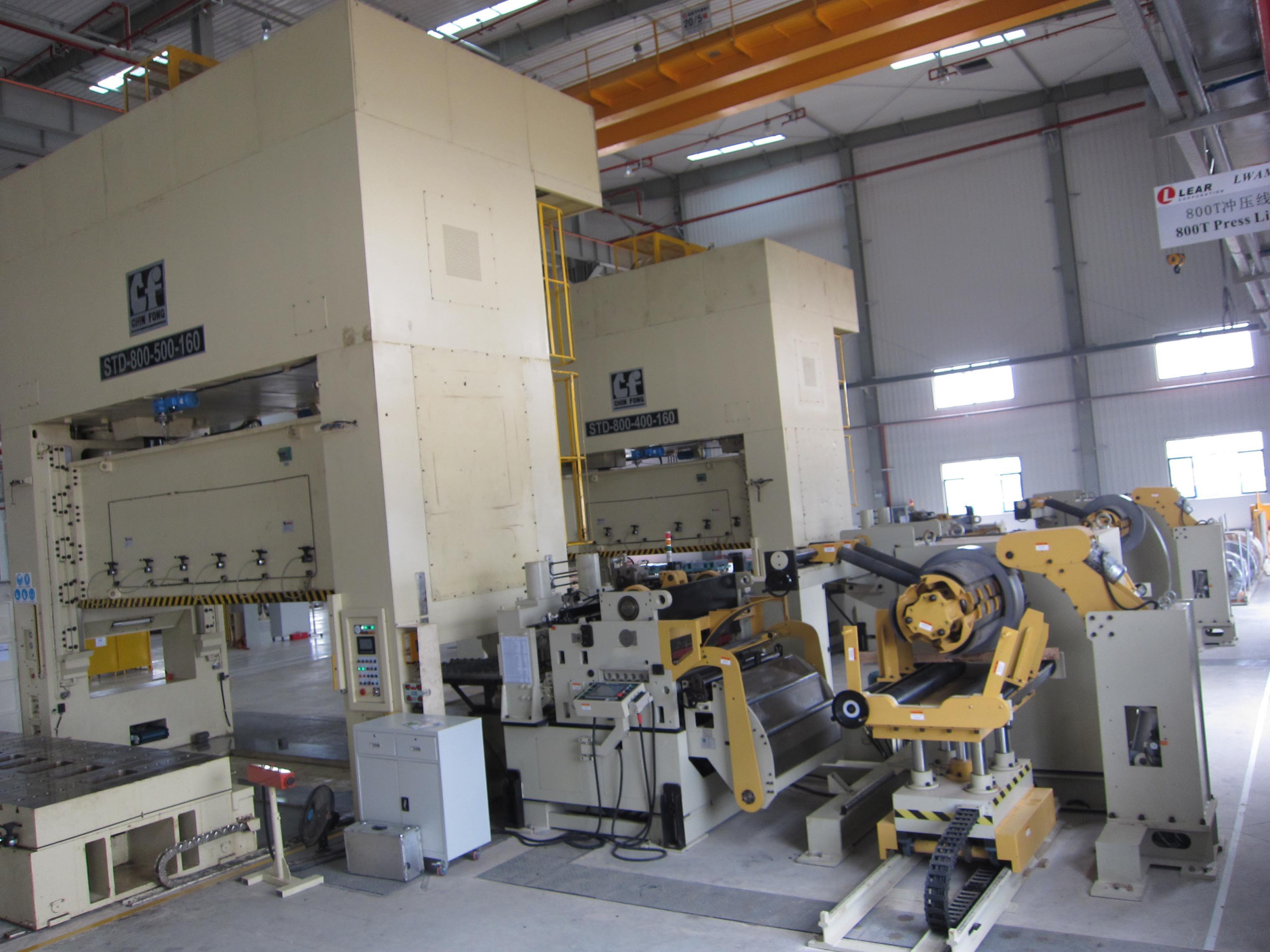
An NC Straightener Feeder is a capital purchase, and for most stamping shops the question is not whether the machine will pay for itself but how to fund it without starving the rest of the business.
Cash preserves flexibility but ties up working capital; leasing preserves cash but adds an ongoing cost; bank financing spreads the burden but brings interest and covenants.
Each option fits a different situation, and choosing well depends on your cash position, your tax situation, and how quickly the new line will generate revenue.
This guide walks through the main financing routes for coil-feeding equipment, compares them with realistic numbers, and gives you a method for calculating whether the machine earns its keep.
The figures used here are illustrative and your bank or leasing partner will quote their own rates. The framework, however, applies anywhere: compare the total cost of each option over the machine's useful life, not the monthly payment, and always test the purchase against the production value the machine will actually deliver.
Beyond the four standard routes, some regions offer government-backed programs that support manufacturing equipment investment: grants for automation, subsidized loans for export-oriented producers, or tax incentives tied to new machinery.
These programs change the effective cost of the machine significantly and are worth researching before you commit to any lender, because they can reduce the deposit required or shorten the payback period.
Ask your local industry association or trade office what equipment-support programs apply to stamping and metal-forming machinery in your country, and factor any subsidy into the comparison table before you choose the financing route.
Four Ways to Fund a Machine Purchase
Most buyers choose between four routes, and each has a clear character.
- Cash. The simplest and cheapest over time, but it removes working capital that could fund other growth.
- Bank equipment loan. You own the machine from day one and repay principal plus interest over a fixed term.
- Equipment lease. A leasing company owns the machine and you pay to use it, with an option to buy at the end.
- Supplier financing. The builder offers payment terms such as a deposit with the balance on milestones or on delivery.
These routes are not mutually exclusive.
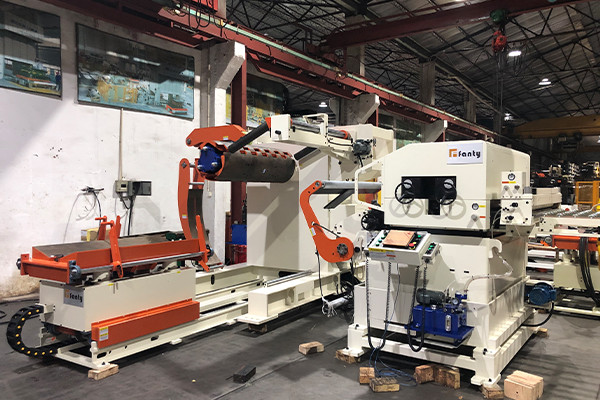 Funding a straightener feeder line that will generate the cash to repay it.
Cost Comparison on a Typical Purchase
The table below compares the four options on a 60,000-dollar NC Straightener Feeder over a five-year horizon, using illustrative rates. The totals show why the cheapest monthly payment is not always the cheapest purchase.
| Option | Upfront cost | Monthly cost | 5-year total | Ownership at end |
|---|---|---|---|---|
| Cash | 60,000 | 0 | 60,000 | Full ownership |
| Bank loan (7% / 5 yr) | 10,000 deposit | ~990 | ~69,400 | Full ownership |
| Lease (8% / 5 yr) | First month only | ~1,190 | ~71,400 plus buyout | Buyout option |
| Supplier terms (30/70) | 18,000 deposit | Balance on delivery | 60,000 if no interest | Full ownership |
Cash is cheapest in absolute terms, but it removes 60,000 dollars of working capital that might earn more elsewhere. The bank loan costs about 9,400 dollars in interest but keeps 50,000 dollars of cash available for operations.
The lease keeps the most cash free but costs the most in total and never builds full equity until the buyout. Supplier terms are attractive when the builder offers them without interest, which is why negotiation over payment milestones is a standard part of machinery buying.
Which Option Fits Which Situation?
The right choice depends on your business profile more than on the machine. A profitable shop with strong cash reserves and stable orders may simply pay cash and own the asset free and clear.
There is one more consideration that buyers often miss: what the machine does to your capacity. If the NC Straightener Feeder lets you take on a contract that your current line cannot run, the revenue from that contract is the real collateral.
Lenders like this story, and presenting a clear production plan with the machine's expected output is the fastest way to improve your financing terms.
How to Calculate Payback Before You Borrow
Before signing any financing agreement, calculate the payback period: how many months of production profit it takes to recover the total cost. The method below works for any machine purchase.
- Estimate added output. The extra strokes per minute or extra line uptime the machine gives you, converted into parts per month.
- Calculate added revenue. Parts per month times your average contribution margin per part, not the selling price.
- Subtract operating costs. Power, tooling wear, maintenance, and one extra operator if needed.
- Divide the total cost by the monthly net. The result is the payback period in months.
- Compare with the loan term. If payback is longer than the financing term, the machine is not yet earning its keep.
As a rule of thumb, a coil-feeding upgrade that replaces manual or pneumatic feeding on a busy line often pays back in twelve to twenty-four months through scrap reduction and uptime alone. That is a faster payback than most expansion investments, which is why banks and leasing companies are generally comfortable financing this type of equipment.
Documents Lenders Want to See
Equipment financing applications are judged on the borrower's ability to repay, so prepare the paperwork before you shop for money.
For international buyers importing the machine, the lender will also want the supplier's pro-forma invoice, the Incoterms, and an estimate of the landed cost, because the loan amount usually covers the installed cost rather than the EXW price. Having these documents ready at the first meeting shortens the approval time from weeks to days.
Frequently Asked Questions
Can I finance a used NC Straightener Feeder?
Yes, but the terms differ. Lenders are more cautious with used equipment because its resale value is harder to assess. Expect a shorter term, a higher deposit, and possibly a higher rate. A builder's certified inspection report helps the lender value the machine fairly.
Is leasing better than buying for tax purposes?
It depends on your tax jurisdiction. Lease payments are often fully deductible as operating expenses, while a purchased machine is depreciated over several years. Ask your accountant which structure gives your business the better result before choosing.
What deposit do suppliers usually ask for?
For a custom-built coil line, a typical structure is thirty percent with the order, forty percent on production completion, and thirty percent before shipment or on delivery. The exact split is negotiable and depends on your relationship with the builder.
How long does equipment financing approval take?
With complete documents, a bank equipment loan typically approves in one to three weeks. Leasing companies are often faster, sometimes within days, because their underwriting is simpler. Supplier financing, when offered, is usually the fastest of all.
What happens if I want to pay off the loan early?
Most equipment loans allow early repayment, but some charge a penalty to compensate the lender for the interest they lose. Ask about the prepayment clause before signing so there are no surprises when your cash position improves.
Related reading
- how much floor space a coil line needs
- how to select the right model
- what each specification line really costs
Part of the the coil line guide library — the full library of coil handling, straightening and feeding guides from FANTY.
Plan Your NC Straightener Feeder Investment Confidently
FANTY provides detailed quotations, pro-forma invoices, and machine specifications that make financing applications straightforward. Tell us your production goals and we will size the machine and supply the documentation your lender needs.
Request a Quotation Package