How to Fix Strip Curl with an NC Straightener Feeder?
- Share
- publisher
- David Park - Senior Stamping Engineer, FANTY Machinery
- Issue Time
- Sep 1,2026
Summary
How to fix strip curl with an NC straightener feeder: causes, diagnosis, roll adjustment procedure, a troubleshooting table, and prevention tips.
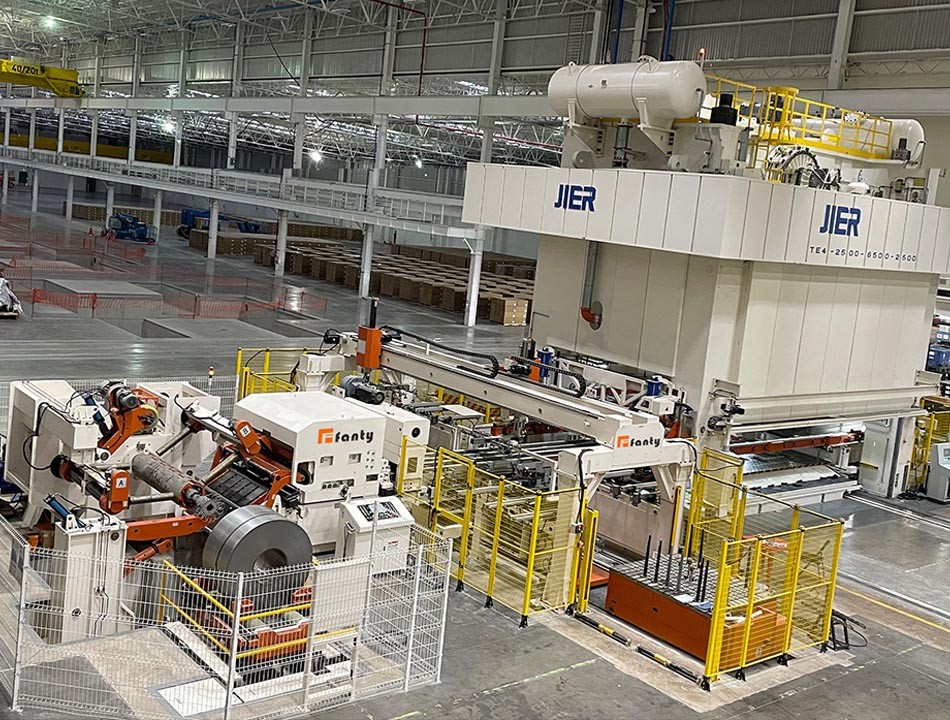
Strip curl is the silent killer of stamping quality. A coil of steel that looks perfectly flat on the rack can curl up or down as soon as it leaves the straightener, and that curl pushes the strip out of the die plane, scratches the tooling, jams the pilots, and turns a good line into a scrap generator.
The good news is that strip curl is one of the most fixable problems in coil feeding, provided you understand what causes it and how the roll adjustment on an NC Straightener Feeder works.
This guide explains why strip curls, how to diagnose the direction and severity, how to adjust an NC Straightener Feeder to flatten it, and how to stop the curl from coming back.
FANTY has manufactured NC straightener feeders and 3-in-1 decoiler straightener feeder lines for twelve years, with 200+ active installations in 60+ countries, a 45,000 m² factory, 370 staff, and 80+ R&D engineers, and the tuning method below is the one our engineers use during commissioning and on service calls.
What Causes Strip Curl in Coil Feeding?
Strip curl is the shape the material remembers. When steel is coiled under tension at the steel mill, the inner layers are compressed and the outer layers are stretched, and that differential stress is stored in the strip as coil-set.
Understanding the source matters because the fix is different in each case. Coil-set curl is fixed with the straightener's roll penetration and pressure settings. Curl caused by uneven straightener roll pressure is fixed by re-leveling the roll bank.
Curl caused by wrong roll diameter for the material is fixed by changing the work-roll set or the straightener model. Trying to fix the wrong cause with the wrong adjustment is why some operators fight the same curl for weeks.
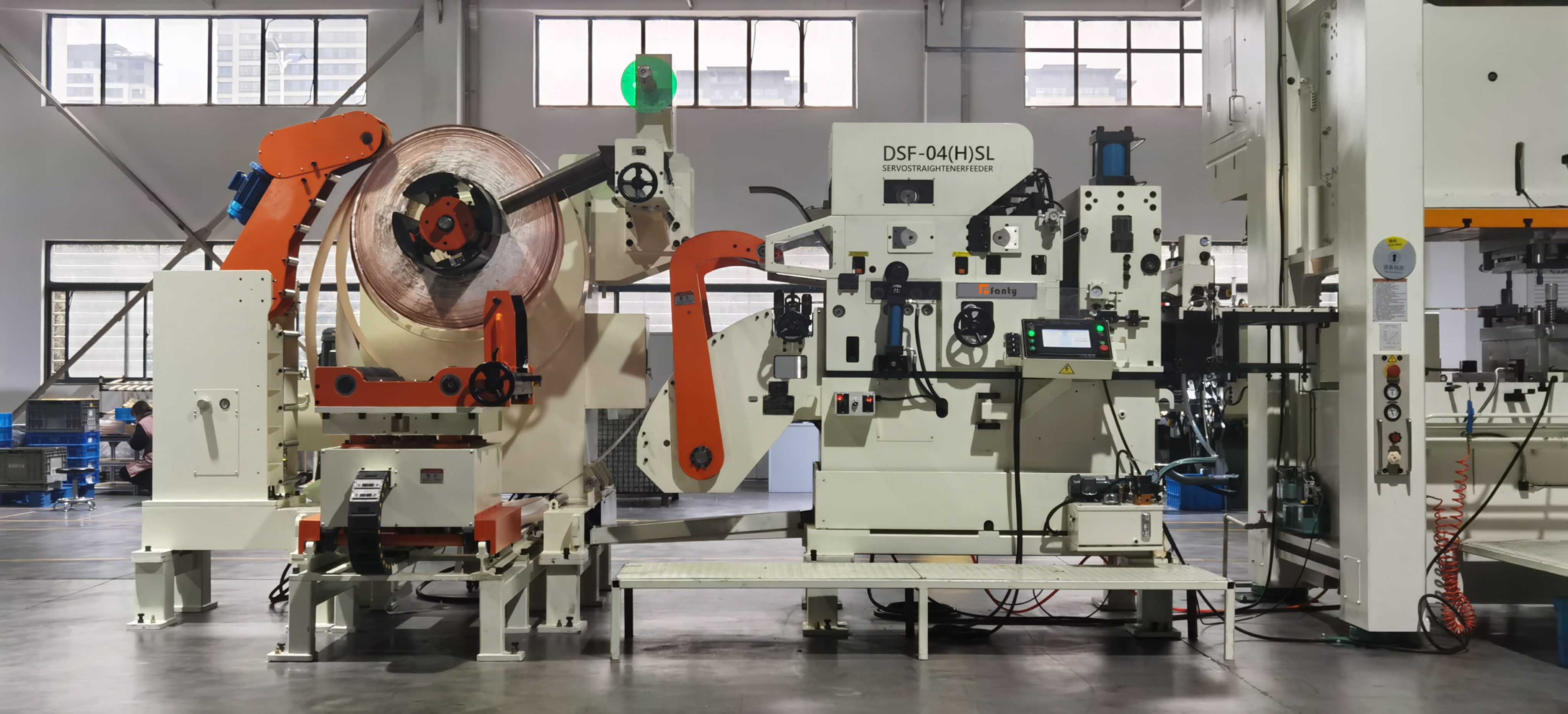 Adjusting the straightening rolls of an NC Straightener Feeder to remove strip curl before the strip enters the press.
How Do You Diagnose the Direction and Severity of Strip Curl?
Before you touch the straightener, diagnose the curl with three quick tests.
Record the results: direction, severity in millimetres of lift at the strip ends, whether it is uniform or one-sided, and the speed at which it appears. This record turns a vague complaint into a precise adjustment instruction, which is exactly how a service engineer diagnoses a curl problem over the phone.
How Do You Adjust the NC Straightener Feeder to Fix Curl?
With the diagnosis recorded, adjust the straightener in small, repeatable steps. Never make a large adjustment at once; the straightener is a lever system, and a full turn of the adjustment screw changes the strip's flatness dramatically.
- Start from the material baseline. Set the roll gap to the value in the material table for your thickness and yield strength.
- Increase penetration for downward coil-set. If the strip curls upward at the ends, deepen the upper roll bank by a quarter turn at a time.
- Decrease penetration for upward coil-set. If the strip curls downward, raise the upper roll bank by a quarter turn.
- Level the roll bank for one-sided curl. Adjust the left and right screws independently until the lift is equal on both edges.
- Re-test with a fresh sample. Cut a new 300 mm sample after each adjustment and measure the end lift.
- Save the working settings. Write the final penetration, level, and pressure into the recipe for that material and thickness.
- Confirm at production speed. Run a full feed cycle at target speed and verify the strip stays flat through the die entry.
Strip Curl Troubleshooting Reference
Use this table when a curl symptom shows up on the floor. It maps the symptom to the likely cause and the first adjustment to try.
| Symptom | Likely Cause | First Fix to Try |
|---|---|---|
| Strip ends curl upward (smile) | Downward coil-set, insufficient penetration. | Deepen upper roll bank a quarter turn. |
| Strip ends curl downward (frown) | Upward coil-set, too much penetration. | Raise upper roll bank a quarter turn. |
| Curl worse on one edge | Roll bank not level side to side. | Level the left and right adjustment screws. |
| Curl appears only at high speed | Feed acceleration lifting the strip. | Soften the acceleration profile, check loop tension. |
| Curl after a material change | Settings from the old material retained. | Recall the recipe for the new material or set baseline. |
| Curl returns mid-coil | Coil-set varies along the coil length. | Increase penetration slightly; consider a second pass. |
| Curl with marks on the strip | Roll pressure too high for the material. | Reduce pressure, check roll surface condition. |
| Curl on thin high-tensile strip | Work-roll diameter too large for the gauge. | Consult the supplier about a small-diameter roll set. |
How Do You Stop Strip Curl From Coming Back?
Fixing curl once is easy; keeping it fixed is a matter of process. The first prevention step is recipe discipline: every material, thickness, and yield strength combination gets its own saved recipe on the HMI, and operators recall it instead of re-tuning from memory.
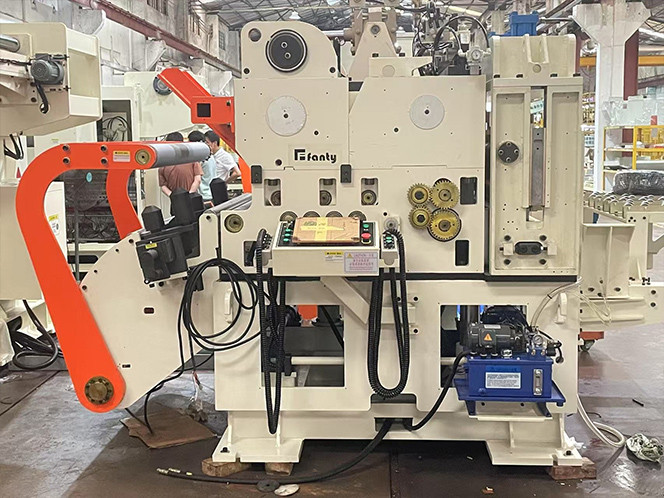 Flat strip exiting an NC Straightener Feeder into the die entry of a stamping press line.
Frequently Asked Questions About Fixing Strip Curl
What is the difference between strip curl and edge wave?
Curl is a longitudinal bending along the strip length, like a coil trying to re-form. Edge wave is a wavy deformation along the strip edges. Curl is fixed with roll penetration and leveling; edge wave is usually fixed with edge roll pressure or a different roll geometry.
How much roll penetration should I use for 1 mm steel?
Start from the material table in the feeder manual; a typical baseline is a small positive penetration that just removes the coil-set. Tune in quarter-turn steps and verify with a 300 mm sample rather than relying on a fixed number.
Can too much straightening pressure damage the strip?
Yes. Excessive pressure work-hardens the strip, raises its yield strength, and can leave roll marks or micro-cracks on the surface. Use the minimum penetration that produces flat strip, and check the strip for marks after adjustment.
Why does the same coil curl more at the end than the start?
Coil-set is not uniform along the coil length. The outer wraps have less curvature memory, and the inner wraps have more. If the tail end curls more, increase penetration slightly for the last portion or slow the feed speed.
Do I need a different straightener for high-tensile steel?
Often yes. High-tensile material has a higher yield strength and needs more work to flatten, which favors a straightener with larger work rolls and higher rigidity. FANTY offers heavy-duty straightener heads for high-tensile and stainless strip.
How do I save the correct settings for a material?
Once the strip is flat at production speed, store the settings as a named recipe on the HMI: material, thickness, width, penetration, level, pressure, and feed speed. Operators recall the recipe on the next run of that coil.
Your Strip Curl Fixing Action Plan
Strip curl is a diagnosis problem first and an adjustment problem second. Measure the direction and severity with a sample, identify whether it is uniform or one-sided, adjust the roll penetration and level in quarter-turn steps, and verify at production speed.
Related reading
- how leveling improves strip flatness
- how to set roll pressure
- how to hit a flatness spec on a coil line
Part of the 3-in-1 decoiler straightener feeder — the full library of coil handling, straightening and feeding guides from FANTY.
Struggling with strip curl on your line?
Send your material grade, thickness, and a photo of the curl. FANTY engineers will help you tune your NC Straightener Feeder or recommend the right straightener head.
Ask a Straightener Engineer