How to Load Coils Safely with a Hydraulic Decoiler?
- Share
- publisher
- David Park - Senior Stamping Engineer, FANTY Machinery
- Issue Time
- Aug 4,2026
Summary
A complete coil loading safety guide for hydraulic decoilers: preparation, mandrel expansion, strapping removal, and the safety features to require.
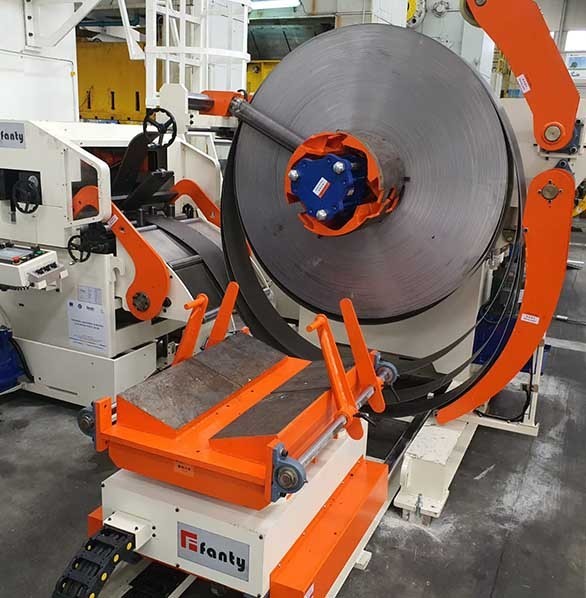
Loading a heavy coil onto a hydraulic decoiler is one of the highest-risk operations in a stamping plant. Coils can weigh several tons, and a coil that shifts, springs, or drops during loading can injure operators and damage the machine.
Safe coil loading is a combination of correct equipment setup, disciplined procedure, and the right safety devices.
This guide explains the complete loading sequence for a hydraulic decoiler, the common mistakes that cause accidents, and the safety features every modern hydraulic decoiler should have, so your team can load coils quickly without compromising safety.
Why Hydraulic Decoilers Are Safer and Easier to Load
A hydraulic decoiler uses a hydraulic cylinder to expand the mandrel segments outward against the coil inner diameter.
Hydraulic decoilers also support powered coil loading aids. Many models include an independent hydraulic arm, a coil trolley, or a loading car that lifts the coil from floor level and slides it onto the mandrel.
This removes the need for a forklift to push the coil directly onto the mandrel, which is one of the most common causes of mandrel damage and coil edge damage. When the loading car is used correctly, the coil is centered and transferred gently, protecting both the material and the machine.
Modern control systems add another layer of safety: interlocks that prevent mandrel expansion unless the coil is in the correct axial position, sensors that detect coil presence and strap condition, and automatic tension control that prevents the coil from spinning out of control when the trailing end is released.
These features turn loading from a manual skill into a controlled, repeatable process.
Step-by-Step Coil Loading Procedure
Follow this sequence every time, without shortcuts. The procedure assumes the decoiler is equipped with a hydraulic arm or loading car; if not, the forklift-based steps must be handled with extra care.
Step 1: Prepare the decoiler
Retract the mandrel fully, confirm the hydraulic pressure is at the specified level, and set the expansion to the correct coil inner diameter. Verify that the coil cradle or V-plate is positioned to receive the coil, and that the area around the decoiler is clear of tools, oil, and personnel.
Step 2: Position the coil
Move the coil to the decoiler using a coil trolley or forklift, keeping the coil's eye aligned with the mandrel axis. Check the coil for damaged strapping, loose wraps, or telescoping edges. A coil with broken strapping must be re-banded before lifting; never trust a damaged coil to hold together during loading.
Step 3: Slide the coil onto the mandrel
Use the hydraulic arm or loading car to lift and advance the coil onto the mandrel until it contacts the back stop. If using a forklift, approach slowly and do not push the coil with the forks; position it so the mandrel can enter the coil eye, then withdraw the forklift before expanding.
Step 4: Expand the mandrel
Activate the hydraulic expansion and watch the segments contact the coil inner diameter evenly. The coil must be gripped firmly enough that it cannot rotate on the mandrel under load, but the expansion must not deform the coil inner wraps. Confirm the coil is flush against the back plate, with no gap indicating misalignment.
Step 5: Remove strapping and thread the material
Cut the coil strapping only after the mandrel is expanded and the coil is secure. Cut straps one at a time, standing to the side in case the strap whips or the coil end springs outward. Thread the material through the straightener and feeder, and only then release the coil end for production.
Step 6: Adjust tension and run
Set the decoiler braking or tension control according to the material thickness and line speed. A hydraulic decoiler with an auto-centering reel and brake control maintains steady back tension, which prevents material from looping or stretching during stamping. Observe the first few strokes to confirm stable unwinding before ramping to full speed.
Common Coil Loading Mistakes and How to Avoid Them
Most coil loading accidents follow a recognizable pattern. Recognizing these mistakes is the first step to preventing them. The table below lists the most frequent errors observed in stamping plants, together with the correct practice.
| Common Mistake | Consequence | Safe Practice |
|---|---|---|
| Expanding mandrel before coil is fully seated | Coil shifts or drops off mandrel | Verify axial position against back stop before expansion |
| Cutting strapping before expansion | Coil springs open, injury risk | Expand mandrel first, then cut straps one at a time |
| Pushing coil with forklift forks | Mandrel and coil edge damage | Use hydraulic loading arm or coil trolley |
| Loading oversized coil beyond rated capacity | Mandrel overload, structural failure | Match coil weight and diameter to decoiler rating |
| Skipping coil inspection | Damaged coil fails during unwinding | Inspect strapping and edges before every load |
| Standing in front of coil eye during loading | Crushing injury if coil falls | Stand to the side, keep clear of the coil path |
| Ignoring mandrel wear | Poor grip, coil slip during production | Inspect and replace expansion segments regularly |
Notice that every consequence in the table is avoidable with procedure and equipment. The most dangerous moment is the transition between lifting and expanding, which is exactly why interlocks and remote pendants are so valuable: they remove the operator from the danger zone during that transition.
Safety Features to Require on Your Hydraulic Decoiler
When selecting or upgrading a hydraulic decoiler, treat safety features as mandatory, not optional. At a minimum, require the following:
- Remote pendant control
All expansion, rotation, and arm movements are controlled from a handheld pendant so the operator never reaches into the loading zone.
- Coil position interlocks
Sensors confirm the coil is seated correctly before the mandrel is allowed to expand, preventing misalignment accidents.
- Hydraulic pressure monitoring
Low-pressure alarms and automatic mandrel retraction prevent operation with insufficient clamping force.
- Emergency stop and guards
Readily accessible emergency stops and safety guards around rotating parts and the coil area protect personnel at all times.
- Trailing end control
A brake or anti-spring device controls the free end of the coil so it cannot whip or unwind uncontrollably after the last wrap.
- CE certification and documentation
A CE-marked decoiler with an operation manual, risk assessment, and maintenance schedule gives you a documented safety baseline.
FANTY's hydraulic decoilers are built to CE standards and include remote pendants, coil position sensors, hydraulic pressure monitoring, and automatic braking as standard equipment.
With 12 years of coil processing experience and more than 200 lines installed in 60-plus countries, FANTY engineers design the loading process into the machine, so safe operation is the default rather than the exception.
Building a Safer Loading Culture
Equipment alone cannot guarantee safety; the operating culture decides whether the procedure is followed every shift. Start each shift with a two-minute loading review, designate one person to verify each load, and stop the line immediately if any step feels wrong.
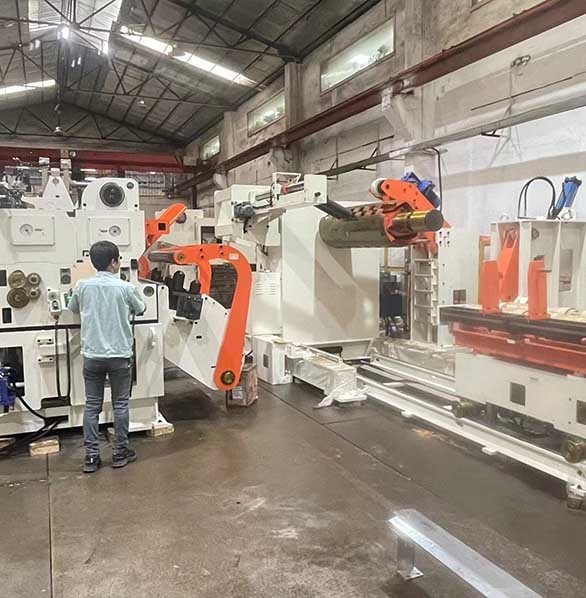
Training matters more than most plants realize. New operators should not learn coil loading by watching and copying; they need structured training that covers the physics of coil handling, the emergency procedures, and the exact sequence above.
An operator who understands why the mandrel must be expanded before cutting straps is far less likely to skip the step when production pressure builds.
Finally, review your decoiler's maintenance schedule seriously. Hydraulic cylinders, valves, seals, and expansion segments wear over time, and a worn system can lose clamping force without any visible sign.
Replace seals on schedule, test the hydraulic pressure monthly, and inspect the mandrel segments for scoring and wear. A hydraulic decoiler that is maintained properly is predictable, and predictable equipment is safe equipment.
Hydraulic Decoiler Safety FAQ
Can I load a coil with a forklift directly onto a hydraulic decoiler?
It is possible, but not recommended. Forklift loading pushes the coil and can damage the mandrel, the coil edge, or the back plate. A hydraulic loading arm or coil trolley lifts and slides the coil gently, which protects both the machine and the material and is much safer for the operator.
Why is it dangerous to cut coil strapping before mandrel expansion?
Coil strapping holds the coil tightly together. If you cut the straps while the coil is unsupported, the tensioned wraps can spring outward violently, causing injury and damaging the coil. Always expand the mandrel first so the coil is gripped internally, then cut straps one at a time from the side.
How tight should the hydraulic mandrel be expanded?
The mandrel should grip the coil firmly enough that it cannot rotate on the mandrel during production, but not so hard that it deforms or scratches the inner wraps. Check the manufacturer's recommended pressure for your coil inner diameter and material thickness, and verify the grip after the first rotation.
What routine maintenance does a hydraulic decoiler need?
Check hydraulic oil level and pressure monthly, inspect cylinders and hoses for leaks, lubricate the expansion mechanism and bearings, and inspect mandrel segments for wear. Replace seals according to the schedule and verify the emergency stop and interlocks at least once per week.
How do I prevent a coil from telescoping during unloading?
Telescoping is usually caused by a worn or misaligned mandrel, incorrect expansion, or material with inconsistent winding. Keep the mandrel segments in good condition, expand evenly, and if telescoping persists, inspect the coil itself and the previous processing stage that wound it.
Related reading
- how a decoiler mandrel grips a coil
- what causes coil telescoping
- how to specify a decoiler for a coil line
Part of the the coil line guide library — the full library of coil handling, straightening and feeding guides from FANTY.
Upgrading to a safer, more efficient coil loading line? Talk to FANTY's engineers about hydraulic decoilers with loading arms, interlocks, and CE certification built in. Get a free line consultation for your material sizes.
Request My Free Consultation →Fanty · Coil Handling Equipment
From 1 to 20 Ton Coils, We Build the Decoiler to Fit
Share your coil spec sheet and we confirm hydraulic versus mechanical, single versus double head, and the expansion range that keeps changeover under five minutes.
Get a Free QuoteFANTY Machinery · 13 years on stamping automation · 2,000+ coil lines installed · engineers reply within 24 hours