How to Load a Coil Without Damaging the Mandrel
- Share
- publisher
- David Park - Senior Stamping Engineer, FANTY Machinery
- Issue Time
- Oct 27,2026
Summary
A decoiler mandrel is asked to hold five tonnes of steel and expand into a bore it cannot see, and most of its damage happens in the ninety seconds before the coil turns. This article sets out the six coil checks to make before the crane moves, eight loading steps from floor to first turn, and the five failure modes behind almost every mandrel repair. It also names the coils that should never go on a standard mandrel.
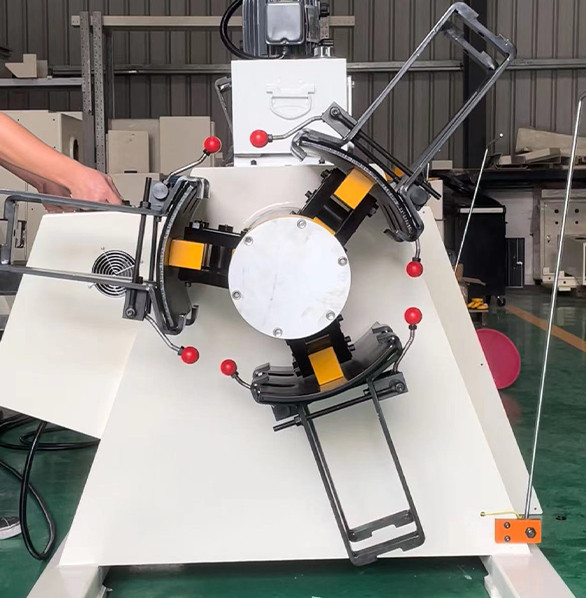
A mandrel is the most abused part of any decoiler. It is asked to hold five tonnes of steel, expand into a bore it cannot see, and survive a crane operator working to a 20 mm tolerance.
Most mandrel damage happens in the ninety seconds before the coil turns, not during production. Loading procedure is where the decoiler mandrel life is decided.
Check the Coil Before the Crane Moves
Six things decide whether a coil is safe to load. Four of them can be checked from the floor with a tape and a torch.
Start with the bore. A 508 mm core that has been crushed to 495 mm will not accept a fully expanded mandrel, and forcing it shears wedges.
Out-of-round is the second check. Roll a straight edge across the bore and look for a gap; anything over 5 mm of ovality needs a sleeve or a different coil.
Weight is the third. The mandrel and spindle are rated as a pair, and a coil at 110% of the nameplate figure will bend a spindle long before it visibly fails.
Then look at the wrap. A coil that has been dropped on its edge has an inner lap pushed inward, and that lap will bind on the segments as they expand.
Banding and strapping come last. Rusted band that snaps under tension is a handling hazard, and a coil that has already started to open has lost its stored energy control.
Banding and strapping come last. Rusted band that snaps under tension is a handling hazard, and a coil that has already started to open has lost its stored energy control.
Measure the bore with an internal caliper at two points 90 degrees apart. A single measurement misses ovality, which is the condition that does most segment damage.
Check the coil ticket against the nameplate on the uncoiler before anything lifts. A 7.5 tonne coil on a 5 tonne decoiler is a crane problem that becomes a spindle problem in under a second.
Confirm the coil car capacity as well. The car is rated for weight and for diameter, and a car at its weight limit with the mast extended is unstable in a way operators notice only once.
| Coil condition | What you see | What it does to the mandrel |
|---|---|---|
| Crushed bore | Flat spot, bore under 500 mm | Wedges forced against a hard stop, segment corners crack |
| Oval core | Gap under a straight edge over 5 mm | Two segments carry the whole load, localised yielding |
| Inner lap pushed in | Visible fold inside the bore | Segment scoring and a coil that will not seat square |
| Rusted or scaled bore | Flaking, high friction | Incomplete expansion, coil creeps under torque |
Eight Steps From the Floor to the First Turn
The sequence below is written for a coil car feeding a horizontal decoiler. A crane-loaded uncoiler follows the same order with the crane replacing steps two and three.
- 1. Park the mandrel collapsed and level. Segments fully retracted, spindle at the height marked on the frame.
- 2. Bring the coil car to the bore axis. Align on the bore centre, not the coil outside diameter, which varies with wrap.
- 3. Insert to at least 80% of coil width. A coil hanging on the mandrel nose bends the spindle and marks the segments.
- 4. Expand to light contact only. Stop at the point where the coil stops rocking on the segments.
- 5. Lift 50 mm and hold. A ten-second hold shows a coil that is not seated before it is two metres in the air.
- 6. Expand to full working pressure. Only now, with the coil supported and square, take the mandrel to its rated figure.
- 7. Set the snubber or hold-down roll. Contact, not pressure, until the strip tail is cut and the first turn is under control.
- 8. Cut band, release the tail, creep one turn. Run at thread speed until the strip is on the line and the coil is turning true.
Step five is the one operators skip. It costs ten seconds and catches the crushed bore, the misaligned car and the coil that only looked seated.
Step five is the one operators skip. It costs ten seconds and catches the crushed bore, the misaligned car and the coil that only looked seated.
Step three has a reason behind the 80% figure. A coil supported on the mandrel nose loads the spindle in bending rather than in shear, and the nose is the thinnest section of the assembly.
Step eight matters because a coil released at full line speed whips. Thread speed exists to let the strip find the pass line before tension is applied.

Where the Mandrel Actually Takes the Damage
Five failure modes account for almost every mandrel repair we see on an uncoiler that is otherwise in good order. They differ in cause and in cost.
Segment scoring is the most common and the cheapest to prevent. It comes from expanding against a dirty bore, and a wire brush on a pole removes most of the risk.
Wedge wear follows. Every expansion cycle slides a wedge against a mating face, and after 30,000 cycles the lost travel shows up as a mandrel that no longer grips a 508 mm core.
Spindle bend is rarer and much more expensive. It needs a coil inserted on the nose only, or a lift that started before the mandrel was expanded.
Segment cracking happens at the corners, where the section is thinnest and the stress concentration is highest. It usually starts with a crushed bore and a forced expansion.
Key and shear-pin failure is the designed outcome, not a defect. Something has to give when a coil jams, and a shear pin is cheaper than a gearbox.
Key and shear-pin failure is the designed outcome, not a defect. Something has to give when a coil jams, and a shear pin is cheaper than a gearbox.
The cost spread between these modes is wide. A segment set is a few thousand euros and a week of lead time. A spindle is a machine rebuild, and the decoiler leaves the floor.
That asymmetry is the argument for the loading procedure. Nine of the ten minutes it costs are spent preventing the two failures that stop production for a month.

When a Coil Should Not Go On the Mandrel
A standard expanding mandrel is a compromise, and some coils fall outside it. Loading them anyway is how a five-year mandrel becomes a two-year mandrel.
Narrow slit coils are the clearest case. A 120 mm wide coil on a 1,300 mm mandrel puts the load on one segment and bends the rest of the assembly.
Thin-wall cores are the second. A paper or light-gauge core will collapse before the segments reach working pressure, so the coil spins on a collapsed core instead of on steel.
Coils above the nameplate weight are the third. No procedure fixes that; the answer is a larger uncoiler machine or a coil car with a split load.
Heavily rusted bores are the fourth. The mandrel will expand, but not evenly, and the coil will run eccentric by several millimetres, which shows up as tension variation rather than as a visible fault.
Below about 300 mm of coil width, ask for a sleeve or a dedicated narrow mandrel set. It is a cheap accessory against a segment replacement.
Below about 300 mm of coil width, ask for a sleeve or a dedicated narrow mandrel set. It is a cheap accessory against a segment replacement.
Coils with damaged outer wraps belong in the same list. The damage is not at the bore, but the loose wrap will catch the snubber roll and pull the coil off square as it unwinds.
None of these conditions is a reason to refuse the coil. Each is a reason to change how it is loaded, and the change is usually a sleeve, a spacer or a slower first turn.
What to Record After Every Load
Five fields on a load sheet turn mandrel wear from a surprise into a trend. The sheet takes forty seconds and pays for itself the first time a wedge needs replacing.
| Record | Why it matters | What it costs to skip |
|---|---|---|
| Coil ID and bore measured | Links damage to a specific coil lot | You blame the operator when the coil was out of tolerance |
| Expansion pressure | Shows whether the mandrel reached rated grip | Creep under torque is diagnosed as a brake fault |
| Insertion depth | Catches the coil hanging on the nose | Spindle bend appears with no obvious cause |
| Operator initials | Makes the procedure traceable | Training gaps stay invisible until a failure |
| First-turn notes | Runout, noise, strip wander | Early scoring is found at the next service instead |
After twelve months the sheet shows which coils and which shifts cause the damage. That is a training answer, not a hardware answer.
After twelve months the sheet shows which coils and which shifts cause the damage. That is a training answer, not a hardware answer.
Keep the sheet with the machine, not in an office. A log that lives at the uncoiler gets filled in; one that lives in a folder does not.
Review it at every service interval. Two consecutive entries with the same expansion pressure and a rising runout note is the earliest warning a mandrel gives.
The specification side of the same decision, from capacity through type and mandrel to control, is set out in the coil line guide library.
How much mandrel expansion is too much on a 508 mm core?
Most segments travel 20 to 30 mm in total. If a 508 mm bore needs more than 12 mm of expansion to grip, the core is worn or the coil is oversize and should be sleeved.
Can a 5-tonne coil go on a 3-tonne decoiler?
No. The rating covers the mandrel and spindle together, and a 65% overload bends a spindle in a single lift. Split the coil or use a larger uncoiler machine.
How often should mandrel segments be inspected?
Every 500 loading cycles, or quarterly on a two-shift operation. Look for corner cracks, a polished wear band on the wedges and any segment sitting proud of the others.
Where to go next
Loading procedure protects the mandrel you have. Choosing the right one in the first place is a four-stage decision, and it is worked through in order in our coil line knowledge base.
The Coil Line Guide Library