How to Maintain a Hydraulic Decoiler for Maximum Life?
- Share
- publisher
- David Park - Senior Stamping Engineer, FANTY Machinery
- Issue Time
- Aug 13,2026
Summary
Extend hydraulic decoiler lifespan with our maintenance checklist. Protect your 3-in-1 decoiler straightener feeder line with FANTY hydraulic decoiler best practices.
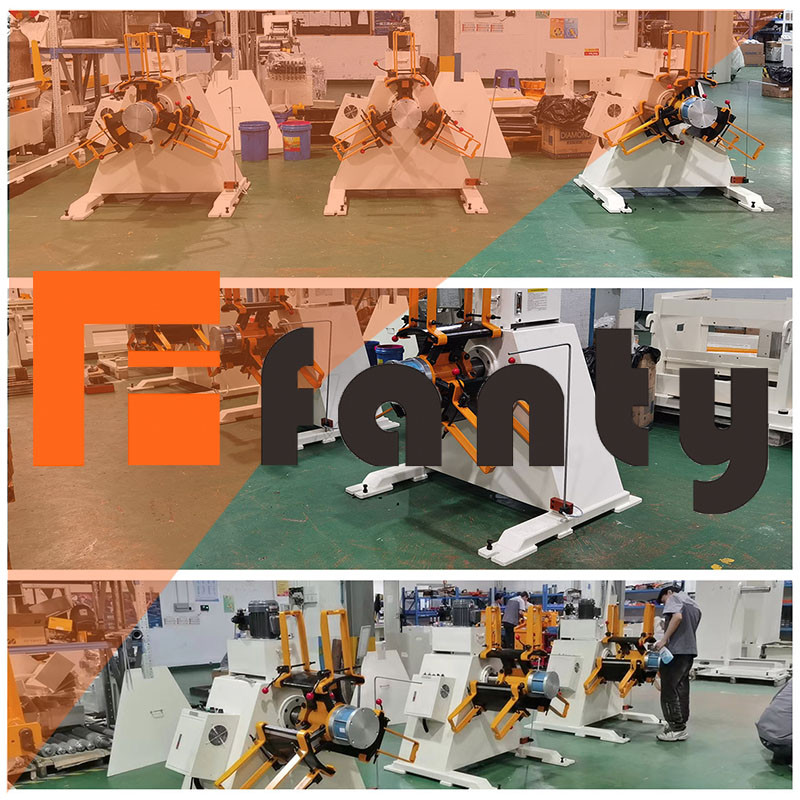
The decoiler is the first machine in every coil-fed stamping line, and it takes the harshest mechanical punishment: full coil weight, constant rotation, and the shock of every coil change.
Yet it is also the most neglected machine on the floor, because it works quietly in the background while engineers watch the press and the NC Straightener Feeder do the visible work. That neglect is expensive.
A hydraulic decoiler that is maintained on a simple, disciplined schedule will easily run 10-15 years with only routine parts, while an ignored one will fail at five years and take the entire line down with it.
This guide lays out the maintenance plan FANTY's own service engineers use for the 200+ decoiler lines we support worldwide, covering daily checks, the hydraulic system, mechanical wear points and the failure modes that end decoiler life early.
Understand Your Hydraulic Decoiler Before You Maintain It
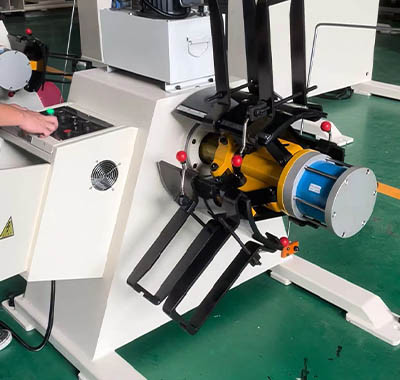
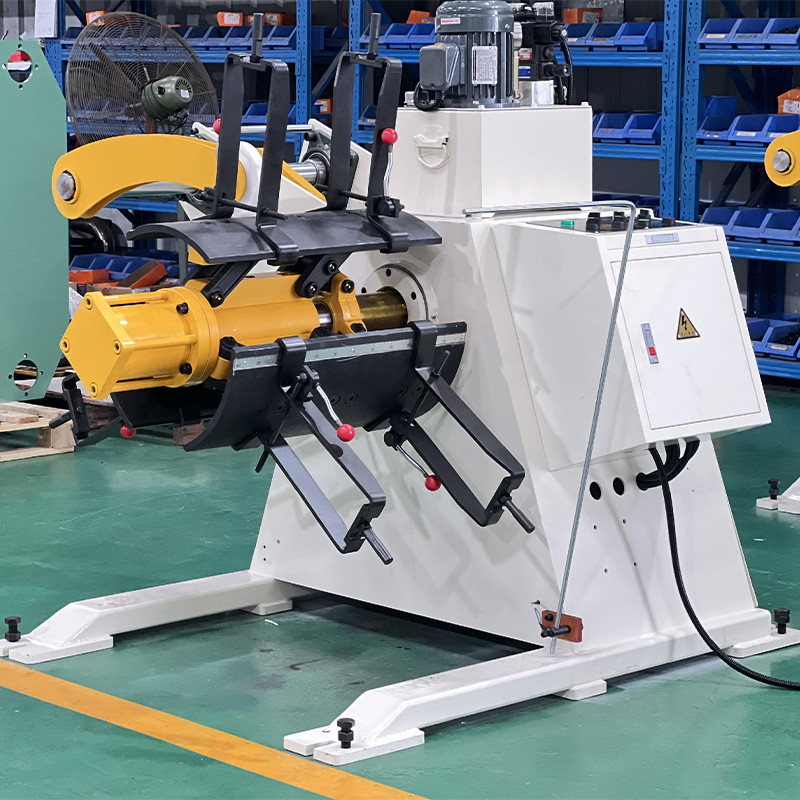
A typical hydraulic decoiler combines a coil cradle or expanding drum, a rotation drive, and a hydraulic system that powers the drum expansion, the hold-down rolls and the braking or pay-off control.
The most common cause of early decoiler failure is not mechanical wear but hydraulic contamination. Dirt, water and degraded oil are the killers. A decoiler's hydraulic system works at high pressure and relatively low volume, which makes it sensitive to viscosity changes and particulate contamination.
When the oil becomes contaminated, pump wear accelerates silently, valve spools stick, and cylinder seals fail — all of which show up as slow drum expansion, drifting clamp pressure or creeping pay-off control before they become catastrophic failures.
This is why oil discipline is the single most valuable maintenance habit on a hydraulic decoiler. Use the grade specified by the manufacturer, sample and test the oil annually, and never top up with an unknown fluid. The cost of an oil analysis is trivial compared with the cost of rebuilding a hydraulic pump on a Saturday.
Daily and Weekly Checks That Catch Problems Early
- Check the oil level in the reservoir each morning; low level is the earliest indicator of a developing leak.
- Inspect under the machine for puddles or drips; trace any oil mark to its source before wiping it away.
- Watch the drum expansion cycle; it should be smooth and firm, with no creeping after clamping.
- Listen for unusual noise from the pump and bearings during pay-out; changes in sound precede most failures.
- Weekly, check hoses for chafing, bulges or hardening at the fittings, especially near moving parts.
- Weekly, verify the pay-off brake or servo control holds strip tension without hunting or surging.
Hydraulic Decoiler Maintenance Schedule
| Interval | Task | Detail |
|---|---|---|
| Daily | Visual and level check | Oil level, leaks, drum clamp action, unusual noise |
| Weekly | Hose and fitting inspection | Chafing, bulges, hardened hoses, loose fittings |
| Monthly | Air filter and breather check | Clean or replace reservoir breather; check tank pressure relief |
| Quarterly | Bearing and drum run-out check | Measure drum run-out; re-torque mounting bolts |
| Every 6 months | Oil sample and test | Particle count, viscosity, water content; change if out of spec |
| Every 12 months | Full hydraulic service | Replace oil and filters, inspect pump and valves, check accumulators |
| Every 24 months | Seal and cylinder overhaul | Rebuild cylinders, replace seals and wear rings |
Hydraulic System Care: The Part Most Shops Get Wrong
Three hydraulic habits separate long-lived decoilers from short-lived ones. First, keep the reservoir breather clean. As oil drains from the reservoir during cylinder cycles, air must enter to replace it, and that air passes through the breather. A clogged or missing breather turns the reservoir into a vacuum pump that sucks in dust and moisture. Second, respect the filter schedule. Hydraulic systems fail on contamination, not on oil age alone, and the return-line filter is your only defence between the cylinders and the pump. Third, warm the system properly. Cold, viscous oil is the hardest condition a hydraulic pump faces; if your climate demands it, let the system idle and circulate before the first heavy cycle of the day.
Watch the pay-off side as well. In a drag-brake decoiler, the brake surfaces convert strip tension into heat, and contaminated brake linings cause uneven tension that shows up as scrap at the NC Straightener Feeder.
In a servo or hydraulic pay-off decoiler, keep the feedback sensors clean and calibrated, because a drifting sensor will make the control hunt, wasting energy and wearing the drive train.
Mechanical Wear Points and When to Rebuild Them
The drum expansion mechanism is the decoiler's most stressed mechanical system. Expanding segments slide against guides under full coil clamping load, and when those surfaces wear, the drum stops expanding evenly.
An uneven drum produces an eccentric coil, which leads to strip flutter, edge damage and speed variation that the straightener and feeder must absorb. If your drum shows visible high spots, or the coil sits visibly off-centre after clamping, the expansion guides and wedges need attention.
Bearings deserve the same respect as hydraulic oil. The main drum bearings carry the full coil weight continuously, and a failing bearing announces itself through noise and heat long before it seizes. Infrared temperature measurement once a quarter is a cheap, effective way to spot a bearing that is running hot.
The gearbox, typically a worm or planetary type, needs its oil checked and changed on schedule; a worm gearbox run dry can destroy itself in a single shift.
Finally, record everything. A one-page log per decoiler — oil changes, filter changes, bearing temperatures, run-out measurements, parts replaced — turns maintenance from guesswork into engineering.
FANTY's service team provides log templates with every line we commission, because a machine with a good record is a machine that gets serviced at the right time, not after it fails.
How Decoiler Care Protects the Whole 3-in-1 Line
Your decoiler never works alone. It feeds the straightener and feeder, and every fault upstream becomes a quality problem downstream. An eccentric coil from a worn drum puts cyclic load into the straightener rolls.
Viewed this way, decoiler maintenance is not a cost centre but the cheapest insurance your stamping line has. The discipline that keeps the hydraulic system clean, the drum true and the bearings cool is the same discipline that keeps feed accuracy at ±0.05 mm and output at 200 SPM, shift after shift.
It is also the discipline that lets a decoiler outlive the contract it was bought for, and then some.
Frequently Asked Questions
How often should hydraulic decoiler oil be changed?
Base the interval on oil testing rather than a fixed calendar. Annual sampling is the minimum; if the particle count or water content exceeds spec, change the oil and filter immediately. Heavily loaded decoilers in hot environments may need six-month changes.
What is the most common cause of hydraulic decoiler failure?
Contaminated or degraded hydraulic oil. Dirt, water and wrong-viscosity oil accelerate pump wear, cause valve sticking and destroy cylinder seals. Keeping the reservoir breather clean and following the filter schedule prevents most premature failures.
How long should a hydraulic decoiler last?
With disciplined maintenance, 10-15 years is realistic for the machine as a whole, with wear items — bearings, hoses, seals — replaced on schedule. Without maintenance, five years is common before a major failure takes the line down.
Can a worn decoiler damage my NC Straightener Feeder?
Yes. An eccentric drum or surging pay-off control puts cyclic load and inconsistent tension into the straightener and feed rolls, accelerating their wear and degrading flatness and feed accuracy. Keeping the decoiler healthy protects the entire 3-in-1 decoiler straightener feeder line.
Related reading
- how to thread a coil onto a decoiler
- how a decoiler mandrel grips a coil
- how to specify a decoiler for a coil line
Part of the the coil line guide library — the full library of coil handling, straightening and feeding guides from FANTY.
Keep your decoiler running for 15 years
FANTY supplies hydraulic and servo decoilers engineered for long service, plus the maintenance documentation and spare parts to keep them running. Built by 370 specialists in a 45,000 m² CE-certified factory, trusted in 60+ countries.
Get Decoiler Maintenance Support