How to Match Your Decoiler with an NC Straightener Feeder for Stable Feeding?
- Share
- publisher
- David Park - Senior Stamping Engineer, FANTY Machinery
- Issue Time
- Aug 7,2026
Summary
Learn how to size and match a decoiler to your NC Straightener Feeder. Coil weight, width, mandrel, speed matching, and alignment tips from FANTY.
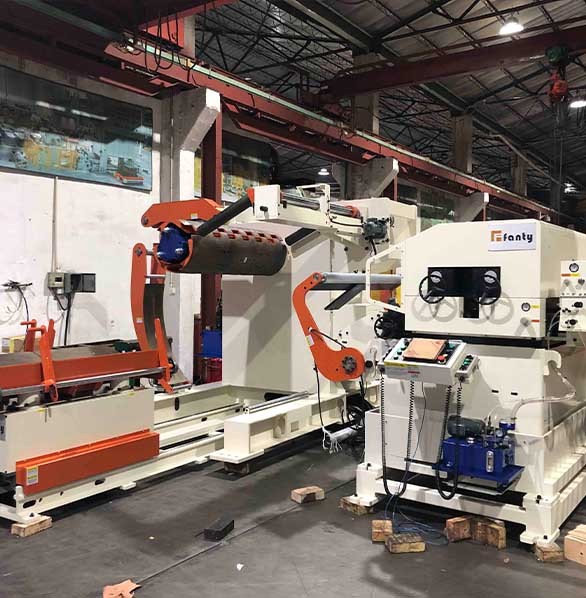
Your decoiler is the first machine in the coil feeding line — and the one most people under-spec. If you are pairing it with an NC Straightener Feeder, getting the decoiler right matters even more: a decoiler that is too small, too slow, or poorly matched will create tension fluctuations that defeat the straightener's precision. This guide explains exactly how to size and match a decoiler to your NC Straightener Feeder for stable, high-quality feeding.
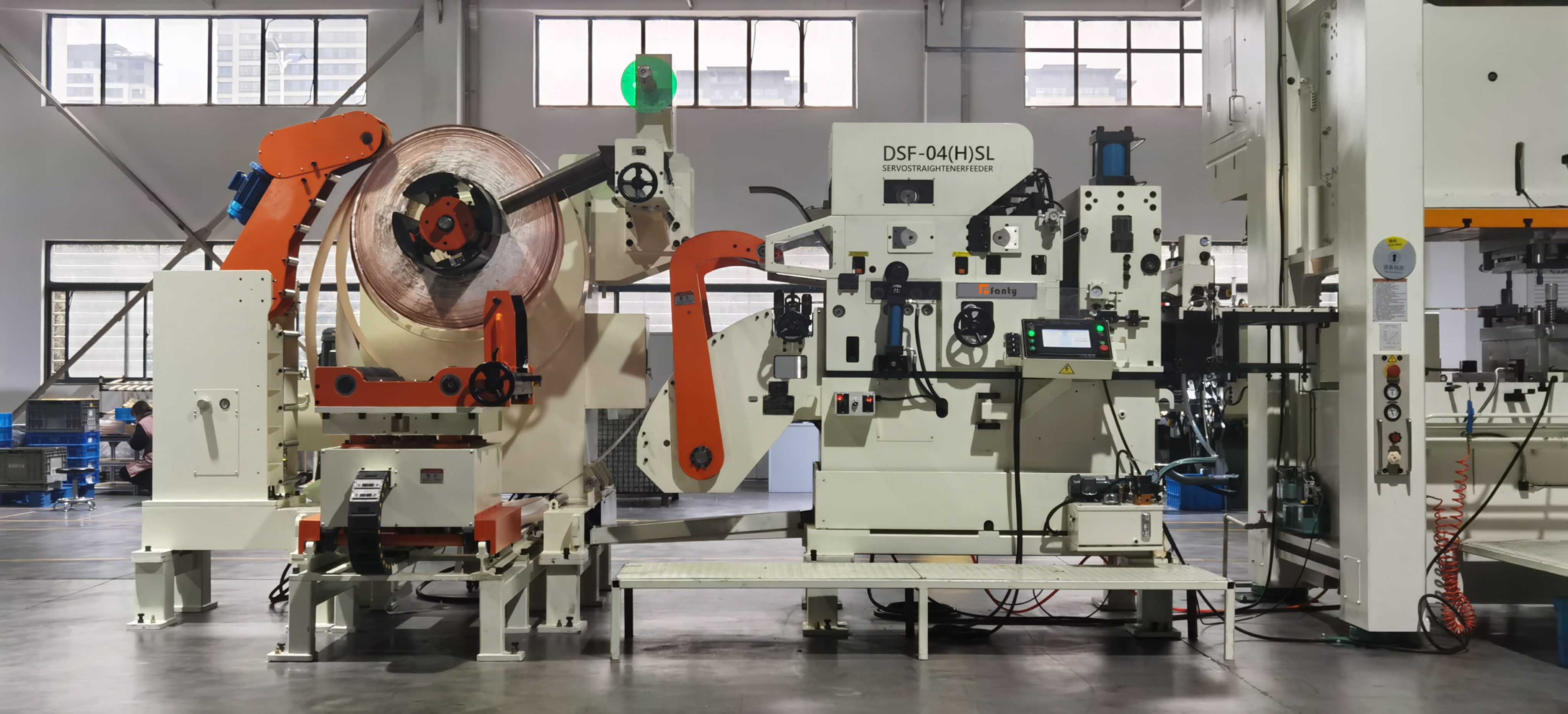
The Three Numbers That Matter
Decoiler selection comes down to three critical dimensions. Get all three right and your line feeds smoothly; get one wrong and you will fight it every shift.
| Parameter | Why It Matters | How to Choose |
|---|---|---|
| Coil weight capacity | Determines bearing size, frame strength, and drive power | Size for your heaviest coil + 20% safety margin |
| Material width | Defines mandrel length and side guide position | Match your widest strip; 200-1,600 mm typical |
| Mandrel expansion range | Must grip the coil inner diameter securely | Standard 450-530 mm ID; custom options available |
Coil Weight Capacity
Coil weight is the biggest factor. Manual decoilers handle up to 500 kg, motorized units 500-3,000 kg, and hydraulic decoilers 3,000-20,000 kg. If your heaviest coil is 2.5 tons, a 3,000 kg motorized decoiler gives you only a 20% margin — workable but tight. A hydraulic unit with a coil car is the safer choice when coils regularly approach the rating.
Material Width
The mandrel length and side guide span must accommodate your widest strip. Running a 600 mm coil on a machine built for 300 mm causes edge damage, strip wandering, and inconsistent feeding. Always confirm the width rating matches the coil you actually plan to run — not just the brochure maximum.
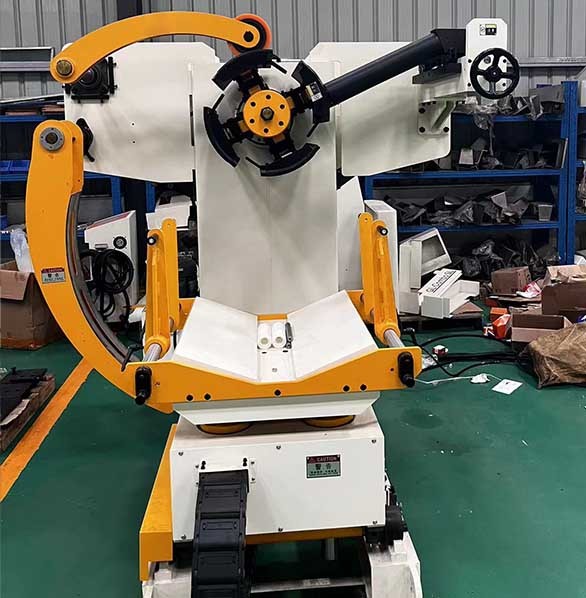
Matching Decoiler Speed to the NC Straightener Feeder
The decoiler and the NC Straightener Feeder must be speed-matched through a loop control system. The loop sensor (dancer roll or photoelectric eye) monitors the material loop between the two machines and signals the decoiler to speed up or slow down. This keeps tension stable so the straightener receives a constant, wrinkle-free feed.
When matching speed, pay attention to three things: the decoiler's maximum unwinding speed must exceed the line's peak demand; the loop sensor response time must be fast enough for your stamping rate; and the loop length must be adequate to absorb acceleration differences during start and stop.
A properly matched pair runs with a stable, gentle loop — never tight, never touching the floor.
Alignment Checklist for Decoiler + NC Straightener Feeder
- Align the decoiler centerline exactly with the straightener inlet — strip deviation starts here.
- Set the feed height so the strip enters the straightener at the correct angle.
- Position side guides to the coil width with a small gap — too tight causes edge damage.
- Verify the loop sensor range covers the full speed envelope of your line.
- Test at low speed first, then ramp up while watching loop stability.
Common Decoiler Mistakes to Avoid
- Undersizing capacity: running near the rated limit accelerates bearing wear and causes tension instability
- Ignoring mandrel ID match: a mandrel that barely reaches the coil ID slips under load
- Poor loop control: a short or misadjusted loop creates jerky feeding that ruins straightening quality
- Mixing speed ranges: a slow decoiler starves a fast NC Straightener Feeder at speed
Frequently Asked Questions
How much space should I leave between the decoiler and the NC Straightener Feeder?
Enough for a stable loop without the strip touching the floor — typically 1.5-3 meters depending on material thickness, line speed, and the loop control method. Your supplier should specify this in the layout drawing.
Can I use my existing decoiler with a new NC Straightener Feeder?
Yes in most cases, provided the speed range and loop sensor are compatible. FANTY can supply a retrofit loop control kit to synchronize an older decoiler with a new NC Straightener Feeder.
What is the most common decoiler failure and how do I prevent it?
Bearing failure from inadequate lubrication. A simple weekly grease schedule prevents about 90% of premature decoiler breakdowns.
Does FANTY supply matched decoiler + NC Straightener Feeder packages?
Yes. FANTY engineers the whole line — decoiler, straightener, and feeder — as a matched package, which guarantees compatibility and stable feeding from day one.
Related reading
- how to thread a coil onto a decoiler
- how a decoiler mandrel grips a coil
- how to specify a decoiler for a coil line
Part of the the coil line guide library — the full library of coil handling, straightening and feeding guides from FANTY.
Planning a new coil feeding line with an NC Straightener Feeder? Contact FANTY's engineering team for a free line layout and equipment matching service.
Fanty · NC Straightener Feeder
Coated, High-Strength or Thin Gauge? Each Needs Different Rolls
Roll finish and pressure setting decide whether you mark the surface or hold flatness. Send your material spec and we size the straightener feeder properly the first time.
Get a Free QuoteFANTY Machinery · 13 years on stamping automation · 2,000+ coil lines installed · engineers reply within 24 hours