How to Prepare a Plant Before a Coil Line Arrives?
- Share
- publisher
- David Park - Senior Stamping Engineer, FANTY Machinery
- Issue Time
- Oct 12,2026
Summary
Site work is the part of a coil line purchase with no vendor and no project manager, and it decides the install date. This guide sequences the jobs that must finish before the machine ships: foundation and anchor layout, slab loading, power and air capacity, and rigging access. It then names where a checklist still leaves you exposed, and what has to be ready on commissioning day.
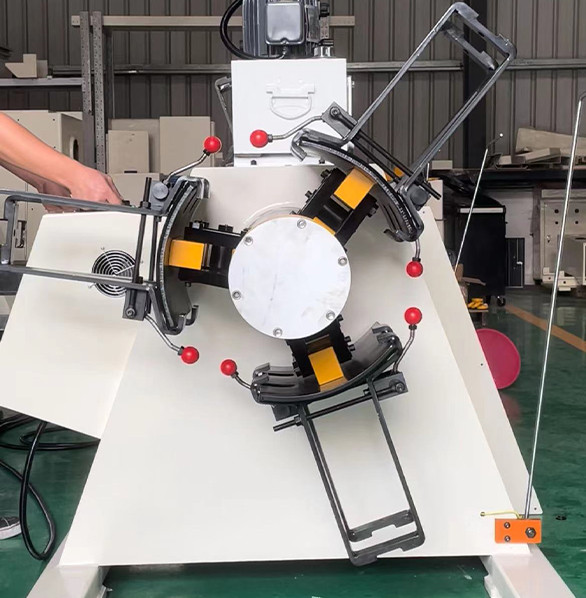
An eight-metre coil line sat in the aisle for eleven days at a plant near Ningbo. The machine was fine. The floor was not.
Site work is the one part of a machine purchase with no vendor, no drawing and no project manager. It moves at the speed of whoever remembers to chase it.
This checklist covers what has to be finished before an NC straightener feeder can be set, wired and commissioned, in the order the work actually has to happen.

Which Jobs Have to Finish Before the Machine Ships
Four items carry a long lead time, and none of them are on the machine order. Start them the week you place the order, not the week the container clears customs.
Foundation and anchor layout. You cannot pour concrete until the final model is fixed, because anchor spacing changes with frame size. Ask for the general arrangement drawing early.
Slab loading and curing. A loaded decoiler plus coil can put several tonnes on a small footprint. Standard reinforced slab is rarely enough without a spread footing.
Utility capacity. Power, air and drainage are usually already in the building, but not at the amperage or the pressure the line wants.
Rigging access. Door width, aisle radius and overhead clearance decide whether the machine arrives on a flatbed or needs a crane and a roof panel removed.
| Task | What to Verify | Typical Figure | Where It Gets Expensive If Missed |
|---|---|---|---|
| Foundation pour | Anchor pattern, edge distance, level tolerance | 28 days cure before setting | Re-pour plus re-rigging; two to three weeks lost |
| Slab loading | Point load under decoiler and press | Designed per machine mass, not per area | Cracked slab, re-levelling, shimmed machine that never levels |
| Power supply | Voltage, phases, earth, breaker rating | 380 / 415 / 480 V, ±5 % | Transformer upgrade ordered late; commissioning slips |
| Compressed air | Pressure, dryness, flow at the manifold | 0.5–0.6 MPa, dry and filtered | Valve and cylinder wear inside the first year |
| Rigging path | Door width, turning radius, floor protection | Clear 500 mm each side of the largest frame | Crane hire, panel removal, damaged paint and guards |
Notice that only one row is about the machine. The rest are about the building, which is why a site plan gets signed off long before anyone measures a feed length.
Power, Air and Drainage: The Utilities Nobody Quotes
Most quotations list the machine, the control and the tooling. Almost none list the supply side, because it is the buyer's scope by convention.
- Confirm the voltage and frequency at the wall, not on the nameplate of the building's main panel.
- Size the transformer for simultaneous starting of the decoiler, straightener and feeder drives.
- Run a dedicated earth, separate from the building lightning earth, and record the resistance.
- Dry the air before it reaches the pneumatic cylinders; condensate is what shortens their life.
- Plan a shallow oil and coolant trench or a bunded tray before the machine lands on top of it.
If your plant runs at 60 Hz and the line was quoted at 50 Hz, the drive parameters change and the achievable strokes per minute change with them. Settle that question before the order, not after the crate is opened.
Three checks are worth finishing before the site plan is signed, because each one is cheap now and expensive later.
- Walk the rigging route with a tape measure and a plumb line, not from memory of the last machine move.
- Photograph the main panel nameplate and breaker rating, so the quotation is checked against the building rather than a datasheet.
- Mark the coil storage position on the layout and confirm the same handling equipment can reach it and the mandrel.
Getting the Machine Through the Door Intact
The largest single piece on a 1300 mm three-in-one is usually the combined frame. It is top-heavy, it has exposed rolls and it does not forgive a corner taken too fast.
Measure the narrowest point on the route, including door frames, cable trays and any pipework that was added after the last time you moved a machine.
Then check the floor along the route. A 2 mm step at a doorway becomes a 6-tonne impact when a forklift bumps it, and that impact travels straight into the straightener rolls.
Set a lifting plan with the supplier. Lifting points are marked on the frame for a reason, and slinging around the shafts or the control cabinet voids any warranty claim you might otherwise have.
Where a Site Checklist Still Leaves You Exposed
A checklist is a memory aid, not a guarantee. Three things it cannot fix are worth naming honestly.
Anchor layouts move. Until the final frame is confirmed, the drawing you are pouring against is provisional. Buyers who pour three weeks before shipment sometimes pour against a superseded revision.
Old buildings lie about their slabs. A 1990s factory floor may pass a visual inspection and still have no structural drawing. In that case a core sample is cheaper than a cracked foundation.
Utilities are verified at design, not at commissioning. The supply you measured in spring may be shared with a new press by autumn. Re-measure the week before the machine arrives.
And one honest caveat on scope: this article assumes the die and the coil supply are ready. A perfectly prepared site with no tooling simply moves the delay downstream.
If you are still weighing specification levels against budget, the cost of each extra spec line is mapped in the coil line guide library.
What Has to Be Ready on Commissioning Day
Commissioning is where a well-planned site turns into a working line, and it stalls for the same four reasons every time.
Sample coils. Have at least three coils of the real production material on the floor. Commissioning on a sample that does not match production proves nothing.
Operator time. Book the people who will actually run the line. A supervisor watching from the doorway does not transfer the setup knowledge.
Measuring tools. A strip flatness check needs a straight edge, feeler gauges and a light source at a shallow angle. None of those come in the crate.
A spares shelf. Even a short list of fuses, proximity switches and a spare encoder saves a day when something small fails in the first week.
Sequencing Site Work Against the Delivery Schedule
Site work and machine building run in parallel, and the two schedules only touch at three points. Get those three right and the rest is arithmetic.
Week one to two. Confirm the model, request the general arrangement drawing, and check the rigging route while the aisles are still empty.
Week two to six. Pour and cure. Concrete needs its full cure window; rushing it is the most common cause of a machine that will not hold level.
Week six to eight. Run the utilities, install the trench or tray, and dry the air line.
On arrival. Allow five to eight working days for positioning, levelling, wiring and mechanical checks before anyone tries to run strip.
Then commissioning. Three to five days is normal for a first line and longer if the operator team is new to coil feeding.
FANTY builds these lines in a 45,000 m² plant and has commissioned more than 200 of them, so the sequencing above reflects what actually holds up on site rather than an ideal plan.
Before you book the pour, compare the footprint and the utility demand of each frame size on our coil line product range, then match those drawings against the space you really have.
How long does a concrete foundation need before the machine can be set?
Plan on 28 days of cure for a standard structural pour. Set the machine early and the anchor bolts will not hold torque, which shows up later as a machine that drifts out of level under load.
What voltage tolerance does a 3-in-1 line actually accept?
Treat ±5 % as the working window on a 380, 415 or 480 V supply. Beyond that the drives trip on over-voltage during deceleration, usually on the fastest stroke rate in the shift.
Can the machine be installed on an existing slab?
Often yes, if the slab has a structural drawing and passes a load check. Without a drawing, take a core sample. The test costs a fraction of re-pouring under a loaded decoiler.
How much clear aisle space should be left around a 1300 mm line?
Keep at least 500 mm of clear space on each side of the widest frame, plus the full travel of the coil car and the maintenance swing of the control cabinet door.
How many days should be booked for commissioning?
Three to five days for a line with an experienced operator team, and five to eight when the crew is new to coil feeding or the die is still being proved out.
Where to go next
This article covers the site side of a coil line purchase. The specification side, and what each extra spec line really costs you, sits in the same buying cluster.