How to Prevent Die Crash with an NC Servo Feeder?
- Share
- publisher
- David Park - Senior Stamping Engineer, FANTY Machinery
- Issue Time
- Sep 2,2026
Summary
Learn how an NC servo feeder prevents die crashes on coil-fed press lines: feed pitch accuracy, strip straightening, sensors, and interlocks that stop the press before damage.
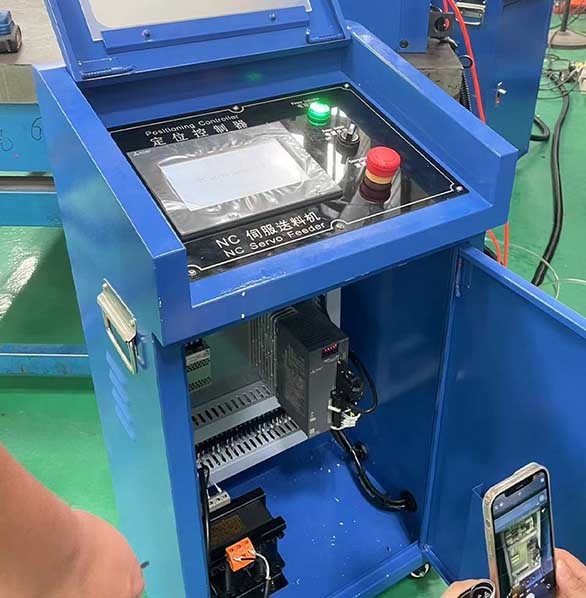
A die crash is one of the most expensive events that can happen on a stamping line. In a fraction of a second, a mis-fed strip or an uncontrolled coil end can smash precision tooling that took weeks to build and tens of thousands of dollars to grind.
The good news is that most die crashes on modern press lines are preventable, and the NC Straightener Feeder system that feeds the strip is usually the first line of defense.
This article looks at the real causes of die crashes on coil-fed press lines, then explains how an NC servo feeder with the right straightener, sensors, and interlocks reduces the risk. We draw on FANTY experience from more than 200 installed coil feeding lines and 12 years of supporting stamping plants around the world.
What Actually Causes Die Crashes?
Die crashes rarely come from a single dramatic mistake. They build up from small failures in material feeding and strip condition.
Strip condition matters just as much as feeding. A coil with heavy coil set, edge wave, or thickness variation can lift, twist, or jam between the dies even when the feeder pitch is perfect. That is why a die protection strategy always starts upstream: if the strip reaching the die is flat, straight, and fed to a repeatable pitch, the tooling has a much easier life.
Why Feeding Accuracy Is the First Line of Defense
Feeding accuracy directly controls where the strip stops under the die. A mechanical or pneumatic feeder drifts with speed and material changes, but a closed-loop NC servo feeder measures actual strip travel every cycle and corrects in real time.
FANTY feeders hold feed pitch accuracy within plus or minus 0.05 mm at speeds up to 200 SPM, which keeps the punched pilot holes and the strip position stable cycle after cycle.
Consistent pitch does more than improve part quality. It prevents the strip from creeping into the die area by a few millimeters on one stroke, which is exactly the kind of slow drift that eventually produces a crash or a damaged die edge.
When the feeder position is trustworthy, the die protection system can be set tightly, because a small signal from the sensor really does mean a problem rather than normal feeding scatter.
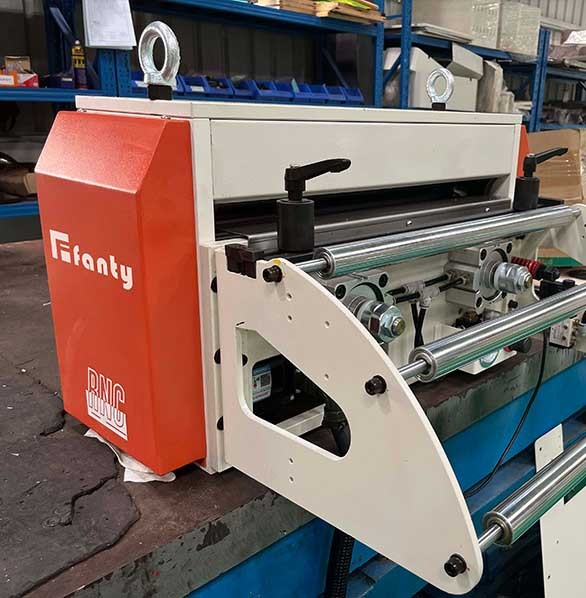
How Strip Straightening Protects the Tooling
A straightener works ahead of the feeder for a reason. Coil strip carries residual stress from rolling and slitting, and that stress shows up as coil set, crossbow, or edge wave when the strip is uncoiled.
Correct roll pressure removes the internal stress pattern and delivers a flat strip to the die opening. FANTY straightening units use small-diameter work rolls with backup support, which is the geometry needed to bend the fibers on both surfaces of the strip and release locked-in stress.
For thin or high-strength materials, adjustable roll gaps let the operator fine-tune the leveling action without slowing the line.
Feeding Problems and the Die Crash Risk
| Failure mode | Root cause | How an NC servo feeder line prevents it |
|---|---|---|
| Overfeed beyond die pitch | Feed length drift at high speed | Closed-loop servo measurement holds pitch to ±0.05 mm and alarms on deviation. |
| Misfeed / short feed | Roller slip or brake tension loss | Servo drive torque control and pinch-roll grip keep strip travel consistent. |
| Loop collapse at die entry | Uncontrolled strip payout | Loop sensor and dancer control match uncoiling speed to press demand. |
| Coil end crash | Tail end of coil runs loose | Material end sensor stops the press before the tail enters the die. |
| Strip buckle into die | Coil set or edge wave in strip | Straightening rolls level the strip before it reaches the feeder rolls. |
| Thick spot or weld jam | Coil weld or gauge variation | Thickness monitor and stop signal protect the tool from hard spots. |
Sensors and Interlocks That Stop the Press
Even the best feeding system needs protection logic around it. A complete coil line should include a material end sensor that detects when the strip tail is about to leave the straightener, a loop control that prevents slack or tension spikes, and a buckle detector at the feeder outlet. These sensors feed into the press control so that a fault stops the slide at the top of the stroke instead of letting it crash through the strip.
Die protection sensors inside the tool, such as station monitors and part-ejection checks, close the last gap. The key point is that the feeder and the press must talk to each other through a clear interface.
FANTY NC servo feeders connect directly to the press control and support the standard signals for feed start, feed complete, and fault stop, which is what makes the whole protection loop fast enough to matter at 200 SPM.
Start-Up and Die-Change Discipline
Die protection is a line behavior, not just a machine feature. The first strokes after every die change and every new coil are the highest-risk moments, because nobody has yet confirmed that the feeder pitch, the straightener setting, and the die positions agree with each other.
A simple start-up routine closes that window: run the first parts at low speed, measure the pitch against the die pilot position, and confirm that the material end and loop sensors respond correctly before you ramp the line up to full speed.
Document the settings that work. A job sheet that records the NC servo feeder program number, the straightening roll pressure, the coil width, and the material grade turns a good operator's memory into a repeatable company standard.
When the same job returns next month, the line starts from a known-good configuration instead of being set up from scratch, which removes a whole class of setup errors that end in damaged tooling.
Preventive Habits That Reduce Die Crash Risk
- Check and record feed pitch accuracy at the start of every shift, not only when parts fail.
- Verify strip condition after each coil change: coil set, edge wave, and surface damage.
- Test the material end, loop, and buckle sensors during the first strokes of every new coil.
- Keep straightening roll pressure matched to the material grade and thickness in the job sheet.
- Train operators to stop the line on any unusual feeder sound instead of overriding the alarm.
- Schedule regular servo drive and pinch roll maintenance to prevent silent feed drift.
Frequently Asked Questions
Can an NC servo feeder really prevent die crashes?
It removes the most common feeding causes of die crashes: pitch drift, misfeed, and loop problems. A closed-loop NC servo feeder holds feed accuracy to ±0.05 mm and communicates with the press control, so faults stop the slide before the die closes on a mispositioned strip.
Why does strip flatness affect die safety?
Curved or wavy strip can catch on die guides, double over, or enter the die at an angle. An NC straightener feeder levels the strip in the same unit that feeds it, so the tooling only ever sees flat, predictable material.
What sensors should a coil line have to protect the die?
The essential set is a material end sensor, a loop control, a buckle detector at the feeder outlet, and die protection sensors in the tool. Together they stop the press within one stroke when something goes wrong.
How often should feeding accuracy be checked?
Check pitch accuracy at every coil change and at the start of each shift. A quick test part takes two minutes and catches the silent drift that eventually causes scrap or die damage.
Does FANTY help integrate the feeder with our existing press?
Yes. FANTY engineers support the electrical interface between the NC servo feeder and your press control, including the standard feed and fault signals, so retrofitting an existing line is straightforward.
Can older presses be retrofitted with die protection feeding?
Yes. FANTY regularly retrofits existing presses by adding an NC servo feeder, a straightener, and the necessary sensors. The electrical interface to the press control is standard, and installation is usually completed during a planned maintenance shutdown.
Related reading
Part of the the coil line guide library — the full library of coil handling, straightening and feeding guides from FANTY.
Protect your dies with a precision coil feeding line
Talk to FANTY about an NC servo feeder and straightener package sized for your press. Our engineers have commissioned 200+ coil feeding lines with die protection in mind.
Send Inquiry to FANTY