How to Prevent NC Servo Feeder Slippage at High Speed?
- Share
- publisher
- David Park - Senior Stamping Engineer, FANTY Machinery
- Issue Time
- Aug 28,2026
Summary
A practical guide to preventing NC servo feeder slippage at high speed: why it happens, how to diagnose it, a prevention checklist, and feed parameter optimization.
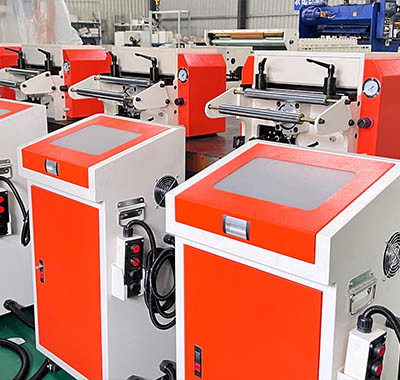
How do you prevent NC servo feeder slippage at high speed? Slippage is the silent killer of stamping accuracy. When the feed rolls lose their grip on the strip, the material advances less than the programmed length, the die punches out of position, and suddenly every part in the batch is out of tolerance.
At high speed the problem is worse, because there is less time for the control system to detect and react.
An NC servo feeder is built to hold the strip firmly through the entire acceleration and deceleration cycle, but grip is a physical process that depends on roll condition, clamping pressure, material characteristics, and the friction between roll and strip. Any one of these can fail silently while the machine keeps running and producing bad parts.
With 12 years of building servo feeders in a 45,000 m² factory and more than 200 active line installations worldwide, FANTY has compiled the practical guide below on why slippage happens, how to diagnose it, and how to stop it before it costs you a batch of scrap.
Why an NC Servo Feeder Slippage Happens
Slippage is fundamentally a friction problem. The feed rolls grip the strip through clamping pressure, and the available friction force must exceed the force required to accelerate the strip mass during the feed stroke. If the required force exceeds the friction limit, the strip slides under the rolls.
The force required grows with speed because acceleration rises. A feeder that has plenty of grip at 30 strokes per minute may be right at its limit at 120 SPM, especially with a heavy or wide strip. This is why high-speed slippage often appears only after a speed increase that was not matched by a clamping pressure adjustment.
Roll surface condition plays the second big role. As rolls wear, they polish smooth, and the friction coefficient drops. A roll that has lost its surface texture grips noticeably less, and the machine compensates nowhere; the encoder sees the roll turning correctly, but the strip has moved less. That is what makes slippage so dangerous: the control system is blind to it.
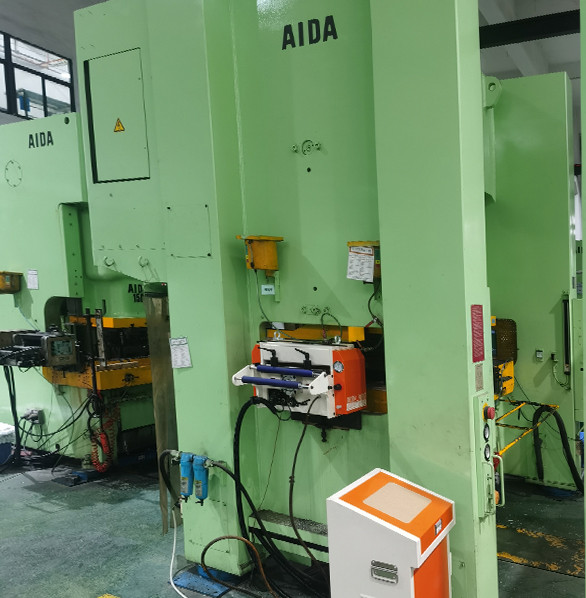
Slippage Symptoms, Causes, and Fixes
The table below helps you diagnose slippage quickly by matching the symptom to its root cause and corrective action.
| Symptom | Cause | Fix |
|---|---|---|
| Short feed on parts, worse at speed | Clamping pressure below the grip limit | Increase pressure in small steps, re-check feed length |
| Feed error appears after roll service | Roll surface not restored to texture | Re-dress rolls or fit new roll pairs |
| Slippage with oily or coated strip | Low friction from process lubricant | Clean strip or specify higher-grip roll surface |
| Intermittent slip during acceleration | Acceleration ramp too aggressive | Lengthen the acceleration profile in the drive |
| Slip only at the end of a large coil | Material tension changes with coil diameter | Balance decoiler tension, avoid strip drag |
| Random position errors | Encoder or coupling problem, not true slip | Check encoder coupling and cable, verify signal |
Use the last row as a reminder: not every short feed is slippage. Confirm the mechanical grip before you adjust parameters, so you do not tune around a sensor problem.
Prevention Checklist for High-Speed Feeding
These are the habits that keep an NC servo feeder gripping reliably at speed, day after day.
- Inspect roll surfaces weekly — look for polishing, grooves, and embedded dirt that reduce friction.
- Set pressure by material, not habit — match clamping to the actual thickness and hardness of each coil.
- Verify grip with a pencil test — mark the strip and measure actual travel after one feed stroke.
- Extend acceleration ramps at speed — gentler ramps cut peak force and add grip margin.
- Keep the strip clean and dry — remove excess process oil where the process allows.
- Log first-piece feed deviation — a growing trend is the earliest warning of roll wear.
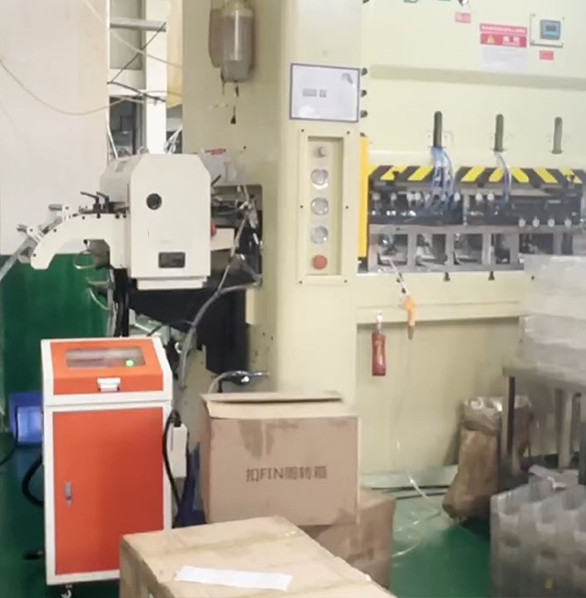
Optimize Feed Parameters for High Speed
Modern servo drives expose several parameters that directly affect grip margin. The acceleration and deceleration ramps are the most important: a gentler ramp reduces the peak force the rolls must transmit, which is the same as adding grip margin without touching the mechanics. If your cycle time allows it, extend the ramp and measure the difference in feed consistency.
Clamping pressure should be set for the worst case, not the average. Measure the actual strip thickness and hardness at the start of each coil, then set pressure to match the current material. Some feeders offer auto-adjusting pressure that tracks material parameters from the recipe memory, which removes the human error from the equation entirely.
Finally, monitor the trend. Track feed length deviation on the first piece of every coil. If the deviation grows over weeks, the rolls are wearing and the surface is polishing. Schedule the roll replacement before the deviation reaches the tolerance limit, and you will never lose a batch to slippage again.
Slippage and the Rest of the Coil Line
The feeder does not work alone, and neither does its grip. On a 3-in-1 decoiler straightener feeder, the decoiler section must deliver strip to the feeder with controlled, consistent tension.
Heat is another partner in slippage. At high speed, rolls, bearings, and the strip itself warm up, and warm surfaces behave differently: some roll materials lose friction as temperature rises, and lubricants thin out.
If you run a line hard all day, check the feed length deviation in the afternoon as well as the morning. A noticeable afternoon drift is a strong clue that thermal effects are eating into your grip margin.
Material variability also matters. Two coils from the same supplier can differ in surface finish and hardness, which changes the friction available at the rolls. Do not assume yesterday's settings are right for today's coil. A quick feed-length test after every coil change, before the first production part, takes one minute and protects the whole batch.
Frequently Asked Questions About NC Servo Feeder Slippage
How can I tell if my feeder is slipping or if the encoder is wrong?
Mark the strip with a pencil line at a known distance from the feed rolls, run one feed stroke, and measure the actual strip movement. If the strip moved less than programmed, the rolls are slipping. If the strip moved the correct distance but the controller reports an error, suspect the encoder system instead.
Should I just increase clamping pressure to stop slippage?
Up to a point, yes, but too much pressure marks the strip surface, increases roll wear, and can overload the rolls. Increase pressure in small steps and confirm with a feed-length test. If you need very high pressure, consider a roll material or surface finish with more grip instead.
Why does my feeder slip only when the line runs fast?
Because the force needed to accelerate the strip grows with speed. The grip that works at low speed may simply be below the required friction at high speed. Increase clamping pressure, extend the acceleration ramp, or both, and retest at full speed.
Does lubricant on the strip cause slippage?
It can. Process oil and drawing lubricants reduce the friction coefficient between rolls and strip. If the process requires lubricated material, choose a roll surface designed for oily strip, or wipe the strip before it enters the feeder where the process allows.
How often should feed rolls be inspected for wear?
At least every scheduled service, and immediately after any unexplained feed accuracy change. Look for a polished wear band, grooves, or embedded debris. Rolls that lost their surface texture should be re-dressed or replaced before they cause a scrap event.
Related reading
- which part limits feeding accuracy
- what feeding accuracy to expect
- how to hold feed accuracy on a coil line
Part of the the coil line guide library — the full library of coil handling, straightening and feeding guides from FANTY.
Stop Slippage Before It Stops Your Line
Talk to FANTY about servo feeders with high-grip roll design and recipe-based pressure control for high-speed stamping.
Request a Feeder QuoteFanty · NC Straightener Feeder
Coated, High-Strength or Thin Gauge? Each Needs Different Rolls
Roll finish and pressure setting decide whether you mark the surface or hold flatness. Send your material spec and we size the straightener feeder properly the first time.
Get a Free QuoteFANTY Machinery · 13 years on stamping automation · 2,000+ coil lines installed · engineers reply within 24 hours