How to Prevent Strip Scratch with an NC Straightener Feeder?
- Share
- publisher
- David Park - Senior Stamping Engineer, FANTY Machinery
- Issue Time
- Aug 28,2026
Summary
A practical guide to preventing strip scratch with an NC straightener feeder: where scratches come from, how to identify the source, and maintenance practices that protect surface quality.

How do you prevent strip scratch with an NC straightener feeder? Surface quality is a requirement, not a luxury, in modern stamping. Scratched strip means rejected parts, rework, and unhappy customers, especially for visible or pre-finished materials. Yet strip scratching is one of the most common complaints on coil lines, and it is almost always preventable.
An NC straightener feeder passes the strip through straightening rolls and feed rolls under pressure, which means the strip surface is in contact with rolls dozens of times per second. Every one of those contact points is a potential scratch source if the roll surface is damaged, contaminated, or mismatched to the material.
At FANTY, we have spent 12 years building coil handling equipment in a 45,000 m² factory with 370 staff and more than 80 R&D engineers, and protecting strip surface quality has always been a design priority. This guide explains where scratches come from, how to find them, and the practices that keep your strip clean through the whole 3-in-1 decoiler straightener feeder.
Where Strip Scratches Actually Come From
Scratches on strip usually trace back to one of four sources: damaged roll surfaces, embedded contamination, material-on-material contact, or misalignment that makes the strip rub against a fixed part of the machine. Each source leaves a different signature, which makes diagnosis straightforward once you know what to look for.
Damaged roll surfaces are the classic cause. A straightening roll that has been nicked, pitted, or scored acts like a tiny cutting tool, and every revolution it drags that defect across the strip. The same applies to feed rolls and any idler roll in the path. The defect can be fresh damage from a foreign object, or slow degradation from years of abrasive strip dust.
Contamination is the silent second cause. Even a small particle of hardened debris sitting on a roll surface is pressed into the strip with the full clamping force, producing a scratch line that repeats once per roll revolution. Coatings, adhesives, and process dust all find their way onto rolls over time, and the effect only shows up on the part.
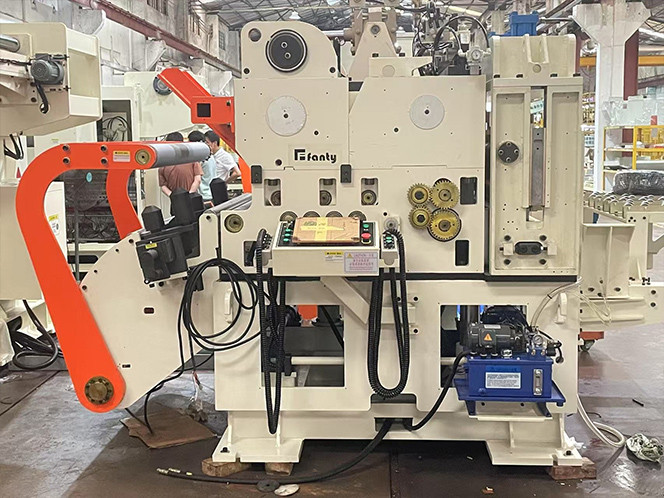
Scratch Types, Sources, and Solutions
Use this table to identify the scratch pattern on your strip and jump straight to the fix.
| Scratch Pattern | Source | Solution |
|---|---|---|
| Single line repeating each revolution | Nicked or damaged roll surface | Inspect rolls, dress or replace the damaged roll |
| Random fine lines, no fixed spacing | Embedded debris on multiple rolls | Clean all rolls, check strip for mill contamination |
| Scratch on one edge only | Strip rubbing a fixed machine part | Check side guides and alignment of the strip path |
| Lines at the coil change point | Coil end or banding residue | Remove banding and foreign material before loading |
| Dull haze or fine scuffing over the whole surface | Roll surface too rough for the material | Specify a smoother roll finish for soft or finished strip |
| Pattern that changes with strip speed | Vibration between rolls and strip | Check bearings, balance, and roll pressure |
Start your diagnosis with the repeating-line test: if the scratch repeats at a spacing that matches a roll circumference, the roll that caused it is found. Measure the spacing, divide by the roll diameter and pi, and you know exactly which roll to inspect.
Prevention Practices for Scratch-Free Strip
Prevention is mostly a matter of habit and housekeeping. These six practices cover the common failure modes.
- Clean rolls after every coil change — wipe the strip path and remove particles while the line is stopped.
- Inspect roll surfaces with bright light — look for nicks, pitting, and scoring on every roll in the path.
- Check for embedded debris — hard particles pressed into rolls produce repeating scratch lines.
- Verify side guide alignment — keep the strip centered so it never rubs a fixed machine part.
- Remove banding and coil debris — clean the coil before loading to protect the first wraps.
- Match roll finish to the material — softer and coated strip needs a smoother roll surface.
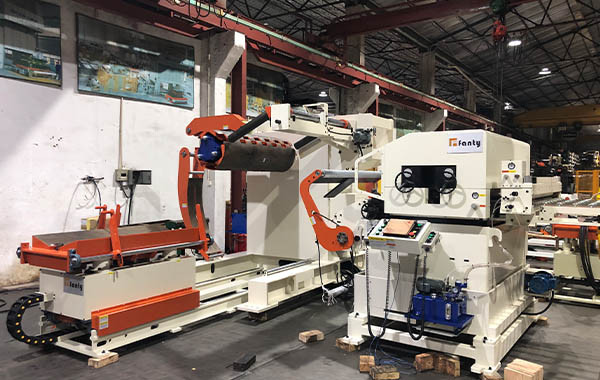
Build a Surface Quality Maintenance Cycle
Surface quality starts degrading the moment the previous maintenance ends, so treat it as a cycle, not an event. After every coil change, wipe down the exposed roll surfaces while the line is stopped and check for new nicks or embedded particles. This takes two minutes and prevents most contamination-based scratches.
Schedule a deeper roll inspection at every service interval: clean every roll in the strip path, inspect for pitting and scoring with a bright light and, where the machine allows, check roll surface roughness with a profilometer against the value specified for the material.
Keep records of which rolls were cleaned, dressed, or replaced, so the pattern of wear becomes visible over time.
For pre-finished materials such as painted, coated, or polished strip, talk to the machine supplier about surface-matched roll finishes. FANTY machines can be configured with roll surface treatments selected for the specific material you run, which is one of the reasons our systems protect surface quality across more than 200 active line installations in over 60 countries.
Material handling upstream of the machine matters just as much as the machine itself. A coil with rust, dust, or mill scale on its surface brings contamination straight into the strip path, where it embeds in rolls and starts scratching. Store coils under cover, keep them dry, and wipe the first wraps when you load.
Some plants run a brush or wiper station between the decoiler and the straightener, which catches loose debris before it reaches the precision rolls.
Finally, make surface inspection part of the operator's job. Put a small inspection light at the line exit and teach operators to look at the strip as it emerges, not just at the stamped parts. A scratch that is caught at the line can be traced to a roll before it repeats across a whole coil.
Caught at final inspection, it is scrap. The same visual habit that catches one scratch early will catch the next one sooner.
Documentation closes the loop. Keep a simple log of when rolls were cleaned, dressed, or replaced, and note the material and coil number when a scratch incident happens. Over a few months, patterns emerge: a particular material scratches more, or scratches always appear after a certain number of coils.
That data tells you exactly which roll finish, cleaning frequency, or handling change will eliminate the problem permanently, which is far better than chasing each incident one at a time.
Frequently Asked Questions About Strip Scratch Prevention
How can I tell which roll is scratching my strip?
Measure the spacing between repeated scratch lines on the strip. Divide by pi to find the diameter of the roll that caused them, then inspect that roll. A single damaged roll leaves a signature that repeats once per revolution.
Can I dress straightening rolls to remove scratches?
Light surface defects can often be dressed by grinding or polishing, provided the roll diameter and surface finish stay within specification. Deep nicks and pitting usually mean replacement. Always check with the manufacturer before dressing hardened rolls.
Why do scratches appear only on coated strip?
Coated and painted surfaces show scratches more easily than bare steel because the coating is softer and the contrast is higher. These materials also need smoother roll finishes, since a finish that is fine for bare strip can still mar a coating.
How often should rolls be cleaned?
Wipe the strip-path rolls after every coil change, and do a full clean and inspection at every scheduled service. If your process generates dust or oil mist, increase the frequency accordingly.
Does FANTY offer special roll finishes for sensitive materials?
Yes. Depending on your material, we can supply rolls with polished, chromed, or coated surfaces selected for scratch resistance. Tell us what you stamp, and our engineers will recommend the right roll configuration.
Related reading
- why pass line height matters
- five-roll straightening up to 4 mm
- how to hit a flatness spec on a coil line
Part of the 3-in-1 decoiler straightener feeder — the full library of coil handling, straightening and feeding guides from FANTY.
Protect Your Strip Surface, Protect Your Parts
Ask FANTY about an NC straightener feeder configured with surface-matched rolls for your material.
Request a QuoteFanty · NC Straightener Feeder
Still Fighting Strip Memory After Straightening?
Send the strip thickness, material grade and target flatness. We specify roll diameter, roll count and NC feed pitch so the line holds tolerance from the first coil, not the fiftieth.
Get a Free QuoteFANTY Machinery · 13 years on stamping automation · 2,000+ coil lines installed · engineers reply within 24 hours