How to Protect a Coil Line's Resale Value Over 5 Years
- Share
- publisher
- David Park - Senior Stamping Engineer, FANTY Machinery
- Issue Time
- Nov 24,2026
Summary
A coil line that cost 1.2 million USD and runs 4,000 hours a year usually sells for 40 to 50 percent of invoice at five years, and the spread between two identical machines can reach 25 points. This guide separates the options that come back at resale from the ones that only make the machine unique, lists the paperwork buyers price into an offer, and gives four contract clauses worth asking for while the leverage still exists.
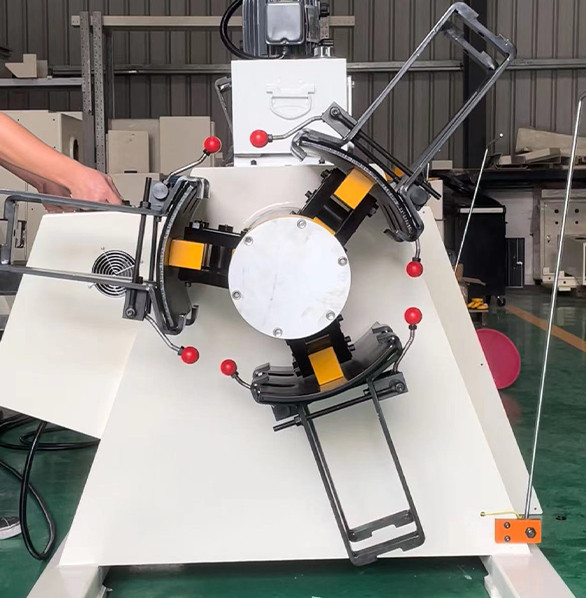
Coil line resale value is settled long before the first coil runs. Three things a purchase order controls decide it: the specification sheet, the documentation package and the way the machine is anchored.
The machinery specification pages show what each option adds to the invoice. They do not show what it protects five years later.
A line bought at 1.2 million USD, run 4,000 hours a year and sold in 2031 typically changes hands for 40 to 50 percent of what was paid.
The spread between two machines built in the same month can reach 25 percentage points, and very little of it comes from wear.
What follows is the arithmetic behind that spread: which options come back, which quietly do not, and what to write into the contract while the leverage still exists.
Reading the Depreciation Curve Before You Sign
Dealers price a used line on four inputs: age, running hours, control platform and paperwork. Age and hours sit on the nameplate; the other two decide how fast it sells.
A standard line covering 400 mm to 1,300 mm strip, built around a mainstream controller, holds roughly 55 to 65 percent at three years and 40 to 50 percent at five.
By eight to ten years it is down to 20 to 30 percent. Past 25,000 running hours the curve steepens faster than the calendar suggests.
Control platform is the largest single lever. A line running on a controller family the maker still supports attracts buyers who can program it in-house.
One built on a discontinued platform attracts only buyers who intend to retrofit, and they price that work into the offer before they price the machine.
That retrofit is rarely small. Replacing a controller, its I/O cards and the operator screen on a five-station line usually runs 6 to 12 percent of the original machine price.
The buyer knows that number. Assume you will be negotiating against it.

Which Options Come Back at Resale and Which Do Not
Options fall into three groups: those that widen the buyer pool, those that lift the price inside the same pool, and those that are worth nothing to anyone but the original owner.
| Option | What it returns at resale | Where it costs you |
|---|---|---|
| Servo-controlled roll gap | Opens the line to thin-gauge and mixed work, which is most of the resale market | 4 to 6 percent on invoice, plus a second drive to maintain |
| Mainstream PLC and drive family | Local service is possible, so the pool of buyers is far larger | 3 to 5 percent price premium over a house-brand control |
| Second roll set, ground spare | Reads as a consumable the buyer would otherwise purchase | 8,000 to 20,000 USD in inventory that sits for years |
| Wider frame and longer mandrel | Adds 1,500 mm buyers to the pool | More steel, more floor space, heavier foundation |
| Custom paint and badging | Nothing, at any age | Paid once, recovered never |
| Foundation cast to a bespoke anchor pattern | Nothing, and it may not match the buyer's pit | Removal and re-coring fall on you |
The pattern is consistent: options that reduce the skill needed to run the machine survive resale.
Options that make the machine unique destroy it. Uniqueness is a cost you pay twice, once when you buy and again when you sell.
The Documentation Package Is Priced In
Every serious buyer sends the same list before making an offer.
If it cannot be answered from one folder, the offer drops 8 to 12 percent and the listing is described as incomplete for the rest of its life on the market.
- As-built electrical drawings, updated to the last modification rather than to delivery
- Program source and the parameter file exactly as the line was commissioned
- Hydraulic and pneumatic schematics with cylinder and valve part numbers
- Factory acceptance report, declaration of conformity and the dated maintenance log
- Spare parts list with lead times for the ten fastest-wearing items
The parameter file matters more than the drawings. A buyer who receives a locked controller has to re-commission every axis from scratch, and will deduct the days that takes plus the risk of getting a ramp wrong.
Keep the log honest. A maintenance record with three blank years reads worse than no record at all, because it tells the buyer the machine was not looked after and nobody wrote it down.
Where Value Leaks Without Anyone Noticing
Most deductions are never negotiated. They are applied silently while the buyer's engineer walks the machine with a torch and a notebook, and they appear as a single line in the offer.
| Value leak | How it shows on inspection | Deduction a buyer applies |
|---|---|---|
| Frame modified and re-welded in place | Grinder marks, paint mismatch, no revised drawing | 5 to 8 percent |
| Non-standard cylinders and valves | Part numbers no local distributor stocks | 2 to 4 percent plus a spares argument |
| Motor rewound twice | Rewind label under the terminal box | 1 to 3 percent |
| Guard interlock bypassed | Jumper wires behind the relay panel | Sale blocked until corrected |
| Roll faces left unprotected at shutdown | Pitting across the working width | 4 to 6 percent, or a regrind |
| Anchor bolts cut at removal | Torn holes in the base plates | 3,000 to 9,000 USD of repair |
The interlock row is not a price question. A bypassed guard stops the sale in most European markets until it is restored and documented, which can cost a month of storage and a second visit.
Rust is the cheapest item to prevent and the most common to find. Two hours of protection before a long shutdown costs less than one percent of the deduction it avoids.

Five questions come up every time a used line is valued. The ones with numbers in them are the ones buyers argue about, so it helps to have an answer ready.
Does a 5-year-old coil line really hold 45% of its invoice?
For a mainstream specification, yes, inside a wide band. Documented machines with a supported controller reach 50 to 55 percent. Machines with a discontinued control and no backup land near 35.
What does a missing PLC backup cost at resale?
Expect 5,000 to 25,000 USD, depending on the controller and the axis count. The buyer prices the re-commissioning days, the risk of a wrong ramp and the possibility that a proprietary function cannot be rebuilt.
Is 20,000 running hours too many for a 5-year-old line?
Not by itself. Hours only mean something against the duty the machine was built for. 20,000 hours on a line rated for three-shift work is light use; the same figure on a single-shift line means it has been pushed.
Does a used coil line sell in 3 months or 9?
Documented lines in a common width range typically move in 60 to 120 days through a dealer. Niche widths and gauge ranges run 6 to 9 months, at 1 to 2 percent of value per month in storage.
Can resale protection survive a 10-year ownership?
Only if it is contractual. Drawing updates, program source and a 10-year spares commitment belong in the purchase agreement, because the goodwill of the engineer who sold the line leaves with him.
What the Residual Table Cannot Tell You
A residual value table is a planning aid, not a promise. Three things break it, and all three are outside the machine.
The first is the market you sell into. A line built for 400 mm strip in a country where the local base runs 1,250 mm has a smaller pool than the table assumes.
The second is removal. A line that came in through a wall does not leave through a door. Rigging, cranes, crating and transport can equal 3 to 5 percent of the sale price, and in a tight building it can exceed it.
The third is regulation. Some destinations restrict imported used machinery, and a line sold into a market that wants a fresh conformity assessment carries a cost the seller usually absorbs without planning for it.
If the plan is to run the machine for fifteen years, optimizing resale is largely wasted effort.
Uptime is the better investment, because a line earning 40,000 USD a month does not care what it is worth at the end.
Writing the Exit Into the Purchase Contract
Four clauses cost nothing at signing and protect the sale years later. None of them is standard, which is exactly why they need to be asked for in writing.
Ask for as-built drawings 30 days after commissioning, not at delivery. Drawings issued before the first coil runs are wrong by definition, and a buyer who discovers that stops trusting the rest of the folder.
Ask for the program source, the licence and the parameter file on removable media at handover, with a statement that the program is not locked against the owner.
This single clause is worth more at resale than any option on the specification sheet.
Ask for spares availability for 10 years, with a named list and a lead-time commitment. It is the clause buyers ask about most often and the one suppliers leave vague most often.
Ask that the warranty transfer to a subsequent owner for its remaining term. It is worth 2 to 4 percent at resale and costs a builder nothing if the machine is sound.
Our coil line knowledge base maps each specification line to the cost it carries through its life, including the ones that only surface at resale.
Reading it before the quotation is signed is cheaper than reading it afterwards.
Where to go next
The exit is the last stage of a decision that starts at the quotation, and this piece covers only that last stage.
The wider guide covers how specification choices turn into money at the quotation stage, and again at the end of ownership.
Read the over-specification guide