How to Schedule a Mixed-Die Week on One Coil Line
- Share
- publisher
- David Park - Senior Stamping Engineer, FANTY Machinery
- Issue Time
- Oct 20,2026
Summary
A mixed-die week on one coil line is a sequencing problem before it is a capacity problem. Ordering the dies by width, then gauge, then run length removes most of the changeover cost without buying anything. This sets out a five-step sequence, the numbers each step depends on, and the weeks where sequencing cannot help at all.
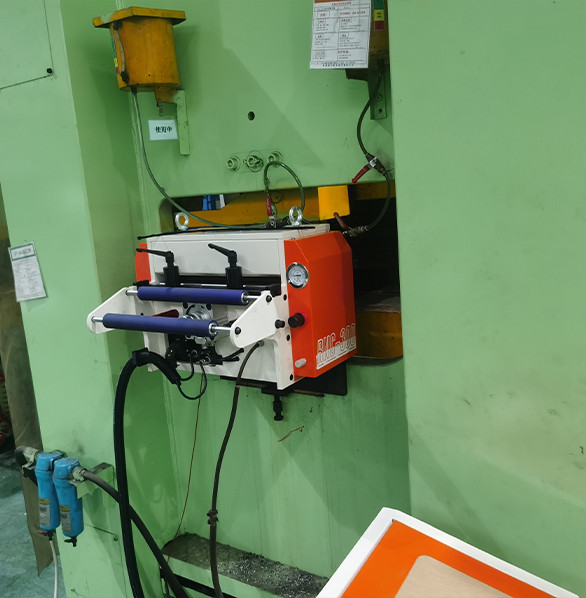
Six dies, one line, five days. The planner's instinct is to sort by due date, which is usually the worst possible order for a coil line.
A servo feeder changes over in minutes. The coil, the guides and the strip path are what actually consume the shift.
Sorting the same six dies differently can remove three changeovers from a week without adding a machine, a person or a shift.
A Mixed-Die Week Is a Sequencing Problem
Every die change costs a coil change, a guide reset and a first-piece approval. Some of that cost is fixed and some of it depends on what you changed from.
Going from a 300 mm coil to a 310 mm coil costs almost nothing beyond the coil itself, because the guides barely move.
Going from 300 mm to 900 mm costs a guide reset, a pass line check and a strip path re-thread, which is the expensive part.
Sequencing exists to turn expensive changes into cheap ones. That is the whole idea, and it is worth more than most capital projects.
The order that does this is width first, gauge second, run length third. Due dates come after all three.
Due dates still matter. They decide which of two dies inside the same width and gauge group runs first.
Grouping is not the same as ignoring urgency. It changes which die runs next within a group, not whether a late order ships.
Step 1: Put the Dies in Width Order
List every die in the week with its required strip width. Then sort by width, ascending or descending, but never alternating.
A week that runs 300, 320, 900 and 950 mm has two big jumps. Reordered as 300, 320 then 900, 950 it still has two, but they are the only two.
A week that alternates 300, 900, 320, 950 has four guide resets, each one costing the same forty minutes.
That single change is usually worth one full shift across a week, and it requires no investment beyond a sorted list.
Width order also reduces edge damage, because guides settle into a position rather than being reset four times.
Step 2: Group by Gauge Within Each Width
Within a width band, sort by gauge. Strip thickness changes affect roll pressure and, on some dies, pilot clearance.
Going from 1.2 mm to 1.5 mm within the same width is a pressure adjustment and a first-piece check, not a full setup.
Going from 1.2 mm to 3.0 mm is a different pass line and a different straightener setting, which costs more.
Grouping by gauge also lets you leave the coil on the mandrel longer, which saves the loading time entirely.
Two dies that share a width and a gauge can often run back to back with only a die change and no coil change at all.
Coil weight within a group matters as well. Two 3-tonne coils cost one loading; a 3-tonne and a 5-tonne coil cost two.
Where widths differ by under 20 mm, the guides often need a check rather than a reset. Measure before assuming a reset.

Step 3: Place the Long Runs in the Middle
Long runs belong in the middle of the week, not at the start. Starting with a long run means the first changeover happens when the line is least settled.
Ending with a long run means the week finishes with no room to recover from a fault, which is how overtime starts.
Put the two longest runs on Tuesday and Wednesday, with short runs at both ends as buffer.
Short runs at the start absorb the Monday morning settling time. Short runs at the end absorb a day that went wrong.
This is scheduling as risk management rather than as optimisation, and it works because a coil line's week is never as clean as the plan.
Midweek long runs also land on the days when support functions are fully staffed and a fault gets fixed in hours rather than a day.
What the Sequence Costs You
| Sequence | Guide resets | Coil changes | Where It Costs You |
|---|---|---|---|
| Due-date order | 4 to 6 | 6 | Four extra hours of changeover per week |
| Width order only | 2 | 5 | Two hours saved, no investment |
| Width then gauge | 2 | 3 | Half a shift saved, still no investment |
| Width, gauge, long runs midweek | 2 | 3 | Same saving with recovery time built in |
| Add a second coil line | 2 | 1 | Capital cost that the sequence change already avoided |
The last row is the one worth reading twice. Most plants buy capacity for a scheduling problem they could have solved with a spreadsheet.
The saving is also reversible. A planner under pressure reverts to due-date order within two weeks unless the rule is written down.
Put the sequence rule in the planning procedure, or it will be reinvented badly by whoever takes over next.
Step 4: Protect the Changeover Window
A good sequence still fails if the changeover window is not protected. A die change that starts at 3 p.m. will not finish before the shift ends.
Block changeover windows in the plan, the way a maintenance window is blocked, and do not let a rush order eat into them.
Publish the window on the floor. Operators who know a change is scheduled at 10 a.m. prepare the coil before 9.45.
Preparation is where most of the saving actually lands. A coil staged and a die cart ready cuts ten to fifteen minutes from a change.
None of that requires a machine to be faster. It requires the change to be announced.
Announce the sequence at the start of the week, not the start of the day. Preparation happens a day ahead or it does not happen.
Where Sequencing Cannot Help
Sequencing cannot help when every die in the week uses a different width and a different gauge. Some job shops genuinely have that mix.
It cannot help when the constraint is downstream. If the press, the die or the operator sets the rate, a cleaner sequence saves changeover time without adding output.
And it cannot help when the coil supply is the limit. If only one width is available, the sequence is decided by the steel mill, not the planner.
In those cases the answer is quick-release guides, a second die cart or a wider coil range, and sequencing is a smaller lever.
Sequencing cannot fix coil quality either. A damaged coil costs a changeover whether the plan is good or not.
Two inputs are usually missing when a plan fails.
The first is die weight against crane capacity, because a 1.8 tonne die that needs a second crane cannot be changed inside a normal window however well the sequence is ordered.
The second is coil change time as distinct from die change time.
A width change that also changes coil weight needs the car, the mandrel expansion and a fresh threading, which is a different activity from swapping a die on the same coil.
Measure both for two weeks before trusting a plan.
Plants that do this typically find their real constraint is the crane or the coil car rather than the press, and the sequence they build afterwards looks nothing like the first draft.
The wider lesson is that a plan is only as good as the numbers in it.
Changeover time estimated at twenty minutes and measured at fifty turns a feasible week into an overtime week, and no sequencing rule survives that gap.
The Week Plan on One Page
- List every die with width, gauge and required run length before anything is sequenced.
- Sort by width, then gauge, then run length. Due dates decide within a group, not across groups.
- Put the two longest runs on the middle days and keep both ends short.
- Block changeover windows in the plan and stage the next coil before the window opens.
- Record the actual changeover time for each change, because the next plan should use measured figures rather than estimates.
- Review the week on Friday and re-sequence it in ten minutes. It is a repeatable exercise, not a project.
The press feeder range lists feed length and coil weight capacity per model, which sets the shortest practical run for each die in the plan.
Where to go next
Sequencing is the cheapest capacity a plant can add, and it works best when the tolerances are known. The feed accuracy guide shows how much of the changeover cost is actually tolerance recovery rather than setup.
The Coil Line Guide LibraryHow many die changes per week can one coil line handle?
Eight to ten with a coil car and staged dies. Above twelve, changeover dominates and a second line or a wider coil range starts to pay.
Does sequencing by width really save a shift a week?
On a six-die week with mixed widths, yes. Four guide resets at forty minutes each is nearly three hours, before coil loading is counted.
What is the cost of one guide reset on a 900 mm line?
Thirty to fifty minutes including pass line verification and first-piece approval, plus 2 to 4 metres of strip.
Should a 2-day run start or end the week?
Neither. Put them midweek so both ends of the week have short runs that can absorb settling time or a fault.
Can a servo feeder reduce changeover time on its own?
It removes threading time, sixty to ninety seconds. The remaining time is guides, coil and first-piece approval.
When does a second coil line beat better sequencing?
When every die in the week uses a different width, or when die changes exceed twelve a week on a single line.