How to Stop Galling and Pickup in High-Speed Stamping?
- Share
- publisher
- David Park - Senior Stamping Engineer, FANTY Machinery
- Issue Time
- Sep 9,2026
Summary
Galling and pickup in high-speed stamping usually start with lubricant film breakdown, heat and die surface condition. Practical fixes from the feed side and the die side, with a prevention checklist.

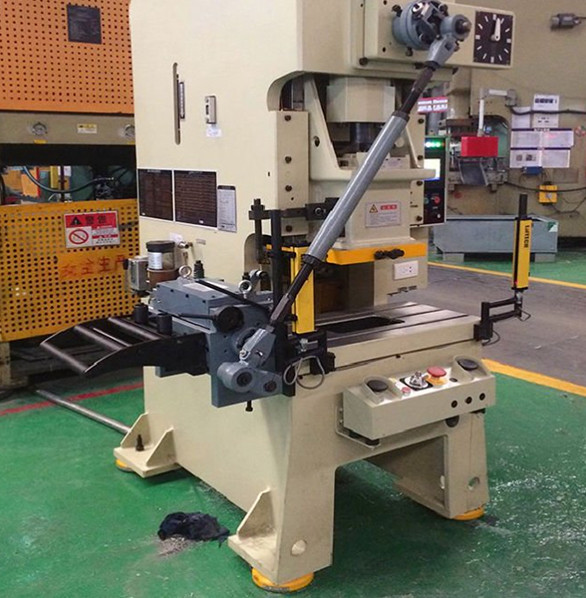
Galling — the cold welding of strip material onto the die surface — shows up as rough, torn parts, a rising tonnage trace, and eventually a die that needs polishing in the middle of a production run. At high-speed stamping rates above 200 SPM the problem gets worse quickly, because each stroke leaves less time for the lubricant film to recover. The fix is rarely a single change. It is a chain: material condition, feed consistency, lubricant choice, die surface, and heat management. This guide explains each link, starting with the NC servo feeder side of the line — the coil feeding equipment shown on our product index — where many galling problems quietly begin.
Start upstream: what the strip brings to the die
Galling does not start at the die. It starts with what the strip surface carries into the tool. Coil material that arrives with edge burrs from slitting, loose mill scale, or a patchy rust-preventive oil will wipe itself across the die steel within a few thousand strokes. The straightener section on a 3-in-1 decoiler straightener feeder — or on a separate NC Straightener Feeder in front of the die — does more than flatten strip: it also stabilizes the surface condition the die sees, removing the kinks and dirt pockets that make the lubricant film uneven.
Feed consistency matters just as much. When an NC servo feeder delivers strip at a smooth, repeatable speed and pitch, the die engages the material under steady conditions. When the feed jerks, or the strip slides and hesitates, you get momentary loss of lubricant contact and localized heating — exactly the trigger that starts aluminum and galvanized pickup. If you have seen unexplained galling appear after a feeder changeover or roll wear, suspect the feed side before you blame the die.
Lubricant: the film is the real die protection
At high speed, the lubricant has to do three jobs in a few milliseconds: separate the work material from the die steel, carry away heat, and flush away wear particles. A general-purpose oil that works at 60 SPM often fails at 200 SPM because the film squeezes out before the punch retracts. For aluminium and galvanized strip, switch to a high-film-strength drawing compound matched to the material; for stainless, check that the additive package can handle the higher interface pressure without breaking down.
Application method is as important as the oil itself. A spray or mist system that lays down a fresh, even film on every stroke beats a drip line that starves the strip at speed. Measure the oil actually reaching the die — an oily floor and a dry tool is a common failure signature. Plants that instrument their lubrication with flow monitoring typically cut galling-related stops by a third within a few weeks, because they finally see the film fail before the parts do.
A practical starting point for aluminium and galvanized work: set the applicator so the strip is visibly wet entering the die but not dripping onto the floor, then take a photo of the strip at the die entry as the speed reference. When galling returns later, compare the current strip appearance to that reference photo — it instantly tells you whether the film has thinned, which narrows the search to flow, nozzle, or oil condition.
Die surface treatments that resist pickup
When the lubricant is right and the galling persists, the die surface itself needs help. Polished tool steel resists pickup better than a rough ground finish, because there are fewer anchor points for microwelds. Beyond polishing, a coating breaks the adhesion mechanism. The table below compares the common options so you can match the treatment to your material and run length.
| Surface treatment | How it resists galling | Best suited for |
|---|---|---|
| Mirror polishing (Ra 0.1–0.2) | Removes mechanical anchor points | Aluminium, copper, short-to-mid runs |
| TiN / CrN coating | Hard, low-friction barrier on the surface | Galvanized and high-strength steel |
| DLC (diamond-like carbon) | Very low friction coefficient | Stainless and dry-lube applications |
| Nitriding | Hardened case resists adhesive wear | Heavy blanking, long production series |
| Textured / structured surfaces | Pockets hold lubricant at the contact | High-speed progressive dies |
Coating is not a substitute for a healthy lubricant film — it is a second line of defence. The most reliable high-speed setups combine a coated die, a fresh lubricant film on every stroke, and a tonnage monitor that flags rising friction before the surface welds. FANTY engineers see this three-layer approach on the cleanest high-speed lines we commission, and it is the pattern we recommend when a customer pushes a progressive tool toward its SPM ceiling.
Heat: the silent accelerator
Every microweld that forms and breaks releases heat, and heat thins the lubricant, which causes more microwelds — a feedback loop that ends in a torn part and a trip to the toolroom. Attack the loop from both ends. Reduce heat generation by easing the entry impact: a smoother feed profile from the NC servo feeder and correct die clearance keep the work material from being crushed and dragged at the shear zone. Improve heat removal by directing coolant or mist at the highest-load stations rather than flooding the whole die, and schedule short lubrication "recovery" windows if the press control allows a brief low-speed segment during indexing.
Watch the tonnage trace like a vital sign. A slow upward drift in peak tonnage at a specific station is galling announcing itself, usually hours before the part quality shows it. Lines that log tonnage per stroke and alarm on drift catch pickup early enough to clean the die on a planned break instead of an emergency stop.
Daily checklist to keep pickup away
Print this list and run it at the start of every shift. Most galling problems are caught in the first two items.
- Verify the lubricant is actually reaching the die: check spray nozzles for clogging and measure flow, not just tank level.
- Run a strip sample through your hand: burrs, rust and dirty edges on the coil are upstream problems that no die can fix alone.
- Compare the tonnage trace to the reference run; flag any station drifting upward before it welds.
- Check feed rolls and the straightener rolls on your NC servo feeder line for glazing or debris transfer that marks the strip.
- Log the first fifty parts of every run for surface finish; pickup announces itself on the part edge long before the die fails.
Galling in high-speed stamping: FAQ
Why does galling appear only when we raise the SPM?
Higher speed shortens the time available to re-establish the lubricant film and raises interface temperature. The same die and oil that work at 80 SPM can weld at 200 SPM. Raise speed in steps and watch the tonnage trace rather than jumping straight to maximum.
Can an NC servo feeder really cause die pickup?
Indirectly, yes. Jerky or hesitating feed disturbs the lubricant film and causes localized heating at the same die stations. A worn feed roll or slipping grip leaves marks that act as pickup starters. Keeping the feed rolls and the servo feeder in calibration removes a whole class of galling triggers.
Aluminium or galvanized — which gall worse?
Both are adhesive by nature: aluminium softens and transfers easily, and zinc coating smears onto tool steel. Neither should run dry. Use a film-strength compound designed for the material and consider a coated or polished die for long runs.
How often should we polish the die once galling starts?
Treat the symptom once, then find the cause. If galling returns after a polish within the same shift or week, the lubricant film, strip condition or feed consistency is the real problem. Polishing more often than that is maintenance masking a process fault.
Is dry lubrication realistic for high-speed stamping?
For selected applications, yes — dry films or pre-lubricated strip remove the mess and the flow-control problem. But they demand a very clean strip and a compatible die coating. On most progressive lines, a controlled wet film is still the more forgiving route at 200 SPM.
Galling eating your uptime?
Describe your material, speed and die type. FANTY's stamping engineers — backed by 80+ R&D staff and 200+ installed coil lines across 60+ countries — will help you trace whether your next fix belongs on the die, the oil, or the feeder.
Talk to a Stamping Engineer