How to Troubleshoot Common NC Straightener Feeder Accuracy Problems?
- Share
- publisher
- David Park - Senior Stamping Engineer, FANTY Machinery
- Issue Time
- Aug 7,2026
Summary
Learn how to diagnose and fix NC Straightener Feeder accuracy problems. Feed length drift, slippage, misfeeds, and maintenance checklist from FANTY.
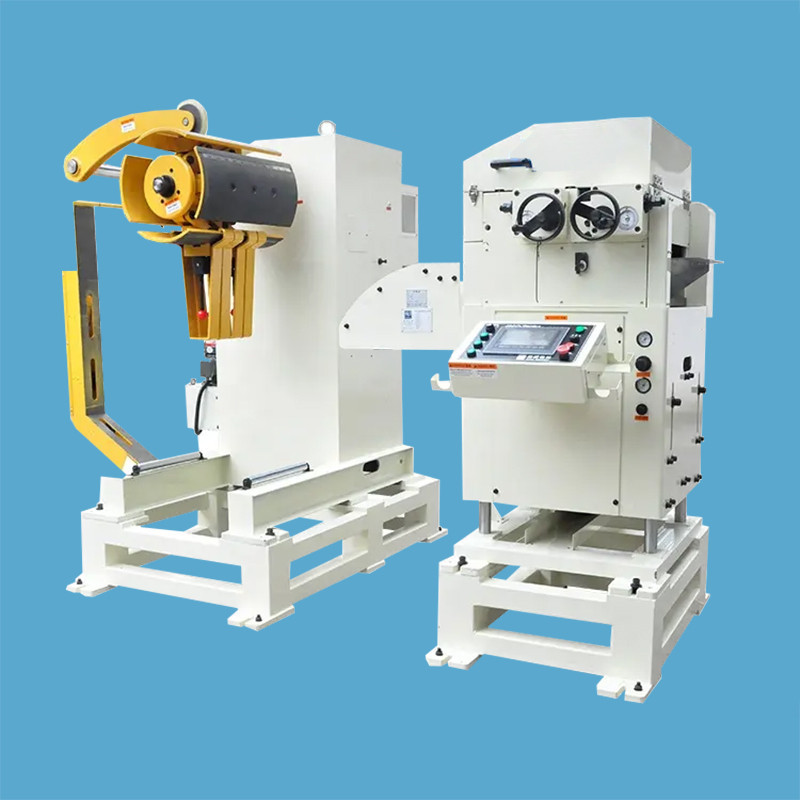
Accurate, repeatable feeding is the heart of profitable stamping. If your parts drift in size, your pilots misalign, or you scrap coils on misfeeds, the fix usually starts with the feeder — and more specifically, with how the NC Straightener Feeder is set up and maintained. This guide walks through the most common feeding accuracy problems, their root causes, and the practical solutions our engineers apply in the field every day.
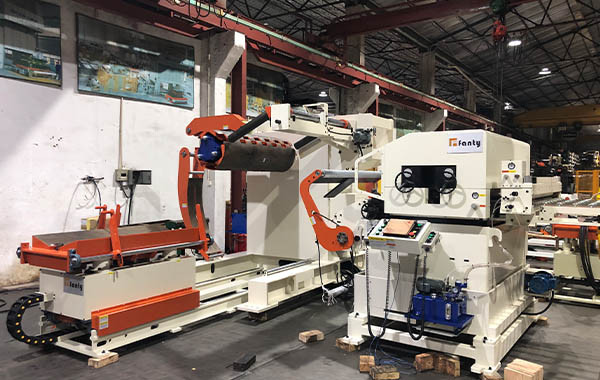
Common Feeding Accuracy Problems and Their Causes
| Problem | Symptom | Most Likely Cause |
|---|---|---|
| Inconsistent feed length | Part size varies; pilot pins misalign | Roller pressure too low; encoder coupling loose |
| Material slippage | Scored strip surface; length drift | Worn rollers; wrong roller surface for material |
| Misfeed / no feed | Press stops; alarm sounds | Material jam at straightener exit; blocked sensor |
| Length drift during run | Parts grow or shrink progressively | Servo motor overheating; encoder drift |
| Strip wandering | Edge damage; inconsistent trim | Centerline misalignment; loose side guides |
Notice that most of these problems are mechanical or alignment-related rather than electronic. Before you suspect the servo drive, check the simple things: roller condition, pressure settings, and alignment. In our experience, roughly 60% of feeder accuracy complaints trace back to mechanical components.
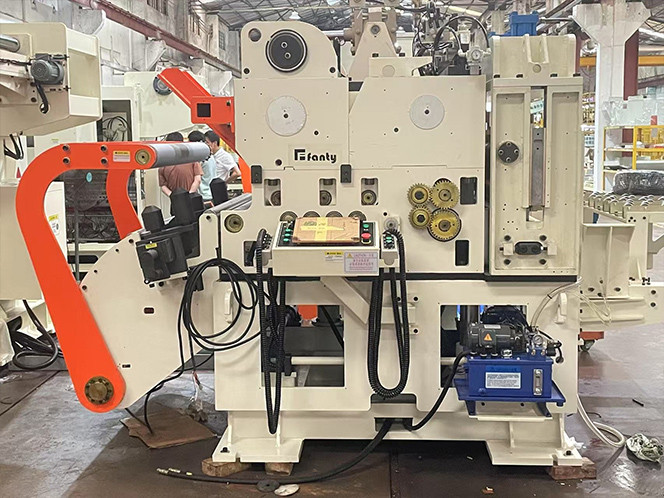
Diagnosing Step by Step
Follow this sequence instead of randomly adjusting settings — it isolates the root cause faster:
- Check mechanical components — rollers, bearings, belts, mounting bolts. This covers most cases.
- Verify sensors and encoder coupling — misalignment here causes phantom positioning errors.
- Review control parameters — feed length, acceleration profile, press synchronization timing.
- Log when problems occur — patterns reveal root causes (specific coils, times of day, materials).
How to Verify Feed Length Accuracy
Run a simple test: program a known feed length, feed ten parts, and measure each with a caliper. Calculate the average deviation. If it exceeds the machine's rating (typically ±0.05-0.1 mm), work through the diagnostic sequence above. Keep a record of these measurements — trend data is invaluable for spotting slow degradation before it becomes a problem.
Preventive Maintenance Checklist
- Daily: clean feed rollers with a soft cloth; check lubrication; verify encoder coupling is tight
- Weekly: measure actual vs programmed feed length; inspect belts; check pneumatic pressure
- Monthly: inspect roller surface condition; check bearings for play; verify sensor alignment
- Quarterly: full calibration check; replace worn rollers; service gearbox
FANTY recommends keeping a spare kit with the most common replacements — feed rollers, encoder couplings, belts, and sensor modules. Having these on hand turns a multi-day failure into a few hours of downtime.
Frequently Asked Questions
How do I know when feed rollers need replacing?
Visible wear marks, reduced grip at the same pressure setting, or increasing dimensional variation in stamped parts. Most rollers last 1-2 million cycles under normal conditions.
Can material quality cause feeder accuracy problems?
Yes — this is one of the most common misdiagnoses. Coils with inconsistent thickness, excessive crown, or poor surface finish can cause feeding issues that look like mechanical failure. Verify material quality before troubleshooting the feeder.
How often should I recalibrate my NC Straightener Feeder?
FANTY recommends a full calibration check every 6 months or 500,000 cycles, whichever comes first. Weekly verification of feed length is good practice for ±0.05 mm applications.
When should I call FANTY for support?
If the problem recurs after standard fixes, you see error codes you cannot interpret, or you suspect electrical damage. FANTY offers remote diagnostic access that resolves most issues without an on-site visit.
Related reading
- how back tension affects straightening
- why pass line height matters
- how to hit a flatness spec on a coil line
Part of the 3-in-1 decoiler straightener feeder — the full library of coil handling, straightening and feeding guides from FANTY.
Having NC Straightener Feeder accuracy problems you can't solve? Contact FANTY's support team for remote diagnostics and expert troubleshooting.
Fanty · 3-in-1 Compact Line
Cut Line Length, Not Line Capability
Tell us the footprint you have and the material you run. We show you which 3-in-1 frame fits and exactly how much line length you get back.
Get a Free QuoteFANTY Machinery · 13 years on stamping automation · 2,000+ coil lines installed · engineers reply within 24 hours