How to Verify NC Straightener Feeder Quality Before You Buy?
- Share
- publisher
- David Park - Senior Stamping Engineer, FANTY Machinery
- Issue Time
- Aug 11,2026
Summary
A practical buyer's checklist for verifying NC straightener feeder quality before purchase, covering frame rigidity, servo drives, straightening rollers, CE certification and supplier support from FANTY.
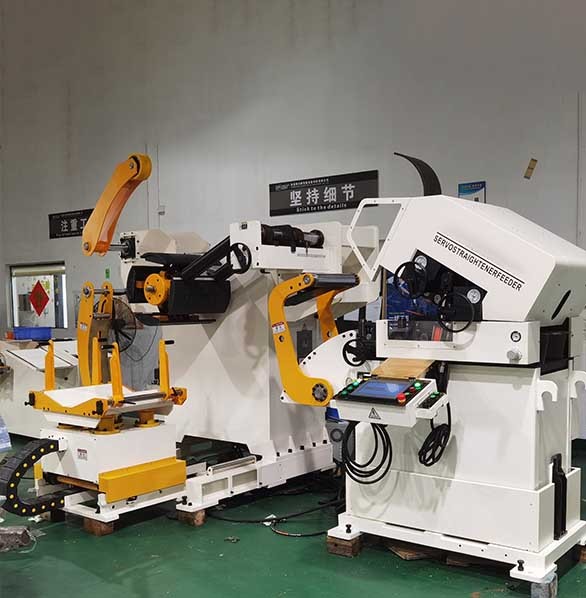
How to verify NC Straightener Feeder quality before you buy is one of the most common questions we hear from stamping shop owners who have been burned by cheap imports.
A 3-in-1 decoiler straightener feeder is the heart of your coil feeding line, and a poorly built unit quietly eats your profit margin through scrap, downtime and rework.
At FANTY Machinery, our engineers have spent 12 years building and testing coil feeding equipment for customers in more than 60 countries, and we have learned exactly what separates a reliable machine from a maintenance nightmare.
This buyer's guide walks you through a practical factory-inspection checklist you can use to evaluate any NC servo feeder or straightener before signing the purchase order.
Why Verifying Machine Quality Matters Before Purchase
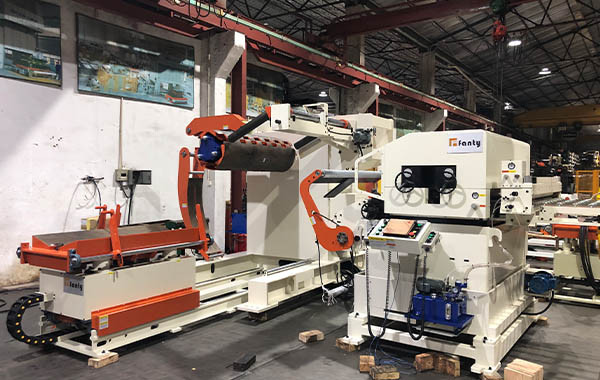
Stamping equipment is a long-term capital investment. The difference between a high-quality NC straightener feeder and a marginal one can mean hundreds of thousands of dollars over the life of the machine.
When you compare NC servo feeder prices from different suppliers, remember that the initial invoice is only a small part of the total picture. Maintenance frequency, replacement part availability, energy consumption and unplanned downtime all add up quickly.
A machine that costs 20 percent more but delivers 95 percent uptime instead of 80 percent will pay for itself within months on a busy progressive die line running at 200 SPM.
Beyond the economics, there is a safety dimension. Poorly welded frames, undersized hydraulic systems and cheap electrical components create real hazards on the shop floor. Coils weighing several tons can slip or telescope if the decoiler expansion mechanism is not rigid enough.
Verifying quality before you buy is not just about protecting your budget; it is about protecting your people.
The Factory Inspection Checklist for an NC Straightener Feeder
You cannot judge a coil feeding line from a brochure. If at all possible, visit the factory or at least run an online factory audit with video inspection. Here is the checklist our own customers use, refined over hundreds of site visits, to separate a serious manufacturer from an assembly workshop.
| Inspection Point | What to Look For | Red Flags |
|---|---|---|
| Frame & welding | Stress-relieved steel plate, smooth welds, thick side plates on decoiler | Thin sheet metal, paint hiding rust, visible weld defects |
| Roller straightening unit | Hardened and ground rollers, sealed bearings, adjustable backup rollers | Soft rollers, play in bearings, no backup support at high load |
| Servo drive system | Branded servo motor and controller, proper kW rating, closed-loop feedback | Generic motors, no encoder feedback, undersized for rated width |
| Feeding mechanism | Precision feed rolls with pneumatic or hydraulic clamping, synchronized motion | Slipping rollers, uneven clamping force, jerky feed motion |
| Electrical cabinet | Neat wiring, labeled terminals, cooling fan, CE-rated components | Bundled cables, missing labels, no cooling, uncertified parts |
| Control interface | Touchscreen HMI, parameter presets, fault diagnostics, memory retention | Basic push buttons only, no stored recipes, no error logs |
| Documentation | CE declaration, wiring diagrams, manual in English, spare parts list | No CE mark, missing manuals, vague warranty wording |
The table above is a condensed version of the audit we perform on every machine before it leaves our 45,000 m² factory. With 370 staff members and more than 80 R&D engineers, FANTY has the engineering depth to support custom configurations, and every NC straightener feeder we ship includes full CE certification and bilingual documentation.
Key Quality Indicators in the Drive and Control System
The servo drive is the brain of the modern NC servo feeder. Ask the supplier which brand of servo motor and controller they use, and what the positioning repeatability is.
You should also check how the machine handles rapid acceleration and deceleration. A high-quality controller uses smooth motion profiles that reduce mechanical shock, extend gear life and protect your die.
On a 3-in-1 decoiler straightener feeder running at 200 SPM, the difference between a tuned servo profile and a crude start-stop motion is visible within minutes in the finished part quality.
- Closed-loop servo with encoder feedback for repeatable ±0.05 mm pitch accuracy
- Touchscreen HMI with stored job recipes for fast die changeover
- Automatic fault diagnostics that log alarms and guide operators to the cause
- Parameter protection so untrained operators cannot corrupt production settings
- Remote support readiness, allowing the supplier to diagnose issues online
Mechanical Robustness: Rollers, Bearings and Frame Rigidity
Straightening quality depends almost entirely on mechanical precision. The straightening rolls must be made from hardened alloy steel, ground to a tight tolerance, and supported by backup rollers so they do not deflect under load. When you inspect an NC straightener feeder, ask about roll hardness, surface finish and how the rolls are supported across their full working width.
The decoiler side deserves equal attention. The mandrel expansion must be strong enough to grip the coil inner diameter without slipping, and the base frame must absorb the vibration of a fast-running line.
FANTY builds the entire 3-in-1 decoiler straightener feeder on a stress-relieved welded frame that keeps the straightening pass line stable at high speed, which is exactly what protects your die and keeps your stamped parts within tolerance.
Questions to Ask Every NC Straightener Feeder Supplier
Bring this short list of questions to your next supplier meeting. The answers reveal more about a manufacturer than any brochure ever will.
- Can you share a live video of the exact machine model running at full speed?
- What positioning accuracy is guaranteed, and how is it measured?
- Which servo and PLC brands are inside the cabinet, and are they CE certified?
- What is the spare parts policy, and how fast can critical parts be shipped?
- Do you provide on-site installation, operator training and remote diagnostics?
- Can you reference three customers in my industry running a similar line?
Service and Support: The Hidden Part of Machine Quality
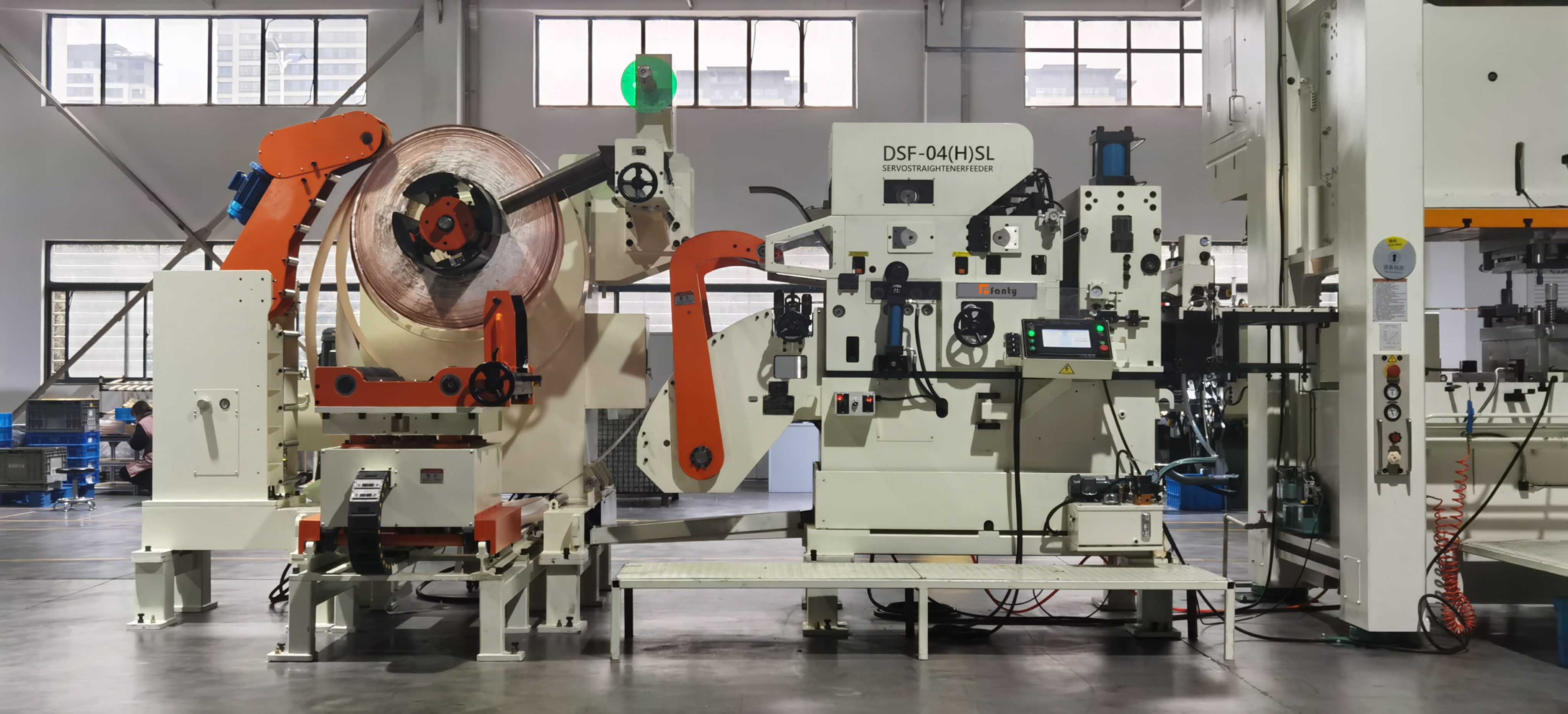
Machine quality does not end at the shipping dock. Ask the supplier how they handle commissioning, training and after-sales support. A manufacturer with local service engineers, a documented response-time commitment and a parts warehouse will keep your line running; a trading company that simply resells machines will leave you guessing when something fails.
FANTY has installed more than 200 active production lines worldwide, and our service team supports customers through remote diagnostics, video-guided troubleshooting and fast spare parts dispatch.
Every NC servo feeder and straightener we deliver includes commissioning support and operator training, because we measure our success by how quickly your line reaches full production.
Frequently Asked Questions
What is the difference between an NC straightener feeder and a separate straightener plus feeder?
An NC straightener feeder combines straightening and feeding in one compact machine, which is usually the middle section of a 3-in-1 decoiler straightener feeder line. The combined design shortens the pass line, reduces floor space and eliminates one synchronization point. Separate units offer more flexibility for unusual coil widths but need more space and a more complex control setup.
How do I check the real feeding accuracy of an NC servo feeder?
Run a continuous feeding test at the rated speed and measure the pitch error over several hundred strokes with a dial indicator or a laser. A quality closed-loop NC servo feeder holds ±0.05 mm repeatability. Also ask the supplier for the accuracy test report of the specific model you intend to buy, not the marketing figure printed on the catalog.
Why does frame rigidity matter for a 3-in-1 decoiler straightener feeder?
Stamping generates strong vibration and shock loads. If the frame flexes, the straightening rolls and feed rolls lose their alignment, which shows up as inconsistent flatness, feed length drift and premature wear. A rigid stress-relieved frame keeps the pass line stable, which is essential for high-speed precision stamping at 200 SPM.
Should I buy directly from the factory or through an agent?
Buying directly from the manufacturer usually gives you better pricing, direct technical support and clearer responsibility for quality and warranty. When you buy from FANTY, you communicate directly with our engineers, see the machine being built, and get commissioning and training from the people who designed it.
Agents add a layer that can delay communication when issues arise.
Related reading
- how much floor space a coil line needs
- how to select the right model
- what each specification line really costs
Part of the the coil line guide library — the full library of coil handling, straightening and feeding guides from FANTY.
Ready to upgrade your coil feeding line with a verified high-quality machine?
Talk to FANTY's engineers today for a free line audit, honest technical advice and a customized quotation for your stamping application.
Send Us Your Inquiry Now