Hydraulic vs Motorized Decoiler: Which Is Better in 2026?
- Share
- Issue Time
- Apr 30,2026
Summary
Compare hydraulic and motorized decoiler machines in 2026. Learn key differences, costs, and how to choose the best solution for your production line.
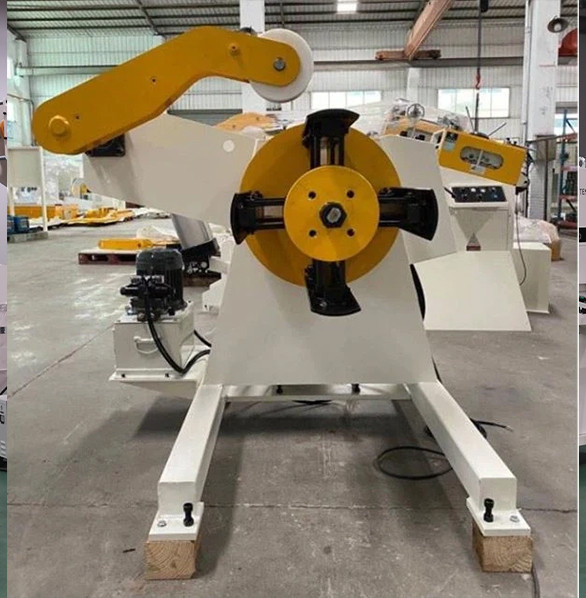
Choosing between a hydraulic decoiler machine and a motorized decoiler is one of the most common decisions when setting up or upgrading a coil processing line. Each technology has its own strengths, cost profile, and ideal application range — and picking the wrong one can mean either paying for capability you never use or struggling with a machine that cannot handle your heaviest coils. This in-depth guide compares both types across every meaningful dimension so you can decide with confidence.

What Is a Hydraulic Decoiler Machine?
A hydraulic decoiler uses a hydraulic power unit to drive its mandrel expansion, coil clamping, and in many models the rotation itself. The operator engages the hydraulic system to expand the mandrel segments outward against the coil's inner diameter, creating a secure mechanical grip that prevents slippage even under heavy load. Because hydraulic force is both powerful and smooth, hydraulic decoilers handle the heaviest industrial coils — typically from 5 up to 20 tons — while keeping coil changes fast and safe.
Most hydraulic decoilers also include a hydraulically actuated pressing arm that holds the outer wrap of the coil in place during unwinding. This is a genuine safety and stability feature: without it, the outer wrap of a heavy coil can spring loose during feeding, damaging the strip edge and posing a risk to operators. The hydraulic system also provides precise, controllable braking, which matters when processing tension-sensitive materials such as thin aluminum or pre-painted steel.
What Is a Motorized Decoiler?
A motorized decoiler uses an electric motor, usually paired with a variable-frequency drive (VFD), to rotate the coil actively during unwinding. The motor speed is automatically regulated by a loop sensor or photoelectric eye, which detects the material loop between the decoiler and the downstream equipment and adjusts rotation speed to match demand. This active feeding reduces strain on the feeder and keeps material tension consistent.
Motorized decoilers typically cover the mid-range of the market — coils from roughly 500 kg to 3,000 kg — and are the most commonly specified decoiler type for small and medium stamping shops. They cost significantly less than hydraulic units, are simpler to maintain, and do not require a hydraulic power unit, making them an attractive choice for lighter-duty applications where coil weights stay moderate.

Key Differences: Hydraulic vs Motorized Decoiler
| Feature | Hydraulic Decoiler | Motorized Decoiler |
|---|---|---|
| Coil weight capacity | 5,000 - 20,000 kg | 500 - 3,000 kg |
| Mandrel expansion | Hydraulic power — fast, under 5 min | Manual or mechanical |
| Speed control | VFD + precision hydraulic brake | Variable frequency drive |
| Pressing arm | Hydraulic — standard on most models | Optional on some models |
| Price range (USD) | $8,000 - $25,000+ | $2,500 - $8,000 |
| Maintenance | Medium — hydraulic oil, filters, seals | Low — motor and bearings |
| Best for | Heavy-duty, 24/7 industrial production | Mid-volume, lighter coil applications |
When to Choose a Hydraulic Decoiler
- Heavy coils over 3 tons: hydraulic expansion provides the grip strength needed to prevent slippage under load
- High-precision material handling: smooth hydraulic braking protects tension-sensitive strips from damage
- Industrial 24/7 production: hydraulic decoilers are engineered for continuous, high-volume operation
- Frequent coil changes: hydraulic mandrel expansion cuts changeover time dramatically
When to Choose a Motorized Decoiler
- Coils up to 3 tons: motorized units comfortably handle typical small and medium shop loads
- Budget-conscious projects: lower upfront cost with a strong price-performance ratio
- Simpler maintenance: no hydraulic system means fewer fluids, filters, and seals to manage
- Mid-volume production: reliable active feeding for lines producing 1,000-5,000 parts per day
Maintenance Considerations
Hydraulic decoilers require periodic hydraulic oil checks, filter replacements, and seal inspections — typically on a quarterly cycle. Motorized decoilers have simpler maintenance needs centered on bearing lubrication and belt tension, which reduces both cost and downtime in lighter applications. That said, for heavy-duty work, the higher maintenance of a hydraulic unit is a fair trade for the load capacity and reliability it delivers.
Frequently Asked Questions
Is a hydraulic decoiler always better than a motorized one?
No — it depends on your coil weight and production volume. Hydraulic decoilers are the right choice for heavy coils above 3 tons and 24/7 industrial operation. For lighter loads up to 3 tons, a motorized decoiler offers better value and simpler maintenance.
Can I upgrade a motorized decoiler to hydraulic later?
Not practically — the frame, mandrel, drive system, and braking design are fundamentally different. It is more cost-effective to select the right technology from the start.
How do I know my coil weight?
Check the coil label or use the formula: coil weight = strip density × width × thickness × length. Most steel suppliers provide the weight on the delivery certificate.
Does FANTY offer both types?
Yes. FANTY manufactures a full range of motorized decoilers for light and medium duty and hydraulic decoilers for heavy-duty applications, all CE-certified and backed by 12 years of engineering experience.
Not sure whether a hydraulic or motorized decoiler fits your line? Contact FANTY's engineering team for a free recommendation based on your coil specifications.