Is Your NC Straightener Feeder Ready for HSLA Steel?
- Share
- publisher
- FANTY
- Issue Time
- Sep 10,2026
Summary
Moving from 340 MPa mild steel to 590 MPa HSLA changes the demand on every part of a straightener. This readiness assessment covers roll count, gap adjustment range.
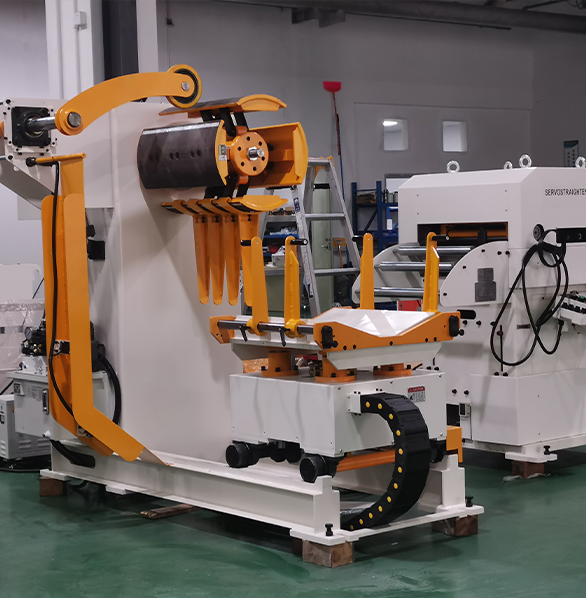
Switching from 340 MPa mild steel to 590 MPa HSLA on a line that was bought for the mild grade is a decision that looks like a material substitution and behaves like a machine redesign. Springback roughly doubles, the torque needed to bend the strip rises by a similar margin, and the flatness that a nine-roll straightener delivered comfortably on the old grade suddenly falls outside tolerance. Most of the machines I see in this position are not obsolete — they are under-configured for the new duty. The question is which parts are actually limiting.
What changes when yield strength doubles
Leveling works by bending the strip through a series of rolls, each bend slightly smaller than the last, until every fibre in the cross-section has been stressed past yield in both directions. Only then does the strip come out flat and stress-relieved.
That last condition is the one that breaks when you change grade. To stress a fibre past yield, the roll has to bend it beyond the elastic limit — and the elastic limit scales with yield strength. Double the yield strength and you need roughly double the bending moment to reach the same plastic strain. If the roll set cannot generate that moment, the outer fibres never yield, the strip comes out with residual stress, and the flatness measurement gets worse even though nothing on the machine has changed.
The practical consequences show up in three places at once: flatness degrades, springback at the die increases because the residual stress is no longer neutralised, and the strip may develop a slight cross-bow as the two edges release differently. All three trace back to insufficient plastic deformation in the straightener.
Roll count and diameter run out first
The number of work rolls determines how many bend cycles the strip experiences. More rolls means each bend can be gentler while still accumulating enough total plastic strain, which is why high-tensile leveling generally wants more rolls rather than fewer.
Roll diameter matters for a different reason. A larger roll produces a larger radius of curvature for a given penetration depth, and reaching yield on high-strength strip requires deeper penetration. Small rolls can be pushed deeper before the strip starts to interfere with the roll shoulders, but they also carry higher contact stresses and wear faster on hard material.
The working rule in the field: a machine that levels mild steel comfortably on nine rolls will typically need eleven or thirteen rolls to achieve comparable flatness on 590 MPa HSLA, assuming the roll diameter and the roll gap adjustment range can accommodate the deeper penetration. If the machine has a fixed top-roll bank with limited adjustment, this is the constraint that decides the answer.
| Readiness check | Mild steel line | Needed for 590 MPa HSLA |
|---|---|---|
| Work roll count | 7-9 rolls | 11-13 rolls for equivalent flatness |
| Roll gap adjustment range | Typically ±3 mm | Needs enough travel for deeper penetration |
| Drive torque at the rolls | Rated for 340 MPa | Roughly 1.8-2.2x the mild steel demand |
| Roll hardness and surface | Standard hardened rolls | Higher hardness; check for marking on coated grades |
| Frame and roll rigidity | Adequate for light strip | Deflection under higher load must stay within tolerance |
| Strip tension control | Open-loop brake often sufficient | Closed-loop tension strongly preferred |
| Flatness measurement | Visual inspection | Quantified measurement; visual is not enough |
Torque: what your existing drive can actually deliver
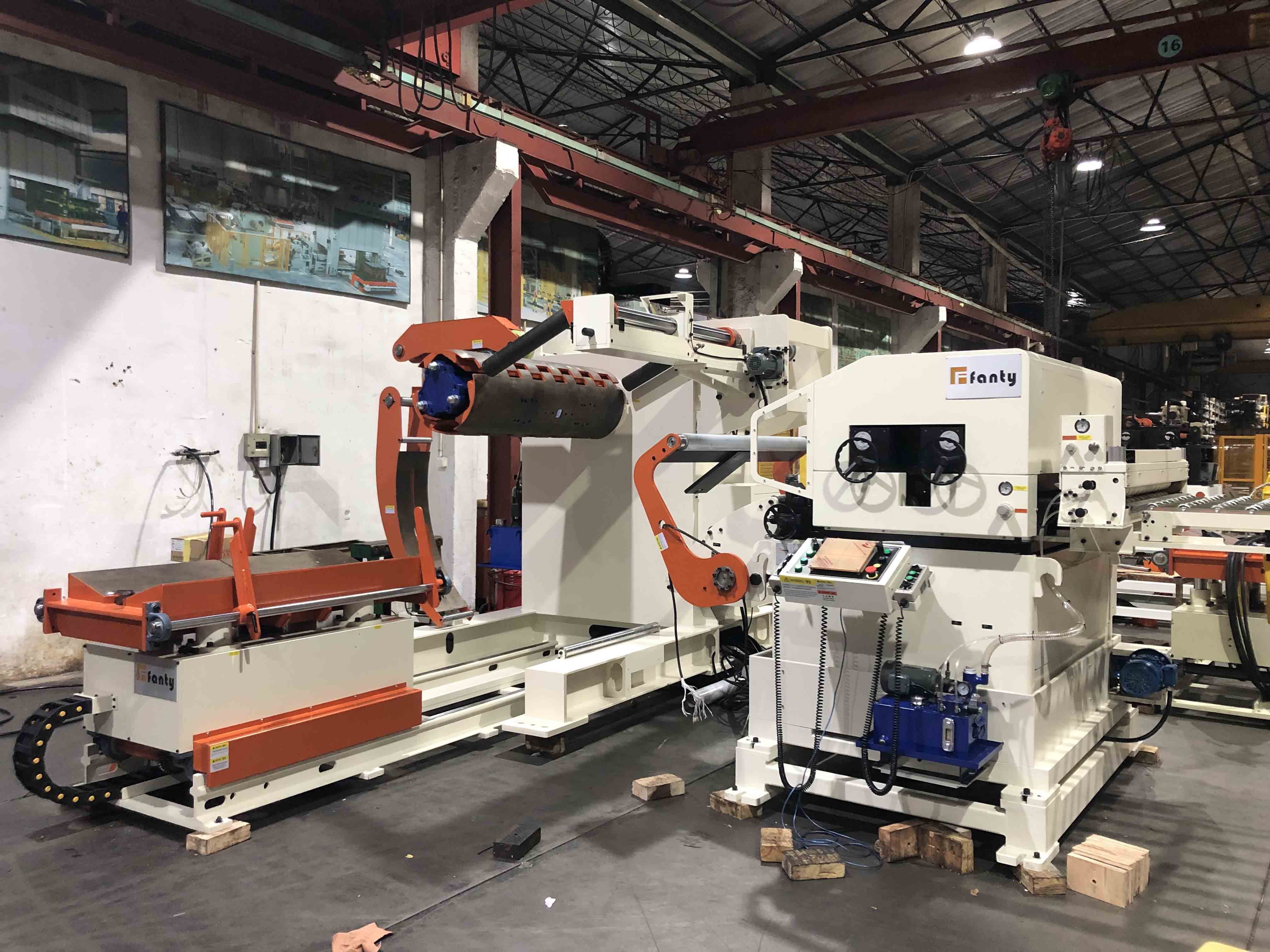
This is where a lot of upgrade plans go wrong. The straightener drive is sized at the original build with a service factor, and it is usually running well below its thermal limit on mild steel. That spare capacity is real but it is not unlimited, and it is shared with the feeder if the machine is a 3-in-1 decoiler straightener feeder with a common drive arrangement.
The torque requirement does not scale linearly with yield strength, because part of the load is friction and bearing drag that does not change. A reasonable field estimate for the increase in straightening torque is 1.8 to 2.2 times, depending on the strip thickness relative to roll diameter and how much penetration depth is needed.
Ask the machine builder for the original torque calculation and the drive's rated output torque. If the margin is under about 20 percent above the new calculated demand, the drive is the limiting item and it will show up as thermal trips during continuous running long before it shows up as a flatness problem.
Pressure, marking and the surface trade-off
Higher strength strip needs more roll pressure to level, and more pressure on harder material increases the risk of surface marking — particularly on coated or pre-painted stock. The two requirements pull against each other, and the usual resolution is to spread the load rather than raise it locally.
Practical options, in order of cost: increase the number of contact rolls so each carries less load; move to a harder, finer-ground roll surface so grip is achieved with less normal force; and add strip cleaning before the straightener so abrasive particles do not get pressed into the surface. The last one costs almost nothing and is routinely skipped.
If the strip is coated, test a short sample before committing the whole coil. Marking that is invisible on bare cold-rolled steel can be obvious on galvanised or painted stock under the same conditions, and the damage is not recoverable downstream.
Upgrade or replace: making the call
Once you have the answers to the checks above, the decision usually falls out clearly. If roll count and adjustment range are adequate and only the drive is short, a drive and control retrofit is the economical route. If roll count is short but the frame, roll diameter and drive have margin, adding a roll bank is sometimes possible — though it is a factory job, not a field modification.
If the frame was built for light strip and the roll gap adjustment cannot reach the penetration depth required, the machine is structurally the wrong size. No retrofit fixes that, and pushing it anyway produces the worst outcome: a line that runs, produces marginal parts, and consumes rolls and drives at an accelerated rate.
There is a middle path worth considering for plants that run both grades. A straightener configured for the high-strength duty will handle mild steel perfectly well — the machine simply does less work — so if HSLA is more than about a fifth of your volume, specifying for the harder grade from the start avoids carrying two configurations and the setup risk that comes with switching between them.
Measure the result, do not assume it
Whichever route you take, validate it with numbers rather than by eye. Four measurements tell you whether the straightener is actually doing the work on the new grade:
- Flatness across the width, on a surface plate. A well-set line holds about 0.08 mm on 590 MPa strip; anything wider means the outer fibres are not yielding.
- Longitudinal deviation along a two-metre cut length, which reveals residual longitudinal stress that a width measurement misses.
- Pilot hole position variation over a fixed run length, compared against the same measurement taken on the old grade.
- Pilot pin wear over a fixed production period. This is the real verdict on springback, and it takes weeks to show — plan the check before you need the answer.
If flatness improved but pilot pin wear did not, the straightener is still leaving residual stress and the penetration depth is not yet sufficient. That is a setup problem before it is an equipment problem, and it is worth one more pass on roll gap before committing to capital spend.
Then check the downstream effect, because that is what the exercise is really for. Compare the pilot hole position variation before and after the change over the same run length, and compare the die's pilot pin wear over a fixed production period. If flatness improved but springback at the die did not, the straightener is still leaving residual stress and the penetration depth is not yet sufficient.
FANTY has supplied leveling and feeding equipment into more than 200 production lines and builds to CE requirements, and the HSLA conversion question comes up often enough that the machine configurations for it are established rather than experimental. The useful starting point for any plant considering the switch is a strip sample and a flatness target — everything else follows from those two numbers.
Can a straightener built for mild steel level 590 MPa HSLA at all?
It will run, but usually not to the same flatness. The outer fibres may not reach yield, leaving residual stress that shows up as degraded flatness and increased springback at the die. Whether that is acceptable depends on your part tolerance.
How many work rolls do I need for high-strength strip?
As a field guideline, add two to four rolls over what the same flatness target needs on mild steel. A nine-roll machine for mild steel typically corresponds to eleven or thirteen rolls for 590 MPa material.
Will higher roll pressure damage coated strip?
It can. Harder, finer-ground rolls achieve grip with less normal force, and cleaning the strip before the straightener removes abrasive particles that would otherwise be pressed into the surface. Test a sample before running production.
Is a drive retrofit enough, or do I need a new straightener?
It depends on the roll set. If roll count and adjustment range suit the higher grade and only the drive lacks margin, a retrofit works. If the roll gap cannot reach the required penetration depth, the machine is the wrong size and the drive is not the real problem.
Does leveling high-strength steel wear rolls faster?
Yes. Contact stresses are higher and the rolls do more work per metre of strip. Expect a shorter roll regrind interval, and budget for it rather than being surprised by it.
Moving to high-strength steel next quarter?
Send a strip sample and your flatness target. FANTY's engineers will tell you whether your existing straightener can hold it, what a roll or drive upgrade would cost, and whether a new configuration is the better answer.
Assess Your Straightener