Is Your Slab Strong Enough for a Heavy-Duty Decoiler?
- Share
- publisher
- David Park - Senior Stamping Engineer, FANTY Machinery
- Issue Time
- Sep 20,2026
Summary
A 12-tonne coil on a slab nobody checked is the most common installation delay on a coil line. This works through the load arithmetic, the four load cases a machine datasheet omits, when a separate foundation block is cheaper, and the cases where the concrete was never the problem.
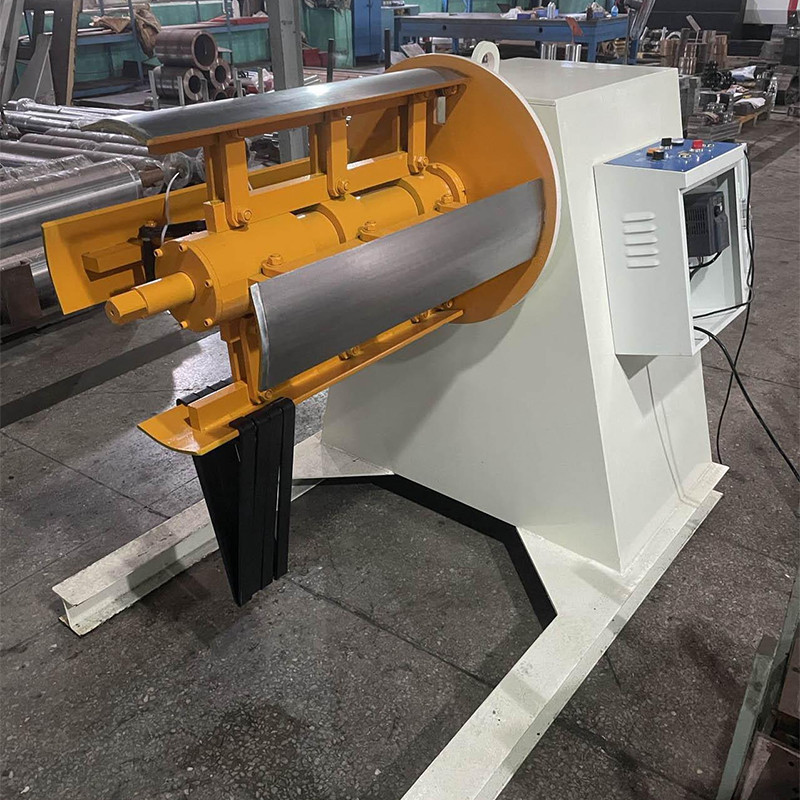
The most expensive mistake I see on a coil line installation is not a machine fault.
It is a 12-tonne coil sitting on a slab that was never designed for the load, and a purchase order that only ever mentioned the machine weight.
Every quotation quotes a coil capacity. Very few quote the load the machine puts into the floor, because the floor belongs to you.
That gap is where installations go wrong: the equipment arrives, the slab turns out to be 150 mm of unreinforced concrete over fill, and the project stops for three weeks while a foundation is cast.
This is the arithmetic worth doing before you order a heavy duty decoiler or uncoiler.
It covers what the machine actually presses into the slab, which load cases the nameplate omits, and when a separate foundation is the cheaper answer.
Machine options sit in our product range, and the specification logic behind capacity and mandrel choice is set out in the coil line guide library.
Start With the Load, Not the Machine
Floor loading questions usually arrive phrased as "what slab does this machine need". That framing invites the wrong answer, because the machine is rarely the heavy part.
On a 12-tonne capacity heavy duty decoiler, the machine frame, mandrel, base and hydraulic unit together weigh roughly 4 to 5 tonnes. The coil it is built to carry weighs 12.
So the floor sees about 17 tonnes, and 70% of that arrives on the mandrel as a cantilevered mass, not as a distributed machine load.
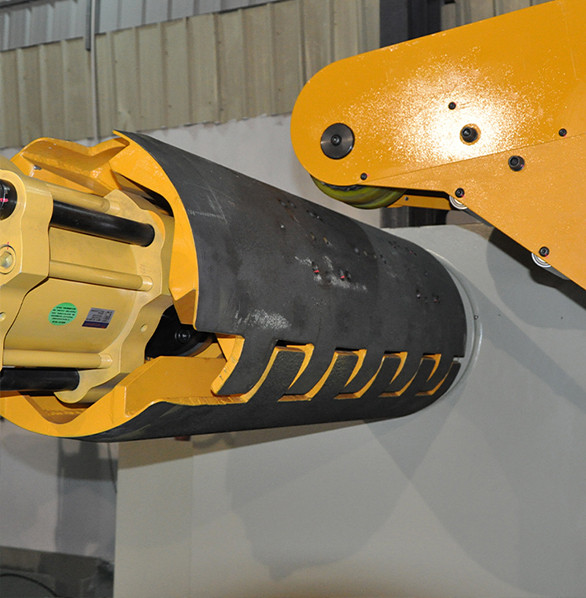
The distinction matters because a cantilevered coil produces an overturning moment that a distributed load does not.
Three quantities decide whether your slab is adequate. The bearing pressure under the feet tells you whether the concrete crushes. The anchor bolt capacity tells you whether the machine stays put.
The slab's punching shear capacity tells you whether the load spreads before it punches through.
Most site assessments check only the first, and the first is almost never the one that fails.
Working Through a 12-Tonne Example
Take a real case: a 12-tonne steel coil, 1,250 mm outer diameter, 508 mm bore, 1,250 mm wide, loaded on a heavy duty uncoiler with a four-pad base.
Step one: total mass. Coil 12,000 kg plus machine 4,500 kg gives 16,500 kg, or about 162 kN. Under gravity alone that is the whole story.
Step two: contact area. Four levelling pads of 250 × 250 mm give 0.25 m² of contact. The average bearing pressure is 162 kN ÷ 0.25 m², or about 0.65 MPa.
Against a 30 MPa concrete mix, 0.65 MPa looks trivial, and it is. This is why the bearing check passes on almost every site and why it tells you almost nothing.
Step three: the real check. A levelling pad does not sit flat on concrete. It sits on shims, and shims concentrate load onto a fraction of the pad area.
Substitute an effective contact area of 0.06 m² across four shimmed points and the pressure becomes 2.7 MPa — still acceptable in bearing, but now within a factor of three of what a thin slab can spread.
Step four: punching shear. This is the governing check for a slab on grade.
A 150 mm slab without reinforcement has very limited capacity to resist a concentrated load; 200–250 mm with a fabric mesh or a rebar mat is the normal minimum for equipment of this size.
The conclusion from the arithmetic is useful: the concrete almost never crushes. What fails is the slab's ability to spread a concentrated load, or the anchors' ability to hold it.
Four Load Cases the Nameplate Leaves Out
A coil capacity figure describes one load case out of four. The other three are the ones that damage floors and anchors.
| Load case | What produces it | Typical magnitude | Where the data misleads |
|---|---|---|---|
| Static weight on the pads | Coil plus machine, four levelling pads | About 0.65 MPa average, up to 2.7 MPa on shims | Datasheets quote machine weight only. The coil is 70% of the load and it is not in the figure |
| Overturning moment from the coil | Coil mass hanging on a cantilevered mandrel | Roughly 12,000 kg × mandrel overhang, resisted by the base width | Coil weight capacity is quoted without stating the mandrel length it assumes. A longer mandrel raises the moment |
| Brake reaction torque | Braking torque resisted through the base and anchors | 2,400 N·m at 508 mm bore gives about 9.4 kN tangential | Brake torque scales with coil diameter, so the worst case is a small, full-diameter coil, not the heaviest one |
| Impact at coil loading | Coil car or crane setting the coil down | 1.5–2× static on one pad for a few milliseconds | Appears on no datasheet at all. A coil lowered 5 mm onto a mandrel is a shock load the slab still has to take |
Read the second row carefully. The overturning moment is what determines the base width of the machine and the spacing of the anchor bolts, and it is the load case a foundation designer will ask about first.
If your supplier cannot state the mandrel overhang their coil capacity assumes, you cannot size a foundation from their datasheet. Ask for the overhang, the base bolt pattern and the machine's centre of gravity.
Any competent supplier has all three.
When the Slab Is Not the Problem
Not every installation needs a foundation, and treating the slab as the only variable produces expensive answers. Five cases where the strength of the concrete is the wrong thing to worry about.
Small machines. A 3-tonne capacity uncoiler weighing under 900 kg on four pads is well within the capacity of an existing 150 mm industrial slab. Ordering a foundation for it wastes money and delays the install.
Post-tensioned slabs. Here the concrete is strong enough and the anchors are the problem.
Drilling into a post-tensioned slab to set chemical anchors is a serious risk, and the answer is usually a surface-mounted steel plinth rather than a deeper hole.
Upper floors and mezzanines. A thicker floor topping does not fix a structural floor.
A 12-tonne coil on a mezzanine is a structural engineering question about the beams, not a slab question, and the answer may be that the machine cannot go there at all.
Adjacent precision work. If a surface grinder or a CMM sits two metres away, vibration matters more than strength. Isolation is a separate design decision, and a thicker slab does not provide it.
Ground conditions. A slab on grade passes its own checks and still settles if the fill beneath it is loose.
A plate load test or a soils report tells you more about long-term behaviour than any concrete strength figure.
The general principle: the concrete is rarely the limiting element. The subgrade, the anchors and the load path are, and none of them appear in a machine datasheet.
What to Measure Before You Pour
- Core-test the existing slab if there is one. Thickness, presence of reinforcement and concrete strength are all unknowns until you drill. Three cores cost far less than a foundation you did not need, or a repair you did.
- Get the mandrel overhang and base bolt pattern from the supplier. Without both, no one can size the anchor group. Ask before the quotation is finalised, while it is still a commercial question.
- Decide whether to isolate or to share the slab. A separate block cast with an expansion joint around it costs more up front and removes a whole class of vibration complaints later.
- Size anchor edge distance properly. A chemical anchor needs roughly 1.5 times its embedment distance to the nearest free edge. On a 200 mm slab with 170 mm embedment, that is physically impossible — which is the argument for a block.
- Plan the coil car travel path. A 12-tonne coil moving on a car puts the same order of load into the floor along the whole route, not just under the machine. A floor that passes under the uncoiler can still fail under the car.
- Leave the levelling allowance in the design. Grout pockets and shim space under the pads are normal. A slab poured dead flat with no allowance for levelling is a slab that gets ground down later.
How thick should a slab be under a 10-tonne decoiler?
For a machine of that size, 200–250 mm of reinforced concrete is the normal minimum, with a rebar mat rather than a light fabric mesh.
If the subgrade is unknown or the machine shares the slab with precision equipment, an isolated block 400–500 mm thick is the safer and usually cheaper answer.
Can I bolt a heavy duty uncoiler to an existing floor slab?
Only after you know the slab thickness and whether it is reinforced. Core-test first.
A 150 mm unreinforced slab can carry a small uncoiler but will not reliably hold anchors for a 12-tonne machine, because the governing failure is anchor pull-out under the overturning moment, not concrete crushing.
What anchor bolts does a 12-tonne uncoiler need?
M20 to M24 chemical anchors with 170–250 mm embedment are typical, spaced to the machine's base pattern.
The edge distance rule — about 1.5 times embedment to the nearest free edge — is what usually forces a separate block, because a 200 mm slab cannot provide 300 mm of edge distance.
Does the coil weight or the machine weight matter more for the floor?
The coil, by a wide margin. On a 12-tonne machine the coil is roughly 70% of the load, and it is also the part that produces the overturning moment because it hangs on a cantilevered mandrel.
Sizing a floor from machine weight alone understates the demand.
The decision on a separate block follows the capacity figure directly. Below about 3 tonnes of coil capacity the answer is usually no.
Above 8 tonnes an isolated block is often the cheaper route, because it removes the anchor edge-distance problem and gives you a known datum to level against.
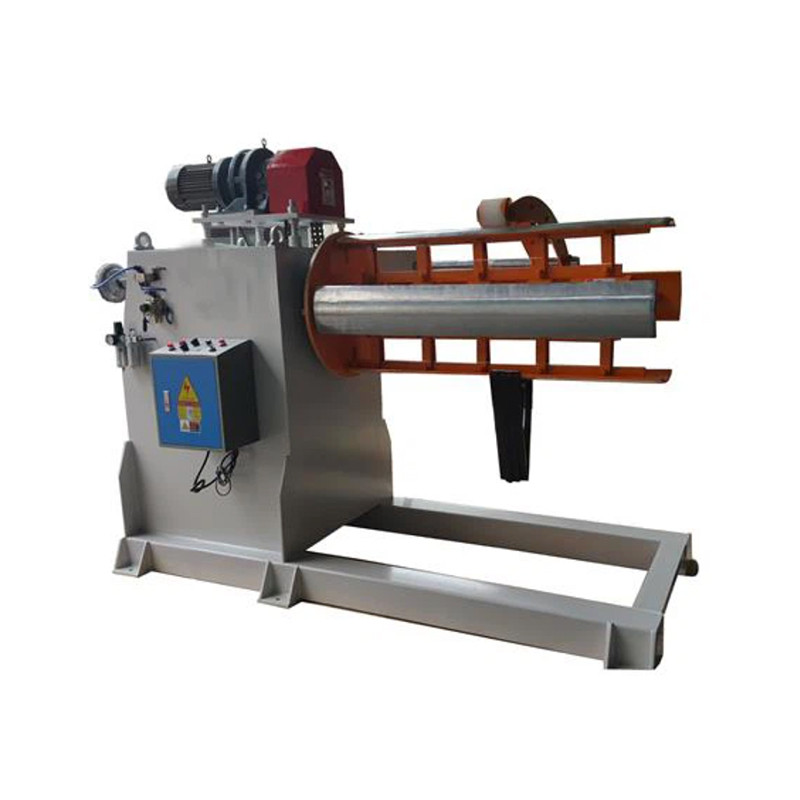
One more consideration that rarely makes it into the budget: the machine has to be levelled and grouted after the anchors are set, and that step needs access to all four pads.
A base designed tight against a wall leaves no room for a wrench, and a machine that cannot be levelled cannot hold strip tension evenly.
FANTY has supplied coil handling equipment for 12 years and has installed more than 200 lines.
We have seen installations held up for weeks by a floor nobody checked, and we now ask for the slab information before the machine is shipped rather than after.
It is a two-minute question that saves a three-week delay.
Where to go next
Foundation load is one line in the specification. The full capacity-to-control decision chain for a decoiler is set out in the guide library.
the coil line guide library