Is Your Uncoiler Creeping Along the Mandrel?
- Share
- publisher
- David Park - Senior Stamping Engineer, FANTY Machinery
- Issue Time
- Oct 7,2026
Summary
Creep is axial movement of the coil along the mandrel, and it is routinely confused with rotational slip. This diagnostic article separates the two, ranks the four common causes by what they cost to check.
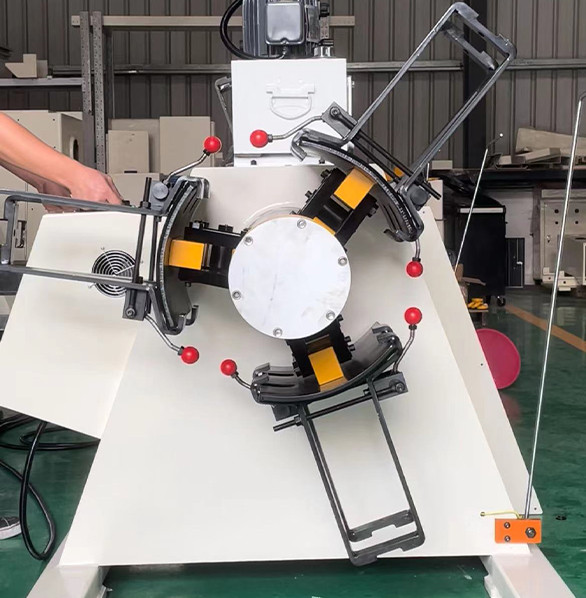
A coil that walks 12 mm sideways along the mandrel in a single run will not announce itself. It shows up later, as edge damage, as a scrap coil, or as a strip that will not track.
By then the operator has usually adjusted something that was not the cause.
This article covers why a coil creeps along a decoiler mandrel, how to rank the causes by what they cost to check, and where the problem cannot be fixed at the machine at all.
It is written for the maintenance fitter who has already tightened everything twice.
Rotational slip makes the coil spin on the mandrel. Creep makes it slide along it. The two get blamed on each other constantly.
If the strip still feeds at the right length and the coil has moved sideways, you have creep.
Read the Symptom Before You Blame the Coil
Start by measuring how far the coil moved, and whether it moved in one direction or both.
One direction, growing through the run. A steady axial force is pulling the coil. Look for strip camber, an off-square decoiler, or a misaligned line.
One direction, then it stops. The coil found a position where the forces balance. Usually a coil eye that is not square, or a mandrel that grips on one side.
Both directions across successive coils. The grip itself is marginal. Segment wear, low hydraulic pressure, or a coil inside diameter at the edge of the mandrel's expansion range.
That single distinction removes most of the guesswork before anyone reaches for a spanner.
Rank the Causes by What They Cost to Check
Four causes account for nearly every case we are called out to. They are listed here in the order a fitter should check them, cheapest first.
- Coil inside diameter outside the mandrel's working range. A mandrel rated for 480-530 mm cannot grip a coil that has opened to 545 mm. The segments contact on their edges, and the coil slides. Five minutes with a tape settles it.
- Segment wear or uneven segment height. Segments wear most where they contact the coil, so grip becomes a line rather than a face. Once wear reaches roughly 0.5 mm on the high spots, axial grip falls off sharply.
- Hydraulic pressure below specification. Grip force is proportional to pressure. A system running at 90 bar instead of 130 bar still feels firm by hand and still lets a 5-tonne coil creep under a cambered strip.
- Decoiler not square to the line. If the mandrel axis is not at right angles to the pass line, every metre of strip pulls the coil sideways. This one is invisible until you check it with a plumb line or a laser.
Two further causes matter but are usually material-side problems rather than machine problems, and they are covered further down.
The order above is deliberate. A tape measure and a pressure gauge between them rule out three of the four causes in under half an hour.
Only the fourth, an unsquare mandrel axis, needs a plumb line and a second pair of hands. That is why it sits last despite being the most damaging over time.
Cost of checking is not the same as cost of ignoring. A decoiler that has been out of square for a year will have worn its mandrel segments unevenly, so the first fault creates the second.
Match the Evidence to the Cause
The table below turns what you can see and measure into a shortlist, and the third column names what the correction will cost you in downtime.
| Evidence | Most Likely Cause | Where the Correction Costs You |
|---|---|---|
| Coil moved 10 mm or more in one direction, coil eye looks square | Strip camber pulling the coil along the mandrel | Correcting camber means fixing the material or the slitting, not the decoiler, and it is out of your control |
| Coil moved a few millimetres and stopped | Coil eye not square, or the coil was telescoped before loading | Rejecting coils costs material and a supplier argument; loading them costs edge damage |
| Movement varies from coil to coil, both directions | Grip is marginal: segment wear or low hydraulic pressure | A segment set is a planned spares cost; discovering it mid-shift is an unplanned stoppage |
| Movement grows steadily with each metre fed | Mandrel axis not square to the pass line | Re-squaring needs the line down for most of a shift, so it belongs in a planned outage |
| Coil slips axially only on the heaviest coils | Grip force adequate at light load, insufficient at full coil weight | The honest fix may be a larger mandrel, which is a machine change rather than an adjustment |
Work down the table, not across it. The first row that matches your evidence is the one to act on.
What the Mandrel Cannot Fix
Three of the five rows above cannot be solved by adjusting the uncoiler, and it is worth saying so plainly before a fitter spends a shift on it.
Camber is a material property. A strip that curves along its length will pull the coil sideways no matter how hard the mandrel grips. More grip only resists it; it does not remove the force.
A telescoped coil stays a telescoped coil. Once the wraps have slid over each other, the eye is no longer cylindrical. A mandrel will grip the high side and let the low side walk.
A mandrel at its expansion limit cannot be adjusted into range. If the coil inside diameter sits outside the rated window, no pressure setting will bring the segments into full contact.
There is a fourth limit that catches people out. An edge guide stops a coil from walking off the mandrel, but it does not stop creep.
The coil will still move until it touches the guide, and then it will sit against it, wearing the guide and the coil edge. Guides contain the damage; they do not remove the cause.
Repair the Cause, Then Stop It Returning
Once the cause is identified, the repair is usually short. Keeping it repaired is the harder part.
Measure the mandrel, not just the coil. With the segments expanded to working diameter, check the outside diameter at four positions 90 degrees apart.
More than 0.5 mm difference means the segment set needs attention.
Check hydraulic pressure under load, not at idle. A gauge reading taken with no coil mounted tells you almost nothing. Fit a gauge you can read with a full coil on the mandrel.
Square the uncoiler to the pass line annually. This is a thirty-minute check with a plumb line and a steel rule, and it prevents a class of creep that no amount of grip pressure will cure.
Set edge guide clearance at 2-3 mm per side. Tight enough to limit travel, loose enough not to scrape the coil edge during normal running.
Give operators a rejection rule. A coil with a visibly deformed eye should never reach the mandrel. Two minutes of inspection at goods-in saves an hour of edge damage downstream.
FANTY has supplied coil handling equipment for twelve years, and the machines that stay stable are the ones where the mandrel is checked on a schedule rather than after a complaint.
A workable schedule is short. Segment diameter every six months, hydraulic pressure at every oil change, mandrel squareness once a year, and edge guide clearance whenever a coil edge is visibly marked.
None of those checks takes more than fifteen minutes, and between them they cover every cause on the list except camber.
Write the results down. A mandrel diameter that has moved 0.3 mm since the last reading is telling you the segment set is approaching its limit, and you would rather learn that from a log than from a damaged coil.
The coil line guide library sets out how capacity, type, mandrel and control are specified together, which is where the expansion range should have been fixed in the first place.
Current machine ranges are listed on our products index.
How much sideways movement is normal on a 508 mm coil?
Up to about 2 mm over a full coil is normal and harmless. Beyond 5 mm you are damaging the coil edge, and beyond 10 mm the strip will start to track off the pass line.
At what mandrel segment wear does grip drop off?
Around 0.5 mm of differential wear between segments is the practical limit. Below that, grip is still a face contact; above it, you are relying on two or three high spots.
Does hydraulic pressure below 100 bar cause creep on a 5-tonne coil?
It can. Grip force scales with pressure, so a system set at 90-100 bar instead of 130-160 bar will hold a light coil and let a heavy one walk.
Can an edge guide stop creep on a cambered coil?
No. It limits how far the coil travels, but the axial force stays. You will see the coil parked against the guide with a polished, damaged edge.
How often should the mandrel expansion range be verified?
Every six months in normal duty, and after any coil that was rejected for a deformed eye. The check takes under ten minutes with the segments expanded.
Will a heavier decoiler stop a coil from creeping?
Only if the current one is under-sized for the coil weight. If the cause is camber, an unsquare mandrel or segment wear, a heavier machine will creep just as reliably.
Where to go next
This article sits in the decoiler branch of the coil line guide library, one layer below the specification pillar. It diagnoses one fault on an installed machine rather than choosing a new one.
Read the decoiler specification guideFanty · Coil Handling Equipment
Match a Decoiler to Your Coil, Not the Other Way Around
Send your coil inner diameter, outer diameter, weight and line speed. Our engineers reply with the mandrel size, motor power and expansion range that actually suits your coil — no guesswork, no overselling.
Get a Free QuoteFANTY Machinery · 13 years on stamping automation · 2,000+ coil lines installed · engineers reply within 24 hours