Is a Dual-Drive NC Servo Feeder Worth It on Wide Coil?
- Share
- publisher
- David Park - Senior Stamping Engineer, FANTY Machinery
- Issue Time
- Sep 26,2026
Summary
Wide coil exposes a weakness that narrow strip hides: one driven roll pair grips the centre and lets the edges float. This compares single-drive and dual-drive NC servo feeder builds on grip, flatness etc.
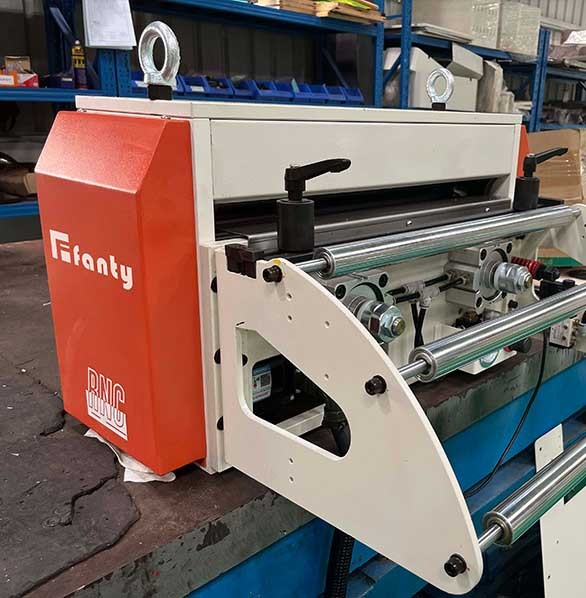
A 900 mm coil hides a weakness that a 300 mm coil never exposes. The feed rolls grip the centre, the edges float, and the strip reaches the die slightly wider on one side than the other.
On narrow strip, a single driven roll pair is usually enough. Past a certain width it is not, and the question becomes whether a second drive earns its cost.
This compares single-drive and dual-drive NC servo feeder builds on grip, flatness, marking and price, and identifies where the second drive stops paying for itself.
The error budget that decides how much of the tolerance the feed rolls own is set out in the coil line guide library, and the machine range is listed under our machines.
Where a Single Drive Loses Grip on Wide Strip
The mechanics are simple once the geometry is clear.
A single drive turns the lower roll. The upper roll follows the strip, so the material is driven from below and only held down from above.
On a 900 mm coil at 1.2 mm, the strip between the rolls behaves like a shallow beam. Pressure applied at the centre does not reach the edges evenly.
The result is a feed that measures correctly on the centreline and drifts at the edges, which shows up as a diagonal short feed across a wide die.
At 200 SPM that drift repeats 200 times a minute, and over a few thousand strokes it turns into a visible edge burr and a die that wears unevenly.
The drift is small enough to hide in a sample. A 0.1 mm difference between centre and edge looks like normal scatter on a single sheet.
It only becomes visible when the same sheet is measured at three points across the width, which most incoming inspection does not do.
On a 600 mm coil the effect is usually inside tolerance. On a 1,200 mm coil it is not, and the difference between those two widths is what the rest of this article is about.
Single Drive and Dual Drive Compared
The two builds differ in more than the number of motors, and the differences cut both ways.
Read the table by column, not by row. A buyer comparing only the purchase cost will always choose the single drive, and on a 900 mm line that choice usually shows up in the scrap report within a quarter.
None of these differences is large on its own. They matter because they all point the same way once width passes the threshold.
| Aspect | Single drive | Dual drive | Where each costs you |
|---|---|---|---|
| Grip across the width | Centre-led; edges begin to float past about 600 mm | Even grip across the full width | Dual adds a second servo, cable and drive channel |
| Marking risk | Lower, because edge pressure stays low | Higher when pressure is set high on thin strip | Dual needs a pressure recipe per material and thickness |
| Feed accuracy | Holds about ±0.05 mm on narrow strip | Holds ±0.05 mm to 900 mm and beyond | Single loses accuracy with width, not with speed |
| Maintenance | One motor, one encoder, one drive | Two of each | Dual doubles the parts that can stop the line |
| Purchase cost | Baseline | Typically 12 to 20 per cent more | Only worth it above the width where single fails |
The Width and Thickness Where Dual Drive Pays
There is no single width at which the second drive becomes worthwhile. Five conditions decide it, and three of them usually have to be true at once.
- Strip wider than 600 mm. Below that, edge drift is usually inside the tolerance the die can absorb.
- A width-to-thickness ratio above roughly 400 to 1. A 900 mm coil at 1.6 mm sits at 563 to 1 and will drift on a single drive.
- Yield strength above 340 MPa. Higher strength reduces the grip the rolls can develop at a given pressure.
- Feed lengths over 400 mm. Long indexes amplify any difference between centre and edge travel.
- Visible or coated surfaces. Where marking is already a risk, the lower edge pressure of a dual drive is often the safer choice.
Three of those five together is the practical trigger. A 700 mm coil at 1.0 mm with a 450 mm feed is the kind of job where the second drive usually pays back inside a year.
Run the numbers against your own scrap rate. If edge drift is costing more than about 1.5 per cent of material, the second drive is cheaper than the scrap.
The five conditions are not equally weighted. Width and the width-to-thickness ratio carry most of the decision, and the remaining three act as tie-breakers.
On a 500 mm coil at 0.8 mm, the ratio is 625 to 1, which is high, but the absolute width is small enough that edge drift stays inside tolerance. Width and ratio have to be read together.
Where two of the five conditions are true, the decision is close and a trial is worth arranging. Where four are true, the second drive is the safer choice.
What the Second Drive Cannot Fix
Adding a drive does not solve every wide-strip problem, and expecting it to wastes capital.
It does not correct a coil that arrives cambered or edge-waved. That is a material or upstream handling issue, and the feed rolls will pass the defect straight through.
It does not remove the need for guides. A dual drive grips more evenly, but lateral position still depends on the guide setup and the loop.
It does not help when the feed error comes from the die or from pilot release timing. If the strip is delivered correctly and the die still misfeeds, the cause is downstream.
On strip below about 300 mm wide, the second drive adds cost and a second failure point for no measurable gain. Buying it as insurance is poor value.
There is a weight limit too. A dual-drive head is heavier, and on a light press frame the added mass can excite vibration that a single-drive head does not.
One more limit deserves mention. A dual drive grips more evenly, but it does not increase the total force the head can apply.
Where the job needs more grip than the roll surface can deliver, a second drive changes the distribution of force rather than the total available.
A second drive also adds inertia to the head. On a short feed length the extra mass can slow the response slightly, which matters above about 300 SPM with short indexes.
Deciding Without a Trial Run
You do not need a machine on the floor to settle this. Four measurements on the existing line usually give the answer.
First, measure feed length at the strip centre and 50 mm in from each edge, using a scribed mark and a dial gauge. A spread above 0.15 mm points to edge drift.
Second, check whether the spread grows with coil diameter. If it does, part of the problem is upstream and a second drive will only mask it.
Third, count the scrap attributed to edge burr and die wear over one month, and put a cost on it.
Fourth, compare that monthly cost with the price difference between the two builds. If the difference recovers in under 18 months, the dual drive is the cheaper machine over its life.
Where the spread is small and the scrap is low, keep the single drive and spend the difference on guide setup and operator training instead.
| Cost line | Single drive | Dual drive | Where the comparison misleads |
|---|---|---|---|
| Machine price | Baseline | 12 to 20 per cent higher | Quotes often exclude the extra drive channel and cable |
| Setup time per grade | One pressure recipe | Two pressure recipes to maintain | The second recipe costs minutes once it is stored |
| Edge scrap | Rises with width and yield strength | Lower on wide, hard strip | Scrap is often booked to the die, not to the feed rolls |
| Spares and service | One motor, one encoder | Two of each | The second channel rarely fails before the first |
Over five years, two cost lines move the answer: machine price and edge scrap. The maintenance difference is real but small against either.
The measurements are cheap and the decision is expensive. Two hours of instrumentation on an existing line is enough to justify or reject the upgrade without buying anything.
Four questions that decide the dual-drive argument in most plants.
At what strip width does a dual-drive NC servo feeder pay back?
Past roughly 600 mm on 0.8 to 2.0 mm strip. On a 900 mm coil at 1.6 mm, the typical payback runs 6 to 14 months against edge-drift scrap.
Does a dual drive cost more to maintain?
It has twice the motors, encoders and drive channels, so the parts list doubles. In practice the extra cost is small against the added servo channel and its annual check.
Can a single-drive feeder be upgraded to dual drive later?
Rarely. The head casting, roll drive train and control architecture differ, so the change is usually a machine replacement rather than a retrofit.
How much more does a dual-drive machine cost?
Expect 12 to 20 per cent on the feeder price. On a 900 mm line that is often less than two months of edge-drift scrap at 1.5 per cent material loss.
Where to go next
This article compares two drive architectures on wide strip. The full error budget that shows where feed accuracy is actually lost, station by station, is set out in the guide library.
the coil line guide library