Is a Used Coil Line Really Cheaper Over Five Years?
- Share
- publisher
- David Park - Senior Stamping Engineer, FANTY Machinery
- Issue Time
- Oct 21,2026
Summary
A used coil line usually costs 45-55% less than new, but the landed line closes part of that gap before the first coil runs. This compares purchase, install, spares and availability over five years, lists the six components that carry the risk, and names the three cases where a used line is the wrong purchase at any price.
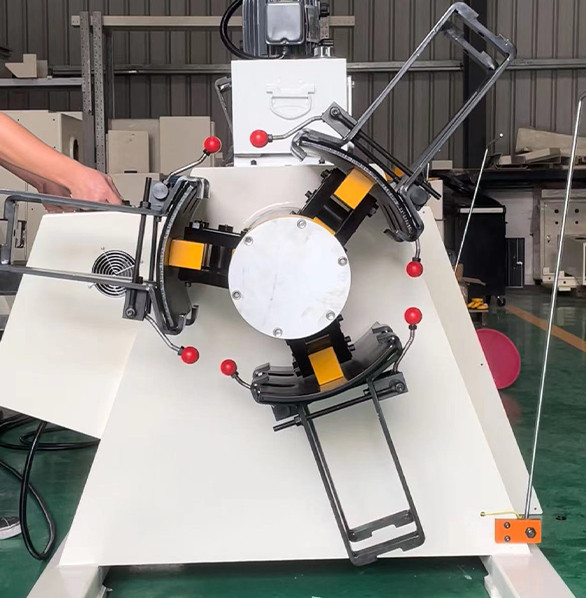
A 2016 line with 9,000 running hours sells for about half of new. The arithmetic looks obvious until you price the parts nobody rebuilt.
Over five years the gap narrows, and on some lines it closes completely. The variables are narrower than most buyers expect: two wear items, one control generation, one document.
This is the comparison we run with buyers before a deposit moves. It applies to a NC straightener feeder line as much as to a bare coil line, because the wear pattern is identical.
Start With the Parts You Cannot Rebuild
A used line is not one asset. It is a frame, a roll stack, a gearbox and a cabinet, and only three of those four come back to spec economically.
Castings and weldments do not wear out. Roll geometry does, and so does every bearing that has run 20,000 hours in coolant mist.
The cabinet is the wild card. A 2012 PLC with no current firmware path is a five-year liability, not a discount.
A cabinet with a current firmware path is worth 8,000-12,000 USD more than one without, and sellers rarely price that difference in.
Check the frame first. Twist shows as a diagonal difference across the uprights. Past 0.3 mm over 2 m the line will not hold flatness at speed.
Roll diameter comes next. Measure three points across each roll face: 0.05 mm of taper is normal wear, 0.15 mm means a regrind before production.
Bring a micrometer, not a caliper. Roll faces are curved, and a caliper reads only the high point of the crown.
Then read the hour meter. A line showing 6,000 hours after eight years was either idle or re-metered, and both answers change the price.
What a Used Line Saves on Paper
Sellers quote the machine. Buyers should quote the landed line, because the gap between those two numbers is where the saving lives or dies.
Ask for the shipping dimensions and the lifting points before the freight quote. A line that needs a low-bed trailer changes the number.
Rigging, freight, duty, foundation work, power drop and re-commissioning are all real, and every one of them is larger on a used machine.
| Cost line | New line | Used line, 8 years | Where it costs you |
|---|---|---|---|
| Machine price | 100 | 45-55 | The saving is here and almost nowhere else |
| Rigging and freight | Included | 4-7 | No factory crating, no loading plan |
| Foundation and grouting | On the drawing | 3-6 | The old anchor pattern rarely matches |
| Electrical and controls | New cabinet | 2-9 | Firmware, safety relay, spare boards |
| Roll regrind | None | 1-3 | Two to three weeks of downtime |
| First-year spares | 1 | 3-5 | Obsolete boards, custom gears |
| Commissioning | 1-2 | 3-5 | No builder engineer on call |
Add the columns and a 45-55% headline becomes 18-25% on most lines. On a 250,000 USD machine that is still 45,000 to 60,000 USD of real money.
The spec-by-spec cost of each of those items, and which ones you can leave off, is set out in our coil line knowledge base.
It is worth chasing, but only if the inspection confirms the mechanicals. A cheap line with worn rolls is a financing problem wearing a purchase order.
Where the Five-Year Bill Comes From
Five-year cost is not the price plus spares. It is availability, and availability is what a used line is worst at in year one.
| Cost line | Year 1 | Years 2-5 | Where it misleads |
|---|---|---|---|
| Unplanned stops | High | Falling | The year-one curve is steep, not flat |
| Rolls and bearings | 1.5x | 1x | Reground rolls wear faster than new ones |
| Control spares | 2-3x | 1.5x | Obsolete board prices rise, they do not fall |
| Energy | Same | Same | Old hydraulics idle at full pressure |
| Operator labour | 1.3x | 1x | The crew learns a second control language |
A line that stops four hours a week in year one costs about 8,000 USD in lost contribution at 40 USD per press hour. Compare that against the purchase saving, not against zero.
By year three the curve flattens. A used line that survives the first 18 months runs like any other, provided the spares list was built properly.
Which Components Decide the Verdict
Six items carry almost all of the risk. Price them before you negotiate, not after the deposit clears.
- Roll stacks: measure diameter and taper. Budget a regrind if any roll sits 0.3 mm under nominal.
- Gearboxes and couplings: check backlash by hand at the output shaft, never by ear.
- Servo drives and motors: read the hour meter and pull the last 200 alarms from the log.
- Hydraulic power unit: 30-minute pressure hold. A 10 bar drop means a pump or a valve.
- Safety circuit: the light curtain and interlocks must match current CE documentation, not 2011 wiring.
- Documentation: a wiring diagram with hand-drawn changes is a two-week reverse-engineering job.
Run the Inspection in One Day
One day under power with your own material prices the risk. A visual walk-around does not, however many photos it produces.
Bring 200 kg of the strip you intend to run. A line that feeds the seller's 1.2 mm CR4 may behave differently on your 2.5 mm HSLA 420.

Morning, power off.
Frame twist, roll diameters, backlash, anchor bolts, cabinet condition, and a photo of every nameplate. Photograph the parameter screen as well.
Afternoon, under power.
Run 30 coils at the fastest speed you actually need. Log feed length error, strip camber and every alarm. Ask for the parameter file on a USB stick.
Compare what you are buying against a current machine before you commit. Our coil line product range lists the standard configuration for each model.
Two numbers decide the outcome: feed length repeatability inside ±0.10 mm over 50 strokes, and camber under 1 mm per 2 m at running speed.
The Retrofit Trap That Eats the Saving
Every used line attracts a retrofit list, and the list grows once the machine is on your floor and the original builder is unreachable.
A control upgrade quoted at 15,000 USD often lands at 28,000 once safety, the operator interface and drive firmware are included.
Get the quote from the control builder, not from the machine seller. The seller marks up work he cannot schedule himself.
FANTY has rebuilt coil lines for plants in more than 60 countries, and the pattern repeats. The machines that pay back had good mechanicals and an old control.
Reverse that combination and the arithmetic fails. A clean cabinet on worn rolls is the worst of both worlds, because you paid twice and fixed neither.
Ask for the retrofit quote in writing and itemised before you sign. A verbal 15,000 is a hope, not a budget.
Where a Used Line Is the Wrong Purchase
Three situations make a used line a poor decision at any price.
First, when the part mix needs a control generation the cabinet cannot reach: recipe storage, servo profiling, or traceability logging for a customer audit.
Second, when the line must meet a flatness or feed-accuracy spec the seller never measured. You inherit an unproven machine and carry the proof yourself.
Third, when spare lead times exceed your changeover interval. A three-week gearbox on a two-shift operation is a shutdown, not a delay.
Ask for lead times on the servo drive and the main gearbox in writing. Those two parts decide whether the line can recover at all.
A used line also cannot carry a fresh CE declaration without a technical file. Budget that assessment before you budget the rigging.
One more limit is worth stating plainly. A used line will not teach you what a new one would, and the first engineer to leave takes the undocumented settings with him.
These are the questions that come up in every used-line negotiation. The answers are the ones we give with a quote in hand.
At what running hours does a used coil line stop being a bargain?
Past about 15,000 hours the roll stack, gearboxes and main bearings are due, and that work usually costs 12-18% of the purchase price.
Does a 45% lower purchase price survive five years?
On most lines it lands at 18-25% once rigging, foundation, regrind and year-one spares are counted. Below 15% the deal rarely justifies the risk.
How much strip should I bring to a used-line inspection?
200 kg is enough for 30 coils at 1,250 mm width. Bring the heaviest gauge and the hardest grade in your mix, not the easiest one to run.
Can a 2012 control cabinet be upgraded for under 15,000 USD?
Only if the drives and safety circuit are already current. Add 8,000-13,000 USD when the safety relay and operator panel must be replaced.
What feed accuracy should a used line still hold?
±0.10 mm over 50 strokes at your running speed. Past ±0.20 mm the servo, the rolls or the encoder coupling needs work before production.
Where to go next
This article compares two purchase routes for the same line. The per-spec cost of each item, and which specs you can safely leave off, sits in our coil line knowledge base.
The Coil Line Guide Library