NC Servo Straightener Feeder vs Hydraulic Straightener?
- Share
- publisher
- David Park - Senior Stamping Engineer, FANTY Machinery
- Issue Time
- Jul 31,2026
Summary
Comprehensive comparison of NC servo straighteners vs hydraulic straighteners. Precision, energy efficiency, TCO analysis, and selection guide from FANTY.
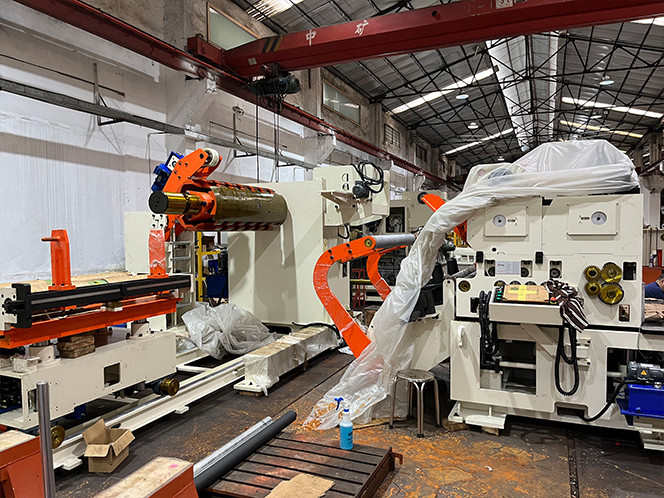
When designing a high-precision coil stamping line, one of the most debated equipment choices is the NC servo straightener feeder vs hydraulic straightener configuration.
Both technologies flatten coiled strip before it enters the press feeder, but they operate on fundamentally different principles and deliver different results in terms of precision, energy consumption, maintenance, and total cost of ownership.
This in-depth comparison from FANTY Machinery examines both technologies across ten critical dimensions, helping you choose the right straightening solution for your specific stamping application.
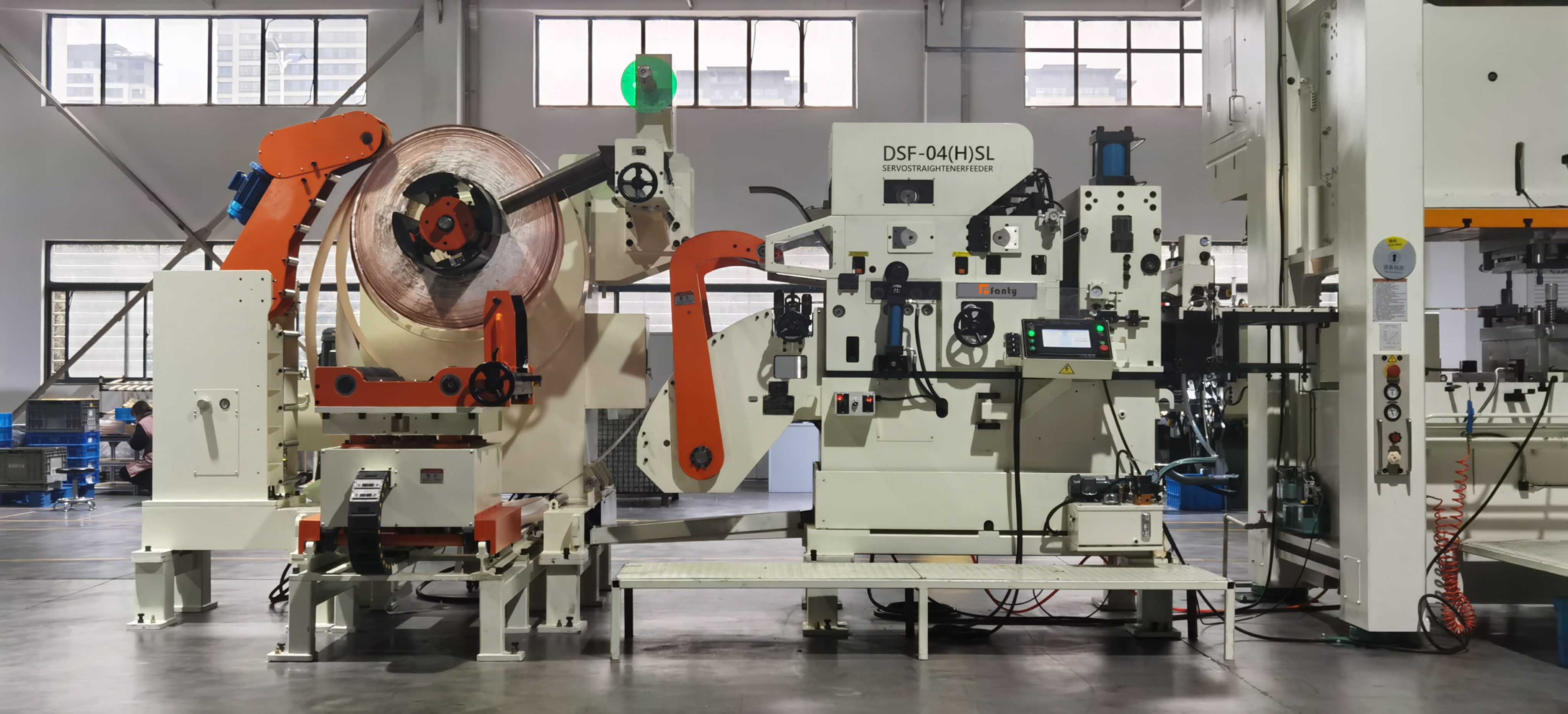
Choosing between NC servo and hydraulic straightening technology is a critical decision for your stamping line.
How Each Technology Works
Before comparing performance, it is essential to understand the fundamental operating principles:
Hydraulic Straightener: Uses a hydraulic power unit to drive the upper roller bank up and down, applying forceful pressure to bend the strip back and forth through alternating rollers.
The gap between upper and lower roller banks is adjusted manually or via hydraulic cylinders using a mechanical handwheel or motorized adjuster. The strip passes through 5–9 straightening rollers, with the hydraulic system maintaining constant pressure regardless of strip thickness variations.
NC Servo Straightener: Uses servo motors to independently control the position of each upper roller with micron-level precision. The servo-driven adjustment system can change roller gaps in real time based on feedback from thickness sensors at the strip entry.
A typical NC servo straightener has 7–11 rollers, with each upper roller position individually programmable through the HMI. The servo system also drives the straightener feed rolls to provide synchronized strip advancement with the downstream NC feeder.
Head-to-Head Comparison: NC Servo vs Hydraulic Straightener
| Comparison Dimension | NC Servo Straightener | Hydraulic Straightener |
|---|---|---|
| Straightening Precision | ±0.03 mm flatness; programmable roller positions for each material recipe | ±0.10 mm flatness; roller gap set manually, cannot compensate for variations |
| Material Thickness Range | 0.2 – 6.0 mm with automatic gap adjustment | 0.5 – 12.0 mm; wider range on heavy-duty models |
| Speed Range | Up to 200 SPM synchronized with servo feeder; 0–40 m/min infinitely variable | Up to 120 SPM; speed limited by hydraulic response time |
| Energy Efficiency | 70–80% more efficient; servo drives consume power only during roller adjustment and feeding | Hydraulic pump runs continuously, consuming 5–15 kW even when idling |
| Setup Time | < 2 minutes for recipe change; all parameters recalled from HMI memory | 10–20 minutes; requires manual gap adjustment with feeler gauge or shims |
| Real-Time Compensation | Yes — servo adjusts roller gaps automatically for thickness variations, coil curvature, and thermal expansion | No — roller gaps are fixed once set; no feedback loop |
| Maintenance Requirement | Low — replace servo motor bearings every 20,000 hours; no hydraulic fluid, filters, or seals | High — hydraulic oil changes every 2,000 hours; seal replacements; pump overhaul at 8,000 hours |
| Operating Noise | < 65 dB — quiet operation due to servo motor direct drive | 75–85 dB — hydraulic pump and valve hissing noise |
| Initial Investment | Higher (typically 20–40% more than hydraulic equivalent) | Lower upfront cost; easier to budget |
| Total Cost of Ownership (5 years) | 30–50% lower due to energy savings, less maintenance, less scrap | Higher due to energy consumption, fluid replacement, and downtime |
When to Choose an NC Servo Straightener
An NC servo straightener is the better choice when your application demands:
- High precision stamping: Progressive die stamping, connector terminals, electronic components, and fine-blanking operations require strip flatness within ±0.03 mm. Only servo-controlled straighteners can maintain this level of precision consistently
- Frequent material changes: Job shops that switch materials 3–10 times per day benefit enormously from the recipe recall feature of NC servo straighteners. A material change that takes 20 minutes with a hydraulic unit takes under 2 minutes with a servo unit
- High-speed production: Lines running at 150–200 SPM need a straightener that can respond instantly to speed changes and material variations. The servo system's real-time adjustment capability is essential for maintaining strip quality at high speed
- Thin or sensitive materials: Materials thinner than 0.5 mm or with pre-coated surfaces require precise roller gap control to avoid surface marking or deformation. The servo system's soft touch and programmable pressure makes it ideal for delicate materials
- Energy-conscious operations: For facilities tracking energy consumption, an NC servo straightener reduces electricity usage by 70–80% compared to a hydraulic unit running continuously. Over a 5-year period, the energy savings alone can offset the initial price premium
When to Choose a Hydraulic Straightener
Hydraulic straighteners still have their place in certain applications:
- Heavy-gauge material: For strip thickness exceeding 6 mm, hydraulic straighteners provide the raw force needed to flatten thick steel plate. The hydraulic system can generate significantly higher straightening force than servo motors of comparable size
- Low production volume: If your stamping line runs infrequently with long setup times between jobs, the lower initial investment of a hydraulic straightener may be justified. The energy cost difference matters less when the machine operates only a few hours per day
- Simple applications: For basic blanking or forming operations where strip flatness tolerance of ±0.10 mm is acceptable, a hydraulic straightener provides adequate performance at a lower upfront cost
- Limited budget: When capital expenditure is the primary constraint, hydraulic straighteners offer a lower entry price. FANTY still provides CE-certified hydraulic models for budget-conscious buyers, though we always recommend evaluating TCO before deciding
FANTY's Straightening Solutions
NC Servo Straightener Series
FANTY's NCSF series servo straighteners feature independent servo control for each upper roller, 23-bit absolute encoder feedback, and touchscreen HMI with material recipe storage. Precision ±0.03 mm. 7–15 roller configurations available.
Hydraulic Straightener Series
FANTY's HY series hydraulic straighteners are built for heavy-gauge applications from 3–12 mm thickness. Features heavy-duty frame construction, hardened alloy steel rollers, and motorized gap adjustment with digital readout.
Combined Straightener-Feeder
For lines where floor space is at a premium, FANTY offers combined straightener-feeder units in both NC servo and hybrid configurations. These reduce the line footprint by up to 40% while maintaining full functionality.
Full Line Integration
FANTY provides complete line integration including decoiler, straightener, feeder, and control cabinet. Our 80+ R&D engineers design matched systems where every component is optimized for the application. Over 200 lines installed in 60+ countries.
Decision Framework: NC Servo vs Hydraulic Straightener
Use this step-by-step framework to make your decision:
- Define your strip flatness requirement: is ±0.03 mm or ±0.10 mm acceptable?
- Calculate your average thickness and maximum thickness across all materials
- Estimate your annual operating hours and energy cost per kWh
- Count your average material changes per day and average changeover time
- Determine your maximum line speed in SPM
- Calculate your acceptable scrap rate and the cost of rejected parts
- Estimate your maintenance budget and availability of skilled maintenance personnel
- Request total cost of ownership calculations from FANTY for both options
- Consider your 5-year production plan: will precision requirements increase?
- Make the decision based on TCO, not initial purchase price
Frequently Asked Questions About Straightener Technology
Can an NC servo straightener handle heavy-gauge material?
Yes, FANTY offers high-torque NC servo straighteners capable of processing material up to 6 mm thickness. For material thicker than 6 mm, we recommend our hydraulic straightener series. The servo system's precision advantage is most pronounced in the 0.2–3.0 mm range, where micron-level control matters most.
How much energy does a hydraulic straightener consume compared to servo?
A typical 5-ton hydraulic straightener's pump motor runs continuously at 7.5 kW, consuming approximately 60 kWh over an 8-hour shift. An equivalent NC servo straightener draws power only during actual straightening and feeding — typically 15–20 kWh per shift. Over 250 working days per year, this represents savings of 10,000–11,000 kWh per machine.
Which type requires more maintenance?
Hydraulic straighteners require significantly more maintenance: hydraulic oil replacement every 2,000 operating hours, seal inspection and replacement, filter changes, and pump overhauls. NC servo straighteners require minimal maintenance — mainly bearing lubrication and periodic encoder calibration.
FANTY's 12 years of service data show that servo straightener maintenance costs are approximately 60% lower over 5 years.
Can I retrofit my existing hydraulic straightener with servo controls?
In some cases, yes. FANTY offers retrofit kits that replace the manual gap adjustment mechanism with servo-driven actuators and add a control system with HMI. However, the straightening roller configuration (roller count, diameter, and pitch) is fixed in the existing frame, which may limit the achievable precision.
A new NC servo straightener with optimal roller geometry delivers the best results.
How long does it take to recoup the higher cost of an NC servo straightener?
Based on FANTY customer data, the payback period for upgrading from hydraulic to NC servo straightening is typically 12–24 months. The payback comes from three sources: energy savings (30–40%), reduced scrap (1–3% reduction), and reduced downtime for changeovers (saving 30–60 minutes per material change). For high-volume operations, the payback can be as short as 8 months.
Let FANTY Help You Choose the Right Straightener
Whether you need the micron-level precision of an NC servo straightener or the raw power of a hydraulic unit, FANTY Machinery has the right solution for your stamping line.
Related reading
- how leveling improves strip flatness
- how to set roll pressure
- how to hit a flatness spec on a coil line
Part of the 3-in-1 decoiler straightener feeder — the full library of coil handling, straightening and feeding guides from FANTY.
Fanty · NC Straightener Feeder
Still Fighting Strip Memory After Straightening?
Send the strip thickness, material grade and target flatness. We specify roll diameter, roll count and NC feed pitch so the line holds tolerance from the first coil, not the fiftieth.
Get a Free QuoteFANTY Machinery · 13 years on stamping automation · 2,000+ coil lines installed · engineers reply within 24 hours