Single-Head or Double-Head Decoiler: Which Is Right for You?
- Share
- publisher
- David Park - Senior Stamping Engineer, FANTY Machinery
- Issue Time
- Sep 8,2026
Summary
Compare single-head and double-head decoilers: how a double-head unit preloads coils to cut changeover time, the cost difference, and which line needs it.
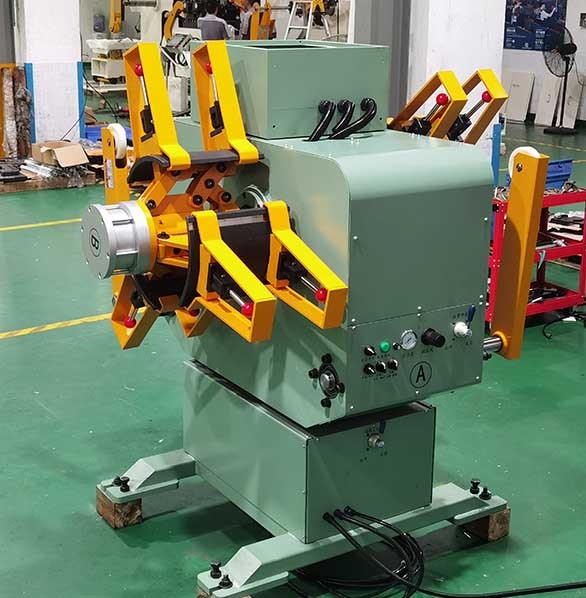
When a coil runs out, the line stops, and the length of that stop is pure lost production. A single-head decoiler can only hold one coil at a time, so the operator must remove the empty core, load the next coil, and thread the strip before the line can restart. A double-head decoiler holds two coils, so the operator can load the next coil onto the second head while the first is still running, cutting the changeover stop to a fraction of the time. The choice between the two is a classic production-economics decision: the double-head machine costs more and occupies more space, but it pays back through shorter stops on lines that change coils often. This guide compares the two configurations honestly and helps you decide which one your line actually needs.
On a line feeding an NC straightener feeder at high speed, a coil can run out every couple of hours, which means the changeover decision repeats several times per shift. That is exactly the situation where the difference between the two decoiler types shows up in the monthly output.
What the Two Configurations Look Like
A single-head decoiler has one expanding mandrel, one brake or drive, and one coil position. When the coil empties, the line stops for the full changeover sequence: remove the core, load the new coil, align it, expand the head, and thread the strip into the straightener and feeder.
A double-head decoiler has two independent mandrels, usually arranged on a rotating base or on two arms, so one head feeds the line while the other holds a standby coil. When the running coil empties, the machine swings the standby coil into the feed position, and the strip is joined or rethreaded with a much shorter stop. The operator can then unload the empty core and load a fresh coil onto the now-free head while the line runs.
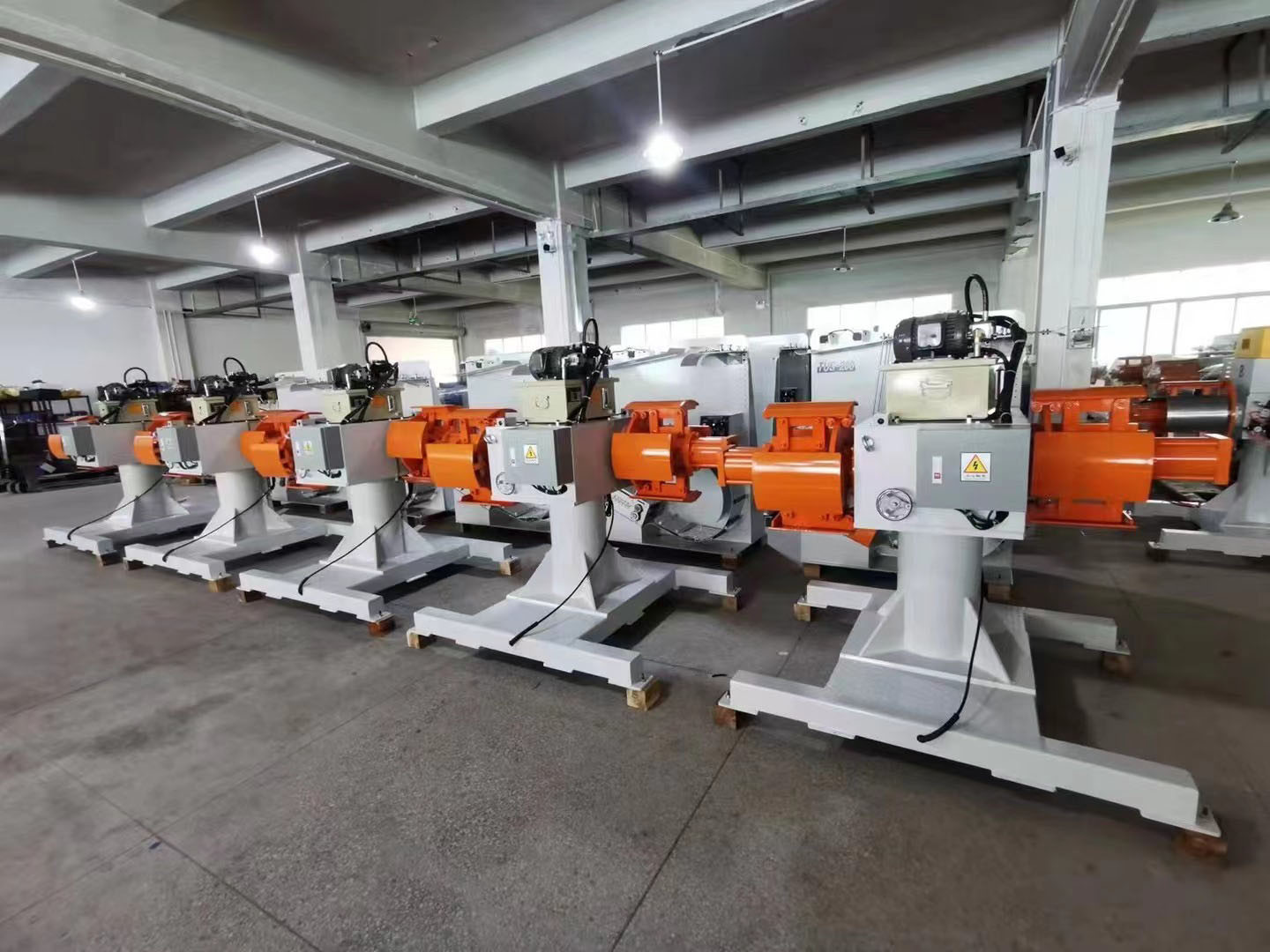 the double-head decoiler production.
Changeover Time: The Core Difference
The table below compares the two configurations across the factors that matter on a production line.
| Factor | Single-head decoiler | Double-head decoiler |
|---|---|---|
| Coil change stop | 10-20 minutes full sequence | 2-5 minutes swing and rethread |
| Ability to preload | No; next coil waits | Yes; standby coil ready to swing in |
| Floor space | Compact | Roughly double the footprint |
| Machine cost | Lower | Higher by a significant margin |
| Operator workload | Full change during every stop | Loading done while the line runs |
| Best for | Few changes, large coils, flexible layout | Frequent changes, small coils, high utilization |
Notice that the difference is not the speed of the change itself but the ability to do most of the work while the line is running. The double-head machine moves the loading time out of the stop and into the production time, which is why it shines on lines that change coils frequently.
When the Double-Head Pays for Itself
The double-head decoiler pays for itself when the saved changeover time adds up to real production. The calculation is straightforward: estimate the number of coil changes per shift, multiply by the minutes saved per change, and compare the resulting hours of recovered production with the extra cost of the double-head machine.
As a rule of thumb, a line that changes coils three or more times per shift and runs at a healthy utilization is a strong candidate for a double-head unit. Saving twelve minutes per change across three changes adds thirty-six minutes per shift, which is more than an hour across two shifts, every day. Over a year that is hundreds of hours of production, which dwarfs the machine's extra cost. A line that changes coils once a day from very large coils, by contrast, saves only twelve minutes a day, and the double-head machine may never pay back.
The coil size is the hidden variable: small coils hold less strip and run out sooner, so a line using narrow or thin strip that is coiled in small weights changes coils far more often than a line running heavy coils, regardless of the press speed.
Other Ways to Cut the Changeover Stop
A double-head decoiler is one answer to the changeover stop, but not the only one. Consider these alternatives and combinations before you decide.
- Coil cars and auto-centering. These speed up the loading part of the change even on a single-head machine, cutting minutes from every stop.
- Strip-end preparation. Preparing the next coil's strip end while the current coil runs removes the fumbling from the rethread step.
- Larger coils. Specifying the largest coil the line and the equipment can handle reduces the number of changes per shift.
- A documented changeover method. A standardized sequence, practiced by the team, cuts the change time on any machine.
A plant that combines a single-head decoiler with a coil car and a disciplined changeover method may reach most of the benefit of a double-head machine at a fraction of the cost. The right answer depends on how much of the changeover stop is loading time and how much is rethread time, which is worth measuring before you choose.
Deciding with Your Own Numbers
Instead of choosing by preference, run the calculation with your own numbers. Count the actual coil changes per shift on the line in question, time the current changeover from press stop to first good part, and estimate how much of that time a standby coil would remove. Multiply the saved minutes by the number of changes per shift, the shifts per day, and the days per year, then multiply by the line's value per hour to get the annual saving.
- Count the changes per shift. Use a real week of data, not an estimate.
- Time the changeover. Measure from press stop to first good part on several changes.
- Estimate the removable portion. The loading and aligning time is what a standby coil eliminates.
- Calculate the annual saving. Saved minutes x changes x shifts x days x line value per hour.
- Compare with the extra cost. Divide the double-head premium by the annual saving to get the payback in years.
If the payback is under two years, the double-head is a sound investment. If it is beyond three or four years, spend the money on coil handling or changeover method instead, and revisit the decision if the coil sizes change.
Frequently Asked Questions
Can a double-head decoiler feed two different strip widths?
Yes, within the machine's width range. This is one of its advantages for job shops: one head can hold the current coil while the other is set for the next job's width, so the changeover between jobs is also shortened, not just the changeover between coils of the same job.
Is a double-head decoiler harder to operate?
It requires the operator to manage two coil positions instead of one, but modern units automate the swing and the alignment, so the operation is a matter of loading the standby coil while the line runs and pressing the swing command at the change. Training is straightforward.
How much more floor space does a double-head unit need?
Roughly double the footprint of a single-head decoiler of the same capacity, because the second head and its coil need the same operating envelope. Confirm the dimensions on the general arrangement drawing before planning the layout.
Can I upgrade a single-head decoiler to double-head later?
In some cases the builder can supply a twin-head attachment for a compatible base, but it is usually more economical to buy the double-head configuration at the start if you expect to need it. Retrofitting a second head and its controls is often close to the cost of a new machine.
Does the double-head design work with a straightener feeder?
Yes. The decoiler feeds the NC straightener feeder exactly as a single-head unit does; the double-head design only changes how coils are supplied to the payoff position. The strip path, straightening, and feeding are unaffected.
Choose the Decoiler That Matches Your Changeover Load
FANTY supplies both single-head and double-head motorized decoilers, and our engineers will help you calculate which one pays back on your line. Send us your coil sizes, changes per shift, and press details for a changeover analysis.
Request a Changeover Analysis