What Causes Slug Pulling on an NC Servo Feeder Line?
- Share
- publisher
- David Park - Senior Stamping Engineer, FANTY Machinery
- Issue Time
- Sep 15,2026
Summary
A breakdown of the four mechanisms that lift a slug, where an NC servo feeder influences each one through strip flatness, feed repeatability and tension, and a symptom-to-cause table for the press floor.
Slug pulling has a reputation as a die problem, and most of the time that reputation is earned. A slug rides back up on the punch face, gets dragged across the die block, and the next stroke produces a doubled part, a scored die face, or a broken punch. But the press floor keeps producing cases where a die that ran clean for two years suddenly starts pulling slugs the same week a new coil line came online. That is not coincidence, and it is worth understanding before anyone starts grinding the die.
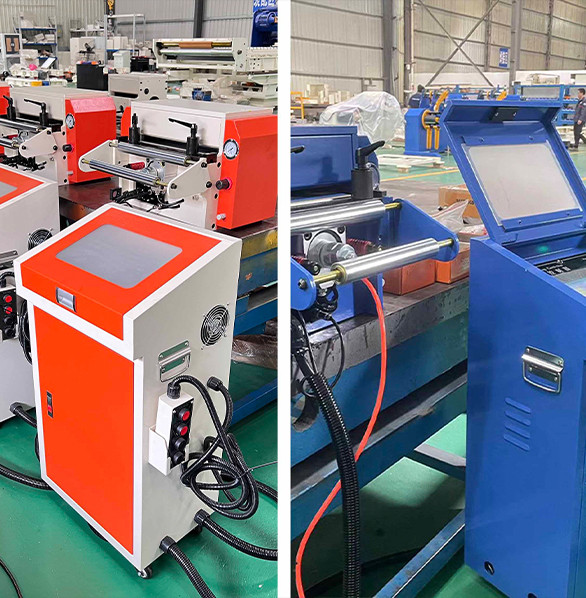
The NC Straightener Feeder sits upstream of the die, so it cannot pull a slug by itself. What it can do is change the strip conditions that let a slug stay attached to the punch. This analysis breaks down the four real mechanisms behind slug pulling, explains where a 3-in-1 decoiler straightener feeder influences each one, and gives you a diagnostic sequence that finds the cause without guesswork. FANTY's coil feeding systems are engineered around these interactions, and our 80-plus R&D engineers test them on real dies rather than on paper.
Slug Pulling Starts in the Die, Not the Feeder
When a punch enters the strip, it shears the material and pushes a slug into the die opening. On the return stroke, three forces act on that slug: gravity, friction between the slug edge and the die wall, and any adhesion between the slug face and the punch face.
Normally gravity and die-wall friction win. The slug stays behind. Slug pulling happens when adhesion on the punch face exceeds the resistance holding the slug in the die — and adhesion is dominated by two things: lubricant behaviour and the presence of a vacuum between the punch face and the slug.
Both of those are influenced by strip flatness, surface condition and feed accuracy. That is the doorway through which the feeder enters the conversation.
The Four Mechanisms That Lift a Slug
- Vacuum adhesion. A flat punch face against a flat slug traps a thin air film. As the punch withdraws, a partial vacuum forms and the slug follows. This is the single largest cause on large, flat, lightly lubricated slugs.
- Lubricant film bridging. Too much or too viscous a lubricant creates a capillary bond between punch and slug. The bond is strongest at low speed and disappears at high speed — which is why some dies pull slugs only during setup.
- Insufficient die clearance. Tight clearance raises stripping load and burnishes the slug edge, giving it more surface to grip the die wall on the way back.
- Weak stripping. Worn springs, a tired nitrogen cylinder or a stripped retainer lets the strip lift with the punch. The slug goes with the strip, and the strip goes with the punch.
Where an NC Servo Feeder Changes the Picture
An NC servo feeder affects slug pulling through strip presentation, not through any direct mechanical action.
Flatness. Coil set and cross-bow leave the strip slightly curved as it enters the die. A curved strip does not seat flat on the die face, so the punch shears at a small angle instead of square. The resulting slug has a burr on one edge and a taper that grips the die wall. A correctly set straightener removes this, and the improvement in slug behaviour is often immediate.
Position repeatability. When feed length drifts, the punch lands on a slightly different part of the strip on each stroke. The slug from a shifted hit is rarely a clean disc — it is a partial slug or a sliver, and slivers pull far more readily than full slugs.
Strip tension. Excessive pull from the feeder or excessive drag from the decoiler stretches the strip between the straightener and the die. Elastic recovery after each stroke nudges the strip, which can unseat a marginally held slug.
Die Clearance, Shear Angle and Slug Control
Die design fixes most slug pulling, and the numbers are well established.
Clearance per side for cold-rolled steel normally runs 6 to 8 percent of strip thickness. On 1.5 mm 304 stainless, that is 0.09 to 0.12 mm per side. Going below 6 percent raises stripping force sharply and burnishes the slug edge; going above 12 percent produces a heavy burr that grips the die wall.
Adding shear — a 2 to 5 degree angle on the punch face — converts flat contact into progressive contact. The punch no longer sits flat against the slug, so no vacuum can form. On large, flat, round slugs this single change often eliminates the problem outright.

Three practical countermeasures
- Shear the punch face by 2 to 5 degrees. Cheapest and most effective fix on large flat slugs.
- Add a slug relief or air blast to break the vacuum and push the slug clear on every stroke.
- Reduce lubricant viscosity or apply it more thinly. A capillary bond needs a film to form.
Feed Timing, Pilot Release and the Second Hit
Timing faults do not cause the first slug to pull. They cause the second one.
If pilot release fires late, the pilots enter the strip before the feeder has released it. The strip is still clamped, the pilots force it sideways, and the punch enters off-position. The resulting slug is a partial cut. Meanwhile the misfed strip has already shifted the next station, so the following stroke repeats the error.
On a mechanical press running 220 SPM, the window between feed complete and pilot entry can be as short as 60 ms. Two things reliably cause trouble: a release signal that is timed from press angle rather than from an actual feed-complete output, and a pneumatic pilot release circuit with an undersized valve that cannot exhaust fast enough.
The fix is to drive pilot release from the drive's in-position signal, not from a cam switch, and to confirm valve response with a pressure trace rather than a stopwatch.
Symptom-to-Cause Diagnosis
Work down this table before touching the die. Each row maps an observable symptom to the most likely cause and the check that confirms it.
| Symptom | Most likely cause | Confirm by |
|---|---|---|
| Slugs pull on large flat punches only | Vacuum adhesion | Drill a 1 mm vent hole in the punch face and retest |
| Pulling starts after a lubricant change | Capillary bond from film | Reduce application rate by half and rerun 50 strokes |
| Pulling only at low speed or during setup | Lubricant viscosity at low shear | Compare at 60 SPM versus 200 SPM |
| Burred, tapered slugs | Clearance below 6% of thickness | Measure slug edge taper under magnification |
| Strip lifts with the punch | Weak stripping force | Measure stripper travel and spring preload |
| Doubled parts without slug in the die | Feed length drift | Log commanded vs actual feed position |
| Problem appeared with a new coil | Coil set or cross-bow | Check strip flatness off the straightener, not off the coil |
One note on scope. Every coil feeder FANTY ships carries CE marking, and the safety circuit design is reviewed as part of that process. None of that protects a die from slug pulling — that fight is won with clearance, shear and strip presentation, and the strip presentation is where a properly set NC servo feeder earns its place.
Questions From the Press Floor
Can a feeder setting really cause slug pulling?
Not directly. The feeder has no contact with the die. What it controls is strip flatness, feed repeatability and strip tension, and all three change how a slug behaves on the return stroke. Poor flatness is the most common indirect cause.
Why did slug pulling start the week we installed a new coil line?
Because the new line changed the strip condition entering the die. Either flatness improved and exposed a die that was always marginal, or a tension or timing setting is wrong. Compare strip flatness at the die entry before and after the change.
Is a vacuum slug system worth fitting?
On a high-volume progressive die with large flat slugs, yes. It removes the failure mode entirely instead of reducing its probability. On small or irregular slugs the benefit is smaller.
How much clearance should a 1.5 mm stainless job run?
Around 0.09 to 0.12 mm per side, which is 6 to 8 percent of thickness. Stainless work-hardens, so staying at the lower end helps edge quality but raises stripping force — balance the two against your stripper capability.
Does higher press speed make slug pulling worse?
Usually it makes it better, because a fast withdrawal gives the air film less time to form a vacuum. The exceptions are timing-related pulls, which get worse as the feed window shortens.
Chasing Slug Pulling on a Coil-Fed Press?
Tell us your strip material, thickness and die clearance. Our engineers will help you separate the die causes from the strip presentation causes and recommend a fix.
Talk to a Stamping EngineerFanty · NC Straightener Feeder
Still Fighting Strip Memory After Straightening?
Send the strip thickness, material grade and target flatness. We specify roll diameter, roll count and NC feed pitch so the line holds tolerance from the first coil, not the fiftieth.
Get a Free QuoteFANTY Machinery · 13 years on stamping automation · 2,000+ coil lines installed · engineers reply within 24 hours