What Changes When a Coil Line Feeds Appliance Panels?
- Share
- publisher
- David Park - Senior Stamping Engineer, FANTY Machinery
- Issue Time
- Oct 9,2026
Summary
A white-goods plant could not hold edge on a 1,500 mm pre-coated panel line. Operators had spent three weeks adjusting feed length; the fault was 12 mm of edge wave before the die. This field case traces it to residual coil set, a five-roll straightener and no entry tension control, shows what each change bought, and is clear about what the configuration will not fix.
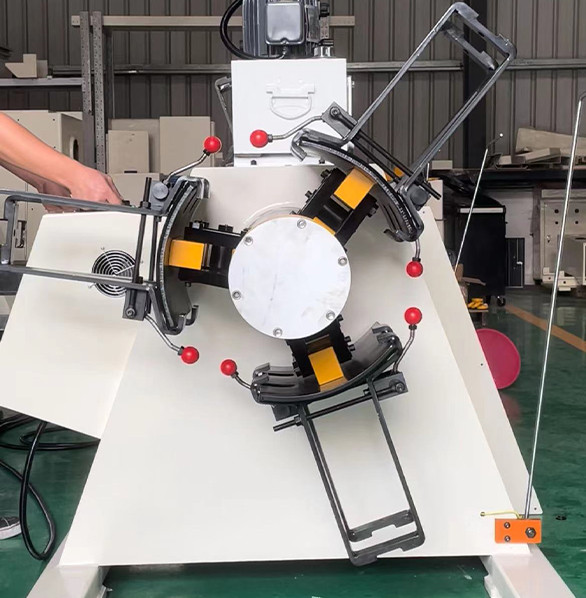
A white-goods plant called us about a panel line that would not hold its edge. The material was 0.6 mm pre-coated galvanised steel, 1,500 mm wide, running at 42 SPM into a progressive die.
Their operators had spent three weeks adjusting feed length. The real problem was 12 mm of edge wave walking down the strip before it ever reached the die.
This is what we found on site, what the NC straightener feeder was doing wrong, and which fixes actually moved the numbers.

Appliance panels are not a difficult material to feed. They are a difficult material to feed flat and unmarked.
At 1,500 mm wide and 0.6 mm thick, the width-to-thickness ratio is 2,500 to one. Any residual coil set turns into visible wave.
The Job: 1,500 mm Pre-Coated Panel at 42 SPM
The line ran 0.6 mm and 0.8 mm pre-coated stock from 5-tonne coils, 1,250 mm outside diameter, feeding a progressive die that pierced and formed in eleven stations.
Panel flatness had to hold within 4 I-units across the full 1,500 mm width. Hole position tolerance was ±0.3 mm, which is loose for the feed system and tight for a panel that is not flat.
Scrap was running at 5.8% and the plant blamed the die. The die was not the problem.
Two clues pointed away from the die before we measured anything. Scrap rose and fell with the coil, not with the shift.
And the defect appeared on the same edge every time, which a die problem rarely does.
The press itself was healthy. Tonnage readings were steady and the die had been serviced three months earlier.
The First Failure Was Edge Wave, Not Feed Length
We measured the strip at three points: after the uncoiler, after the straightener, and at the die entry.
Edge wave was 12 mm on the operator's side and 3 mm on the drive side. That asymmetry is the giveaway — coil set alone produces a symmetric bow, not a one-sided wave.
Feed length was within 0.15 mm. The operators had been adjusting a system that was already working.
The wave was pushing the strip against the entry guide, which was dragging one edge and skewing the strip in the die.
That skew showed up as an off-centre pierced hole. The plant read it as a die alignment problem and shimmed the die twice.
Shimming a die to compensate for a wavy strip works until the next coil, which has a different wave pattern.
Once we measured at the die entry rather than at the machine exit, the cause and the cure became obvious within an hour.
Tracing It Back to Coil Set and Roll Geometry
Three causes stacked on top of each other, and each one hid the next.
- Residual coil set. The coils came from a slitter whose leveller was set for 1.2 mm stock. At 0.6 mm the memory survived the whole coil.
- Roll count too low. Five straightening rolls cannot remove cross-bow in a 1,500 mm wide strip. The geometry does not reach across the width.
- No entry tension control. Without controlled back tension the strip entered the straightener slack, so the rolls worked on a moving target.
Fixing one without the others would have bought a small improvement and a false conclusion.
That is the trap in wide cosmetic panel work. Any single change produces a visible gain, so the first fix gets the credit and the line is declared solved.
Six weeks later the wave is back at 7 mm and everyone believes the straightener has failed.
Measure all three variables before you change any of them, then change them in the order that costs least.

What We Changed, and What Each Change Bought
| Change | What It Gave the Run | Where It Costs You |
|---|---|---|
| Five straightening rolls replaced with seven | Edge wave fell from 12 mm to 3 mm at the die entry | A longer machine body, roughly 900 mm of extra floor length and a higher base price |
| Controlled entry tension added ahead of the straightener | Strip entered the rolls under load, so the roll setting stopped drifting with coil weight | A tension arm and its control loop to maintain, and one more thing to calibrate at changeover |
| Lower rolls changed to polyurethane coating | Surface marking on the pre-coated face dropped to near zero | Less grip in oily conditions, so the upper rolls must stay hard and the gap must be right |
| Coil set removed upstream by the supplier | Coil-to-coil flatness variance collapsed | A material surcharge, and it only holds while that supplier keeps the leveller setting |
The roll count change did most of the work. The other three protected it.
Scrap went from 5.8% to 1.9% over the next three months. Flatness settled at 2 to 3 I-units, comfortably inside the 4 I-unit spec.
Feed length held within 0.12 mm, which is well inside the ±0.3 mm hole tolerance the panel needed.
The straightener settings stopped moving between coils, so the operators stopped touching them. That alone removed a full hour of adjustment per shift.
What This Configuration Will Not Fix
The line is now good at one job. It is worth being clear about where that stops.
It will not fix a bad coil. A coil with a rolled-in edge or a heavy cross-bow from the mill still produces wave. The straightener reduces set, it does not create flatness that was never there.
It will not fix die springback. If the formed panel twists after the draw, that is die geometry, not feed flatness.
It will not flatten high-strength stock at this width. Move to 0.8 mm HSLA 340 on a 1,500 mm coil and seven rolls stop being enough; the material fights back.
It will not hold flatness at very high speed. Above roughly 60 SPM on this width, the loop and tension behaviour change and the settings need re-tuning.
None of that is a defect. It is the boundary of what a wide, thin, cosmetic panel line is for.
Which Settings the Operators Kept
The plant changed its changeover sheet rather than its equipment list, and that is where most of the gain was held.
Roll gap by material, not by habit. The sheet now lists a gap for 0.6 mm and a different one for 0.8 mm, both expressed as a multiple of thickness.
Entry tension set to the coil weight. Heavier coils need more drag, and the setting is written down as a pressure rather than adjusted by feel.
Guide clearance recorded. Two millimetres total on this line. A wider guide lets a wavy strip wander into the die off-centre.
First-panel check. Edge wave and hole position on panel one, before the line goes to production speed.
None of those settings cost money. They cost a laminated sheet at the control panel and a short conversation at handover.
What the Line Did Three Months Later
Three months on, the plant had stopped adjusting feed length between coils. The die ran untouched, and the entry guide wear that had been blamed on the die stopped.
The operator checklist changed in one place: measure edge wave at the die entry on the first panel of each coil, not feed length.
That single measurement catches a bad coil in the first thirty seconds instead of three hundred panels later.
Appliance work rewards that discipline because the surface is visible to the end customer. A hidden panel can tolerate wave; a refrigerator side cannot.
We have commissioned more than 200 coil lines across 60 export markets, and the pattern repeats: the wide cosmetic jobs are won or lost upstream of the die.
If you are comparing line configurations for a similar job, our product index shows the standard builds.
How many straightening rolls does a 1,500 mm panel line need?
Seven is the practical minimum for 0.6 to 0.8 mm pre-coated stock at this width. Nine rolls give more margin if you also run 1.2 mm or high-strength grades.
At what edge wave should you reject a coil rather than adjust the line?
If the wave measures more than 8 mm across 1,500 mm before the straightener, the coil is the problem. Adjusting the machine will not remove it.
Does a 0.6 mm pre-coated coil need different roll coating from bare steel?
Yes. Polyurethane on the lower rolls, about 80 Shore A, protects the coated face. Bare steel tolerates hardened rolls at HRC 58 to 62 without marking.
What scrap rate should an appliance panel line target?
Under 2% is achievable on a stable 1,500 mm line. Above 5% almost always traces back to material or flatness rather than the die.
Where to go next
This article sits in the applications branch of the coil line guide library, one layer below the feed accuracy pillar. It follows one job from symptom to conclusion rather than listing specifications.
Read the feed accuracy error budget