What Decides Between a Coil Reel and a Powered Uncoiler?
- Share
- publisher
- David Park - Senior Stamping Engineer, FANTY Machinery
- Issue Time
- Nov 2,2026
Summary
Two machines that hold a coil and look similar on a general arrangement, priced eight times apart. A side-by-side comparison on weight, pay-off speed, back tension and loading, the tonnage and speed line that separates them, and three real-world variants that blur the choice. Ends with four questions that settle it in one meeting.
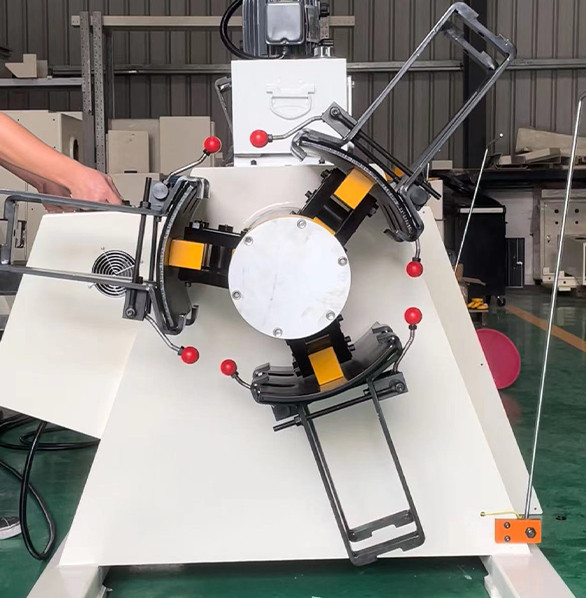
A fabricator buying its first coil-fed line asked for a price on a coil reel and was quoted 2,400 dollars for the stand and 19,000 dollars for the powered alternative.
Both hold a coil and both pay off strip. The difference is what happens when the line pulls, and how much coil you intend to load.
This comparison is written for the buyer who has one quote in hand and no clear reason why the other option exists.
Two Machines That Look Alike on a General Arrangement
A coil reel is a mandrel on a stand. It holds the coil, and the line pulls strip off it. There is no motor, no brake and no expansion mechanism beyond a manual screw or a set of wedges.
A powered uncoiler carries a motor, a brake or a regenerative drive, and a hydraulically or mechanically expanded mandrel. It pays off under its own control and holds back tension on the strip.
Coil reels also come in fixed and expanding mandrel versions. A fixed mandrel needs the coil inner diameter to match; an expanding one covers a range, typically 450 to 610 mm.
That detail matters more than it sounds. A coil with a 508 mm inner diameter will not go onto a 610 mm fixed mandrel, and the buyer finds out at the first delivery.
On a general arrangement drawing the two occupy similar floor space and both carry a coil. That similarity is why buyers ask for one when they need the other.
The practical difference appears the moment the line accelerates. A reel relies on the strip to drag the coil around; a powered machine drives or restrains it.
Coil Reel and Powered Uncoiler Side by Side
Four criteria separate the two machines in practice. Weight capacity and pay-off speed decide most cases before price is even discussed.
| Criterion | Coil reel | Powered uncoiler | Where each one hurts |
|---|---|---|---|
| Coil weight | Up to about 1,000 kg, occasionally 1,500 | 3,000 to 15,000 kg as standard | Above 1 tonne the reel stops being a safe manual load |
| Pay-off speed | Limited by strip tension the line can pull | Follows line demand up to 40 m/min and beyond | A reel on a fast line pulls the coil off centre and slaps |
| Back tension | None, unless a friction brake is added | Controlled by brake or regenerative drive | Without tension, loose wraps and coil set get worse |
| Loading | Crane or jib, coil pushed onto the mandrel by hand | Crane or coil car, mandrel expands hydraulically | A reel needs the operator at the mandrel every change |
| Typical price | 1,200 to 4,000 dollars | 9,000 to 28,000 dollars before freight | The gap buys tension control, not tonnage alone |
Those price bands are typical for standard builds and move with mandrel width, expansion range and whether a coil car is included. Treat them as order of magnitude rather than quotation.
The row buyers read last is usually the one that decides the purchase. A reel that costs 2,400 dollars still needs a crane, an operator at the mandrel, and a line that can tolerate no back tension.

The Tonnage and Pay-Off Speed Line
Two numbers put a buyer on one side of the decision or the other: coil mass and line speed.
Below 800 kg per coil and 15 m/min of strip demand, a coil reel does the job and does it for years. Above 3 tonnes, the reel is not a cheaper machine — it is the wrong machine.
The middle band is where the argument lives. Between 1 and 3 tonnes, a manual reel can work if the line runs slowly and the strip is thick enough to pull without stretching.
Pay-off speed sets the second limit. Pulling strip off a reel at 30 m/min accelerates the coil mass, and the tension spike travels down the strip into the line.
On a 1,500 kg coil at 600 mm outer radius, holding 30 m/min needs roughly 1.2 kW just to keep the mass turning, before any process tension. A reel supplies that power from the strip itself.
That is why thin strip and fast lines almost always end up with a powered uncoiler, regardless of coil weight.
The same arithmetic explains why a reel works well on a slitting line running 8 m/min and poorly on a roll former running 25 m/min, with identical coils on both.
Speed, more than weight, is what pushes most first-time buyers from a reel into a powered machine.

Loading Method Changes the Arithmetic
Coil weight is only half the loading question. How the coil reaches the mandrel decides how much labour sits inside every change.
A 1,000 kg coil loaded by jib crane takes one operator about four minutes, assuming the crane is free. A 5-tonne coil takes two people and fifteen minutes.
A coil car cuts that to one operator and three minutes, because it lifts the coil to mandrel height and pushes it on without a sling.
At six changes per shift, three shifts a day, that is roughly forty minutes a day returned, or about 180 hours a year on a two-shift pattern.
Price the car at 6,000 to 12,000 dollars and the payback often lands inside two years on operator time alone, before any mandrel damage is counted.
The trap is buying the car for a reel. A manual reel with a coil car is a strange hybrid: the car costs more than the stand it serves, and the reel still cannot control tension.
Where the Reel Comparison Misleads
The table above compares base machines. Three real-world variants blur the line, and each one has caught a buyer.
A reel with a friction brake. Adding a brake to a coil reel gives some back tension for a few hundred dollars.
It is not equivalent to a powered machine, because the brake cannot release as the coil diameter shrinks.
A powered uncoiler running at low duty. If the line runs 20 m/min for two hours a day, a powered machine is convenience rather than necessity. The extra capital buys operator time, not capability.
Coil weight quoted as maximum. A reel rated 1,500 kg will hold that coil statically. Loading it, accelerating it and stopping it are different load cases, and the rating rarely covers all three.
The price gap also looks different over ten years. A reel has almost no maintenance; a powered machine carries brake linings, hydraulic seals and motor bearings, which is a real annual cost.
One more caution belongs here. A used powered uncoiler at 6,000 dollars often needs 3,000 dollars of mandrel and brake work, which puts it level with a new reel plus a crane upgrade.
Matching the Choice to Your Coil Schedule
The machine should follow the coil schedule, not the other way round. Four questions settle it in a single meeting.
- What is the heaviest coil you will buy in the next five years, not this month? Coil sizes tend to grow after the line is running.
- How many coil changes per shift? Above six, the loading method costs more operator time than the machine difference.
- Does the line need back tension? Any process that needs a taut strip between coil and die answers yes.
- Is there a crane over the loading position? Without one, neither machine works and a coil car becomes part of the budget.
Write the answers down and compare them with the quotation. A supplier who quotes a reel for a 4-tonne coil has not read the schedule.
Our design team has specified both machine types for twelve years, with 80-plus engineers covering mandrel design, brake sizing and coil car integration.
The rule they apply is simple: choose the reel when the coil is light and the line is slow, and stop trying to make it do more.
Mandrel diameter range, expansion stroke and brake torque for each build are listed on the coil handling product index.
Capacity, mandrel and control decisions for a new installation are covered step by step in the coil line guide library, including the point where a coil car changes the layout.
At what coil weight does a reel stop being safe by hand, 800 kg or 1,500 kg?
Around 800 kg in practice, regardless of what the stand is rated for. Above that, two people cannot control the coil on the mandrel, and a crane becomes mandatory.
Can a coil reel be upgraded to a powered uncoiler later?
Rarely at sensible cost. The frame, mandrel and drive mounting are designed together, so a retrofit usually costs 70 percent of a new machine and keeps the old frame's limits.
How much floor space does a 5-tonne powered uncoiler need?
About 1.2 by 2.5 m for a 1-tonne reel, and 1.8 by 3.2 m for a 5-tonne powered uncoiler with a coil car. The car is what usually breaks a tight layout.
Where to go next
The reel versus powered machine question is the first fork in the specification chain. Capacity, mandrel style and control then follow from it, and the cluster pillar takes each in turn.
Walk through the decoiler specification chain