What Documents Come with an NC Straightener Feeder?
- Share
- publisher
- David Park - Senior Stamping Engineer, FANTY Machinery
- Issue Time
- Aug 31,2026
Summary
A practical checklist of the essential documents that should come with an NC Straightener Feeder - CE declaration, spec sheet, drawings, test report and warranty - plus how to verify them before you pay.
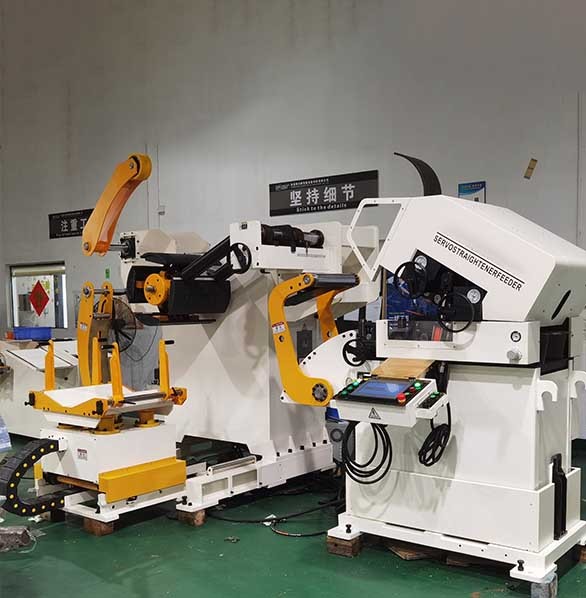
When you invest in an NC Straightener Feeder, the machine itself is only half of what you are paying for. The other half is the documentation that proves the machine is safe, compliant, correctly specified, and backed by a supplier who stands behind the product.
This guide explains exactly what documents should come with an NC Straightener Feeder, why each one matters, and how to tell the difference between a professional supplier and one who is hiding something.
If you are comparing quotes or about to sign a purchase order, use the checklist below before you pay. A supplier that cannot provide proper documentation for their 3-in-1 decoiler straightener feeder line is the biggest red flag in the entire buying process.
Why Documentation Matters as Much as the Machine
An NC Straightener Feeder is a precision piece of equipment that operates under high mechanical stress, carries heavy coils, and feeds strip into a press at high speed.
Beyond safety, documentation protects your commercial position. A machine without a clear specification sheet cannot be audited, and a machine without a warranty document cannot be claimed against.
When you buy a 3-in-1 decoiler straightener feeder, the paperwork you receive defines what you can prove later — about capacity, compliance, commissioning support, and spare part availability. Treat the documentation package as part of the deliverable, not an afterthought.
In practice, buyers who request a full document set before payment avoid three common problems: receiving a machine that does not match the quoted specification, discovering that the unit is not CE certified when it reaches the EU border, and struggling for weeks to get wiring diagrams when the first fault appears.
All three are completely avoidable when the document checklist is agreed in advance.
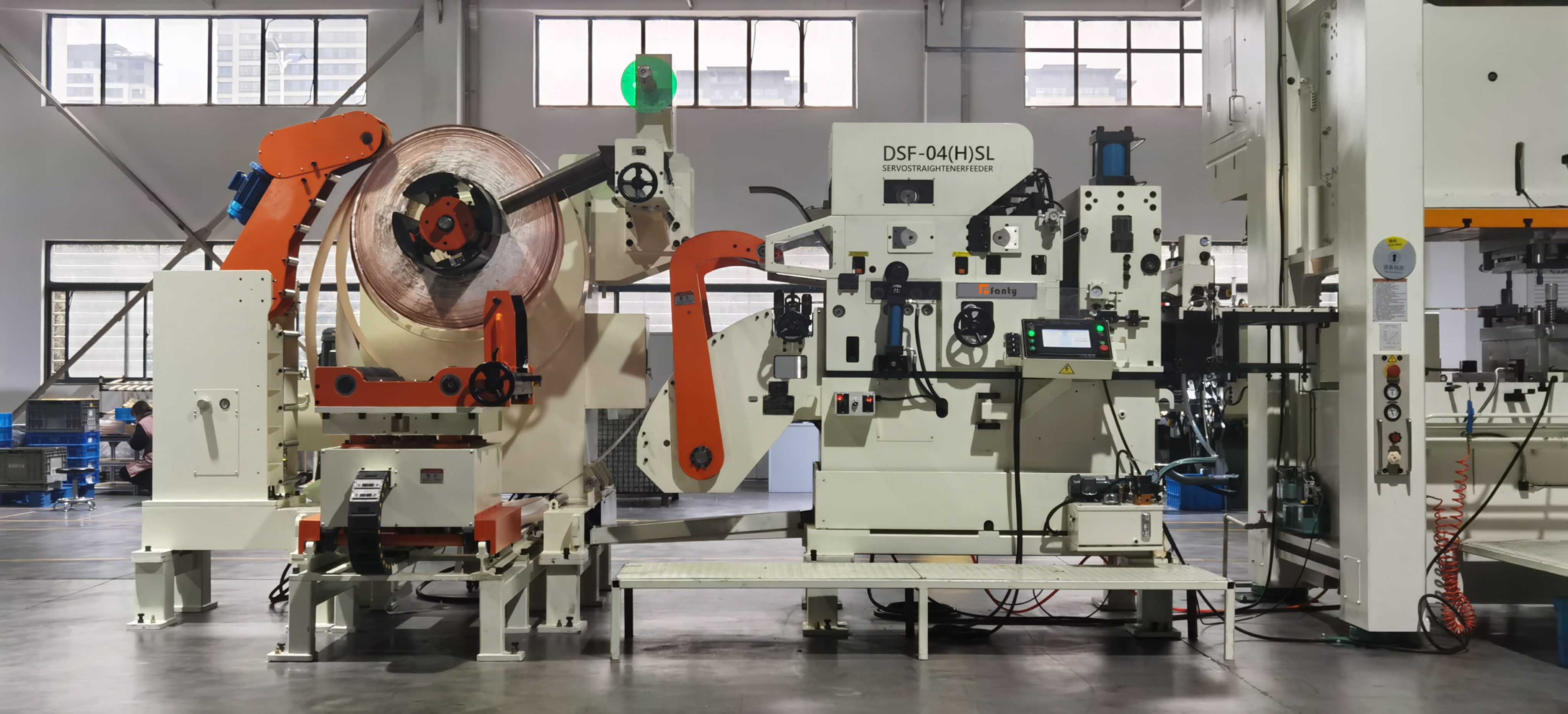
The 7 Essential Documents in Every Professional Package
There is a standard set of documents that any serious supplier of an NC Straightener Feeder will provide with the machine. The table below lists the seven documents that matter most, what each one proves, and why it matters to your operation.
| Document | What It Proves | Why It Matters |
|---|---|---|
| CE Declaration of Conformity | Machine meets EU safety and EMC directives | Required for import into Europe; proves design review |
| Technical specification sheet | Exact capacity, dimensions, motor power, accuracy | Lets you audit that the delivered unit matches the quote |
| General arrangement drawing | Machine footprint, anchor points, utilities required | Essential for plant layout and foundation planning |
| Electrical schematic diagram | Full wiring of control panel and safety circuits | Needed for installation, troubleshooting, and modifications |
| Operation and maintenance manual | Safe operation, daily checks, lubrication schedule | Keeps operators safe and protects your warranty |
| Inspection and test report | Individual machine test data, run-in results | Confirms your unit was actually tested, not just shipped |
| Warranty certificate and terms | Coverage period, conditions, spare part commitments | Defines your rights and the supplier's obligations |
Notice what the list does not include: glossy marketing brochures. Brochures are useful for research, but they are not documents of record. The seven items above are the documents you can rely on in an audit, an insurance claim, or a customer certification audit of your own factory. If a supplier cannot produce any one of them, ask why before you proceed.
How to Verify the Documents You Receive
Receiving documents is not the same as receiving valid documents. A photocopy of a generic CE certificate does not cover your specific NC Straightener Feeder model. Check that the machine model number, serial number, and rated capacity on every document match the data plate bolted to the machine frame. If they do not match, the document does not apply to your unit.
For the CE Declaration of Conformity, verify the manufacturer's name and address, the harmonised standards listed, and the signature date. For the inspection and test report, check that the feed accuracy values and speed tests match the specification you ordered.
A reputable manufacturer such as FANTY tests every unit and records the results against the serial number, so the report should reference your machine specifically rather than describing a generic product family.
Finally, keep the digital copies too. Scan every document into a folder that your maintenance team can access, and record the serial number, delivery date, and warranty expiry date on a simple register. When a spare part is needed two years from now, that register is what saves you from guessing the revision level of your NC servo feeder.
Red Flags When Documentation Is Missing
Missing documentation is a reliable early warning signal. If a supplier cannot provide a technical specification sheet before you order, they may not have a well-defined product at all.
Some suppliers will say that the manual is sent "after delivery" or that the wiring diagram is "available on request." Both are acceptable only when the delivery schedule and format are written into the contract.
The safest approach is to list the seven documents above in your purchase order as deliverables, with the language and format specified, so that payment milestones can be tied to document handover.
Another common red flag is documentation in a language your maintenance team cannot use. For a global buyer, English manuals and English-language electrical diagrams are the practical minimum. If the supplier's only documentation is in the manufacturer's home language, budget for translation or insist on English versions before accepting the shipment.
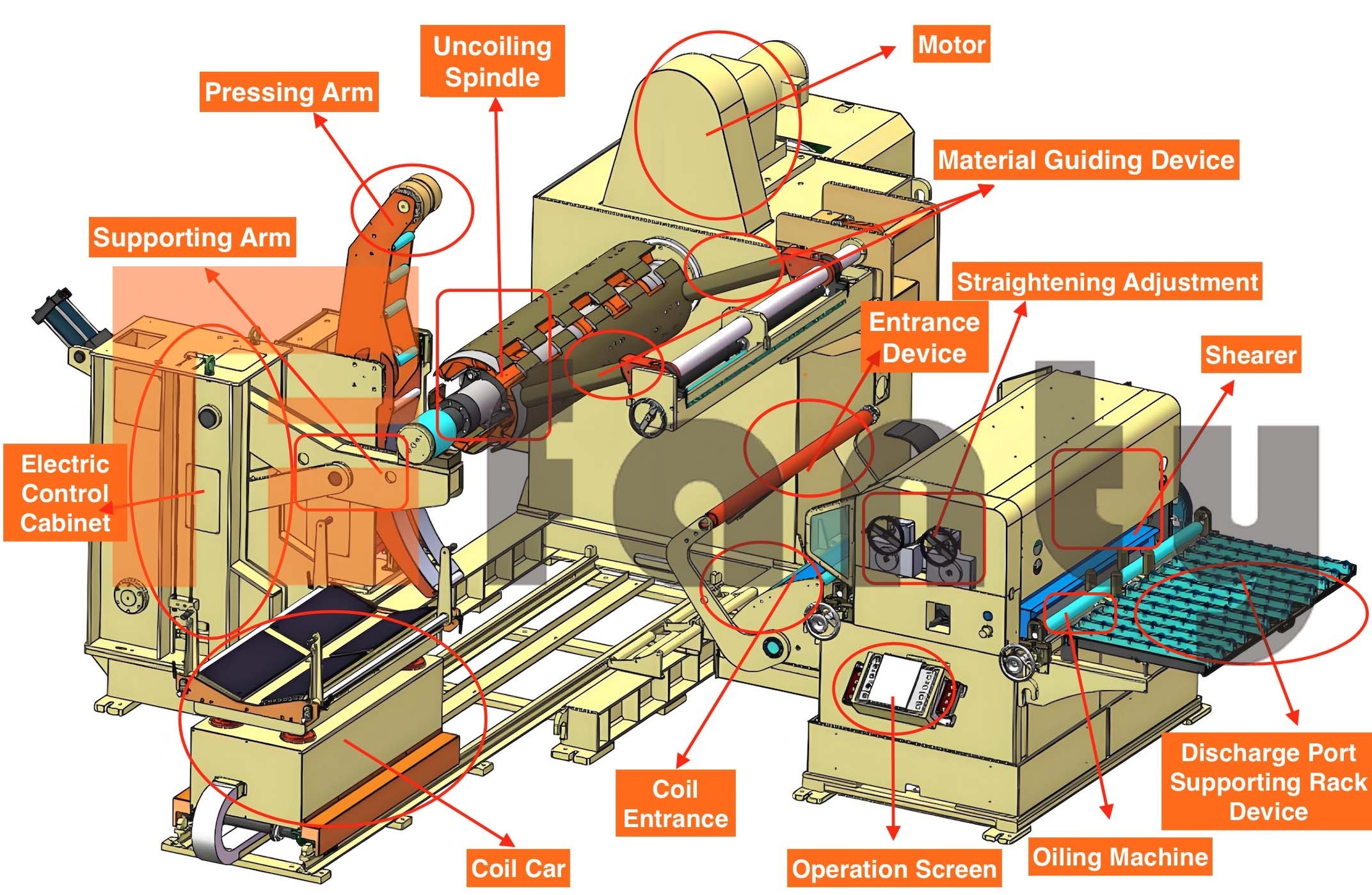
What to Do With the Documents Once You Have Them
Good documentation only helps if it is organised and used. Here are the practical steps that professional stamping plants follow after receiving their NC Straightener Feeder documentation package:
- Match every document to the serial number on the machine data plate before signing the delivery note.
- File the CE certificate and test report in your quality and compliance register for customer audits.
- Give the operation and maintenance manual to the shift leaders and complete the first training session using it.
- Store the electrical schematic in the panel cabinet pocket so electricians can find it instantly during a fault.
- Register the warranty with the supplier and record the expiry date in your maintenance calendar.
Why FANTY Sets the Standard for Documentation
FANTY has spent 12 years building coil handling and stamping automation equipment, and every NC Straightener Feeder that leaves the 45,000 m² factory is backed by a complete engineering document set. With 370 staff including more than 80 R&D engineers, the company produces its own technical documentation in-house rather than relying on generic templates, which is why drawings, schematics, and manuals actually match the machine you receive.
Every FANTY machine is CE certified, the factories are audited for consistent quality, and the company has delivered more than 200 active line installations across 60+ countries.
When you buy from FANTY, the test report is tied to your unit's serial number, the manual is written for real operators, and the warranty terms are clear before you pay. That is the documentation standard that protects your investment for the full life of the 3-in-1 decoiler straightener feeder line.
Frequently Asked Questions
Is a CE certificate mandatory for an NC Straightener Feeder?
If the machine is imported into or operated within the European Economic Area, yes. The CE Declaration of Conformity confirms the machine meets the applicable Machinery Directive and EMC requirements. For other regions, check local regulations, but a CE-certified machine is generally a strong indicator of overall build quality.
Should the test report show my specific machine serial number?
Yes. A professional manufacturer tests each unit and records the results against its serial number. If the report refers to a product family without a serial number, treat it as generic marketing material and request a unit-specific report.
Can I request documents before placing an order?
Absolutely, and you should. Ask for the technical specification sheet, general arrangement drawing, and a sample CE declaration before ordering. A supplier who hesitates to share these before payment is a risk signal.
What if the manual is not in English?
For a global operation, insist on English documentation before accepting delivery. Electrical diagrams and manuals in an unfamiliar language create real safety risks and slow down every future repair.
How long should I keep the documentation?
Keep the complete set for the full life of the machine, and at least the warranty certificate and test report for insurance and audit purposes. Digitise everything so nothing is lost when staff change.
Related reading
- how much floor space a coil line needs
- how to select the right model
- what each specification line really costs
Part of the the coil line guide library — the full library of coil handling, straightening and feeding guides from FANTY.
Ready to Invest in a Fully Documented NC Straightener Feeder?
Get the complete specification sheet, CE declaration, and unit-specific test report for a FANTY machine designed around your press line.
Send Inquiry to FANTY