What Happens When a Coil Breaks at the Decoiler?
- Share
- publisher
- David Park - Senior Stamping Engineer, FANTY Machinery
- Issue Time
- Oct 14,2026
Summary
A 6-tonne coil parted at an uninspected butt weld 40% into the coil, and eleven seconds passed between the break and the line stop. This is what the hold-down arm, the loop interlock and the brake did in that window, the three conditions that turn a break into a line-down event, and the four cases where no hold-down arm can help.
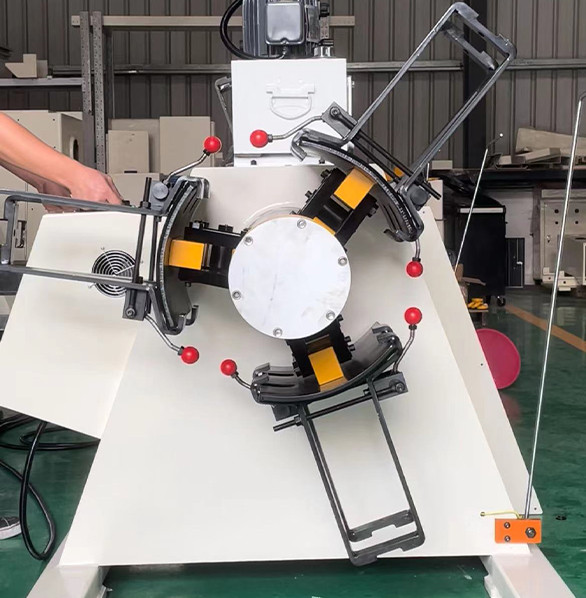
A coil break is the one event a decoiler machine cannot be designed around, only designed for.
The strip separates at a weld or an edge crack, the back tension disappears in an instant, and everything that was holding the coil under control has to react before the loose wraps do damage.
What happens in the next two seconds is a design question, and most of it is answered before the coil is ever loaded.
The Two Seconds After a Coil Break Decide the Damage
When the strip parts, the mandrel is still turning and the brake is still applying drag. The coil does not stop; it accelerates, because the load it was pulling against has gone.
At the same moment the loop sensor downstream reads an empty loop and calls for more strip, which is exactly the wrong instruction. The payoff speeds up while the coil is already running away.
The loose wrap is the dangerous part. A single wrap leaving a 6-tonne coil at speed carries enough energy to bend an entry guide or throw the strip clear of the line.
Every control on a decoiler is really a decision about this window. The hold-down arm, the brake, the loop interlock and the drive response are all there to shorten it.
What We Found on a 6-Tonne Coil at 140 SPM
The case that shaped how we specify hold-down arms came from a plant running 2.0 mm SPHC, 1,250 mm wide, on 508 mm inside diameter coils.
Forty percent into a 6-tonne coil, the strip separated at a butt weld. The weld had been made by hand on the coil line and never inspected.
What followed took eleven seconds from break to stop.
The wrap slapped the hold-down arm, the arm dropped and pinched the loose end, the loop collapsed, and the line pulled the slack strip backwards through the entry guides.
Downtime was 25 minutes. Scrap was about 12 metres of strip plus the damaged tail of the coil. One entry guide was bent beyond reuse.
The machine did not fail. The decoiler held its mandrel, the brake released on command and nothing structural was damaged.
What failed was the absence of an interlock that would have stopped the line on the first sign of lost tension.

Three Things That Turn a Break Into a Wreck
Most breaks are survivable. These three conditions turn one into a line-down event, and all three are visible before the coil goes on.
| Condition | What It Does at the Break | Where It Costs You |
|---|---|---|
| Uninspected hand weld | Fails without warning at any point in the coil | A weld check costs 30 seconds; a break costs a quarter of a shift |
| No loop-low interlock to the line stop | Payoff keeps accelerating into an empty loop | One sensor and one relay, versus the price of a bent guide |
| Hold-down arm set light | The wrap lifts clear and whips before the arm reacts | Heavier arm pressure marks soft or coated strip on every coil |
The third row is the honest trade-off. A hold-down arm tight enough to catch a 6-tonne wrap at speed is tight enough to leave a mark on 0.8 mm pre-painted strip.
That is why the arm setting belongs on the job setup sheet next to the brake torque, not left at whatever the last operator chose.
Coil breaks raise the same questions every time, and the answers depend on how the coil was built rather than on the machine brand.
How far will a loose wrap travel on a 6-tonne coil?
On a 508 mm mandrel at 140 SPM, the strip leaves the coil at roughly 60 metres per minute. One wrap is about 1.8 metres, so it clears the mandrel in under two seconds.
Does a brake failure cause a coil break?
No. A failing brake produces a gradual tension loss and a slack loop, not a separation. If the strip actually parted, look at the weld, the edge or a lap.
Is 2 tonnes the safe coil weight limit without a hold-down arm?
In practice, above about 2 tonnes on a 508 mm mandrel we would not run without one. Below that the wrap energy is low enough for the brake alone to control.
How much of a 1,250 mm coil is lost to a break?
Between 8 and 15 metres on a 1,250 mm line, depending on loop depth. The bigger loss is the 20 to 40 minutes of restart time.
The Hold-Down Arm Is the Part That Matters
Of everything on an uncoiler, the hold-down arm does the most work in a break and gets the least attention at the specification stage.
It has two jobs. During normal running it keeps the outer wrap pressed against the coil so the coil cannot spring open. During a break it has to arrest the loose end before it leaves the mandrel.
Those two jobs want different settings. Running pressure is light, often just enough to keep the wrap seated. Arrest pressure is high, and it has to be reached in a fraction of a second.
The practical answer is a spring-applied arm that holds by default and is released by air or hydraulics. That way a loss of supply pressure makes the arm clamp rather than release.
On a motorised decoiler with a loop control, the arm should also be wired to drop on loop-low. The signal already exists in the control; using it costs nothing.
Five Checks Before the Coil Goes On
Every break we have been called out to investigate was preventable at the loading stage. Five checks cover almost all of them.
- Inspect every butt weld for full penetration and a dressed surface before the coil is loaded
- Measure the weld thickness with a calliper; a weld 0.2 mm proud of the strip will not pass the hold-down arm cleanly
- Check the outer two wraps for edge cracks, where slitter damage concentrates
- Confirm the loop-low signal actually stops the line, by simulating it with the machine unloaded
- Record the brake setting and the arm pressure on the job sheet before the first coil
The third item is the one plants skip. An edge crack 30 mm long will travel quietly through several hundred wraps before it opens.
Hold the coil up to a light and look along the outer edge. A crack shows as a dark line against the reflection, and the check takes about 20 seconds per coil.
The fourth item is a five-minute test that most plants have never run. A loop-low signal that is wired but never proven is not a protection.
Weld quality is the largest single factor. A hand butt weld that has not been dressed will trip the hold-down arm on a good day and part on a bad one.
A butt weld made on a coil line is normally annealed as part of the process. If it is not, the weld zone stays harder than the parent strip and will not bend with the rest of the coil.
The failure then appears at the weld rather than at the edge, and it appears at the moment the weld passes through the tightest bend in the line.
Ask the service centre whether welds are annealed and whether the weld is trimmed flush. Those two answers predict more breaks than the coil weight does.
Where the coil arrives with a lap joint rather than a butt weld, treat the whole coil as suspect. Lap joints add thickness and are a common source of a sudden break at the mandrel.
Where a Hold-Down Arm Cannot Save You
A hold-down arm is a mitigation, not a cure, and there are four situations where it changes nothing.
A break at the mandrel. If the strip separates within the first half-wrap, the arm has no length to press against and the loose end is already past it.
A break with the coil nearly empty. Below about 15% of coil depth the wrap diameter is small, the arm reach is at its limit, and the energy per wrap is low but the control is worse.
Very narrow slit coils. A 60 mm strand is stiff enough to stand up rather than lie down, and the arm can pass over it instead of pinning it.
Coated or polished strip. The pressure needed to arrest a heavy wrap will mark the surface, so the plant has to choose between marking every coil and accepting the risk on one.
None of that argues against fitting the arm. It argues for treating the weld inspection and the loop interlock as the primary defence and the arm as the backstop.
That is the order we build in, and after twelve years and a 370-strong team it is still the order that holds up on the floor.
Where to go next
Capacity, mandrel type and control all interact, and the break response is only one input. The full specification chain for a decoiler sits in the coil line knowledge base.
The Coil Line Guide Library