What Happens to a Coil Line Inside a 40-Foot Container?
- Share
- publisher
- David Park - Senior Stamping Engineer, FANTY Machinery
- Issue Time
- Nov 12,2026
Summary
A three-unit line left Busan in two high-cubes and one 20-foot box and arrived with rust on the mandrel and condensation in the cabinet, costing $2,800 before the first coil ran. This covers what fits in a 40-foot high-cube, why the frames cannot share a container, and where the damage happens between the crate and the quay. It lists the six packing-spec lines that remove the argument later and the four cases where a container is the wrong answer.
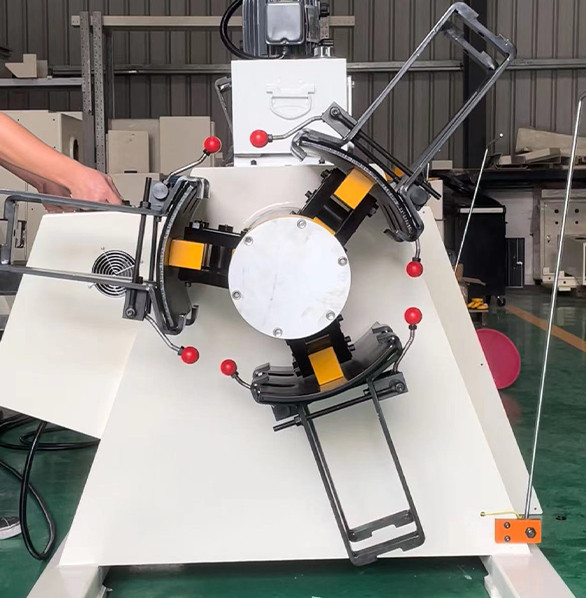
A coil line loses value inside a container long before anyone files a claim, and the loss almost never shows up in the loading photographs. It is decided in the two hours the line spends being packed.
A three-unit line left Busan in two 40-foot high-cubes and one 20-foot box.
Six weeks later the mandrel carried a rust bloom, one cabinet had condensation damage, and the buyer spent $2,800 before the first coil ran.
None of that was the forwarder's fault. The crates met the shipping line's rules and the paperwork was clean.
What follows is how a coil line actually travels, where the damage happens between the crate and the quay, and what the packing specification has to say before the truck arrives.
The Load That Decides Everything Before the Quay
Start with the masses, because they set every other decision. A 1,300 mm line with a 5-tonne decoiler capacity breaks down into four shippable pieces.
The decoiler frame. About 3,400 kg, 2.1 m across the base, and top-heavy once the mandrel is fitted. It is the piece that dictates crate height.
The leveler frame. Around 2,800 kg and 2.3 m long. The roll head is precision-ground, so it travels as a rigid body or not at all.
The feed unit. Roughly 1,900 kg. Short, dense, and easy to crate badly because it looks like a box.
The control cabinet. 900 kg of switchgear, drives and a PLC. It is the only piece that cares about humidity more than about impact.
A 40-foot high-cube gives 12.03 m of internal length, 2.35 m of width and 2.69 m of height, with a payload near 26,500 kg. On paper that swallows the whole line. In practice the width limit is what decides the plan.
Two frames side by side need 4.4 m of floor. They do not fit. So the line ships as one frame per container with the small pieces packed around it, and the third container takes the cabinet and the loose parts.
That is three containers for one line. Buyers who expect two are usually working from the machine footprint rather than the crate footprint, which adds roughly 600 mm on every side.

What Fits, and What Has to Travel Differently
The allocation below is what we ship on a standard three-unit line. The third column is the part that gets argued about after arrival.
| Piece | How it travels | Where it costs you |
|---|---|---|
| Decoiler frame | Timber-skid crate, mandrel braced, one 40-foot HC | Needs its own container; sharing one lifts the crate over the door height |
| Leveler frame | Skid crate with blocking under the roll head, second 40-foot HC | Roll head cannot be braced through the roll gap, so the crate needs internal tie rods |
| Feed unit | Bolted to the leveler skid when width allows | Saves a container, adds 1,900 kg to one crate and moves the centre of gravity |
| Control cabinet | 20-foot box, VCI film, 8 kg desiccant, shock indicator | The cheapest crate and the most expensive failure; condensation kills it silently |
| Mandrels and roll sets | Steel stillage, oiled, wrapped, lashed to the frame base | Loose inside a container they become projectiles in heavy weather |
Anything wider than 2.30 m at the base stops being a container job. The frame moves to a flat rack, gets a tarpaulin instead of a roof, and pays for that in rust risk rather than in freight.
Height is the second trap. A crate that clears 2.69 m at the factory can still fail to clear the door of a high-cube once the skid and the lashing eyes are counted.
The practical rule we give buyers is to design the crate to 2.55 m and measure the door, not the container.
Two hundred millimetres of headroom is what lets a forklift place the load without a crane at the destination.
Where the Damage Actually Happens
Rust on a mandrel is not caused by rain. It is caused by the container breathing.
Container sweat. A steel box crossing four climate zones condenses water on the inside of the roof every night. It drips onto whatever sits highest, which on our line is the mandrel.
VCI film that was cut open. Volatile corrosion inhibitor only works in an enclosed volume. A crate lined with VCI paper and then left open for inspection arrives with no protection at all.
Chafing, not impact. A 2,800 kg frame that moves 40 mm on its skid will rub through paint and into the machined face within a week of sea passage. Impact damage is rare; abrasion is routine.
The cabinet's own heat. Switchgear packed cold and shipped through the tropics pulls moisture into every terminal block. The failure shows up as a nuisance trip three months after commissioning.
Four questions come up on nearly every shipment of this kind.
How many 40-foot containers does a 1,300 mm coil line need?
Three on most builds: two high-cubes for the frames and one 20-foot box for the cabinet and loose parts. A compact two-unit line can travel in two if the feed unit bolts to the leveler skid.
How much desiccant does a 20-foot cabinet container need?
Roughly 8 kg of container desiccant for a 33 m³ box on a 30-day voyage, plus VCI film on the cabinet itself. Below 5 kg the desiccant saturates before the ship crosses the equator.
At what crate width does a coil line leave the container?
Above 2.30 m at the base. A standard high-cube gives 2.35 m of internal width, so a 2.4 m frame cannot be loaded without removing structure that should not be removed.
What does condensation damage cost on a control cabinet?
$1,500 to $4,000 in parts and drying, plus two to five days of commissioning delay. Terminal corrosion found after power-up usually means replacing contactors rather than cleaning them.
What the Packing Specification Should Say
Six lines in the purchase contract remove most of the argument later. They cost nothing to write and about $1,200 to execute.
- Crate every frame to 2.55 m maximum height, including skid and lashing eyes, and state the door height it must clear.
- Block the frame under its overhang, not at the corners. A frame supported only at four corners bows under its own mass at sea.
- Brace the mandrel with timber cut to fit and record the brace positions in the packing list, so the destination crew removes them in order.
- Seal the cabinet in VCI film with 8 kg of desiccant and fit a humidity indicator card that can be read without opening the crate.
- Photograph the loaded container with the lashings visible, and put the same photographs in the shipping documents.
- Fit a shock and tilt indicator to each frame crate. A red indicator converts a claim from an opinion into a record.
The photographs are the item buyers skip. Without them, an argument about whether a frame was braced at loading becomes one party's word against the other, and insurers settle at a discount.
Base dimensions, anchor patterns and lifting points for our frames sit on the specification pages in our coil handling equipment index, which is the drawing set to hand to a packing contractor.
When a Container Is the Wrong Answer
Containers are the default because they are cheap and everywhere. Three situations make them the wrong choice.
The frame is wider than 2.30 m. A wide-bed line with a 1,600 mm coil and outboard bearing supports does not come apart for shipping.
It goes on a flat rack, and the buyer should budget for rust removal rather than expect a sealed crate.
The destination has no crane and no forklift above 5 tonnes. A container delivers a crate, not a machine.
If the plant cannot lift 3,400 kg off a trailer, the freight saving disappears into a crane hire that costs more than the sea leg.
The destination building has a low door. A 2.55 m crate does not pass a 2.4 m opening.
In that case the frame ships partially disassembled, and re-assembly plus re-alignment belongs in the installation budget, not the freight budget.
There is a fourth case that is not about size at all. Lines over about 25 years old often have no reliable drawing of the base or the lifting points.
You are then quoting freight on an unknown, and the crate design becomes guesswork.
The Claim Six Weeks Later
Damage is usually found at the destination, after the container has been opened and the crates cut. That timing is the problem.
Insurance surveyors want to see the packing in place. Once the crate is open and the lashings are cut, the evidence that would prove poor blocking is gone, and the claim moves to a negotiated percentage.
Inspect before unpacking. Photograph the container interior, the lashings and the indicator cards with the crates still closed. Ten minutes of photographs is the difference between a paid claim and a discount.
Log the humidity card. A card reading above 60 percent explains cabinet corrosion without an argument about who left the door open.
On the shipment described at the top, the rust bloom cost $1,800 to polish out and the cabinet cost $1,000 in contactors. The claim recovered $600, because the crate had been opened before the surveyor was called.
Sixty countries of export experience does not remove that lesson. It just makes it predictable, and predictable is what a packing specification is for.
Where to go next
Freight and packing are two lines in a purchase budget that has nine others, and the cheapest way to control all of them is to know what each specification line costs before the order is placed.
The coil line guide library prices each specification line against its landed cost, including the freight and installation items buyers routinely forget.