What Is a 3-in-1 Decoiler Straightener Feeder? Complete Guide for Stamping Lines
- Share
- publisher
- David Park - Senior Stamping Engineer, FANTY Machinery
- Issue Time
- Jul 17,2026
Summary
Wondering what a 3-in-1 decoiler straightener feeder (NC straightener feeder) is and whether you need one? This complete guide covers how it works, key advantages, and selection tips.
If your stamping line runs below capacity, produces inconsistent parts, or racks up scrap costs, the problem might not be your press — it could be how the material is being fed.
A poorly matched 3-in-1 decoiler straightener feeder silently drains profitability: uneven feeding wears dies faster, material waste eats into margins, and constant manual adjustments burn operator hours. Get the machine right, and the same line becomes a well-oiled, automated powerhouse.
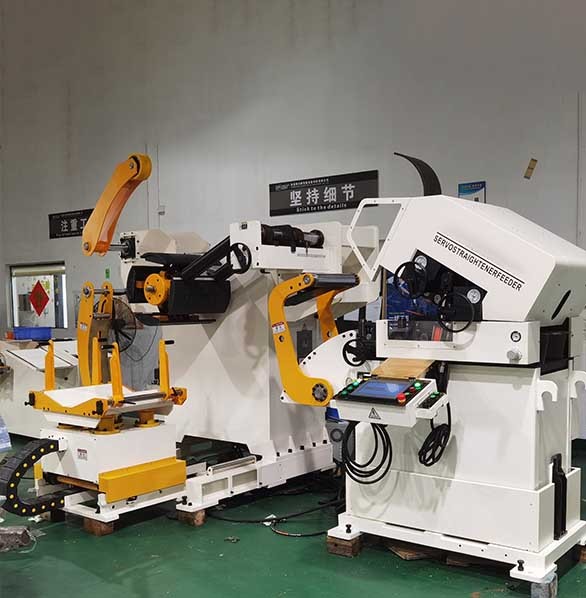
Also called an NC straightener feeder or NC servo straightener feeder, this integrated system combines precision decoiling, leveling, and servo-driven feeding in one compact unit.
After more than 12 years designing and deploying these systems across 2,000+ production lines worldwide, the team at FANTY Machinery has seen every mistake in the book — and learned exactly what separates a smart investment from an expensive lesson.
On this page
What Exactly Is a 3-in-1 Decoiler Straightener Feeder?
A 3-in-1 decoiler straightener feeder is a single integrated machine that performs three sequential operations on metal coil stock: unwinding the coil (decoiling), flattening the strip and removing internal stress (straightening), and advancing the material into the press at a precise, programmable length (feeding).
Understanding how the three functions interact explains why integration is so powerful. In a separate layout, each machine has its own drive, its own alignment, and its own control interface, and the strip must travel through free-loop arcs between them.
Every transition point is a source of tension variation, edge damage, and setup time. The 3-in-1 design removes these transition points entirely, giving you a shorter, stiffer material path that is inherently more accurate.
1. Decoiling — Controlled Unwinding
The decoiler section holds the metal coil on an expanding mandrel. As the mandrel rotates, it feeds the strip forward at a speed synchronized with downstream demand via a loop sensor or photoelectric eye.
Key features to evaluate include mandrel expansion type (manual, mechanical, or hydraulic), the pressing arm that stops the outer wrap from springing loose, and the variable-frequency drive that matches unwinding speed to production.
For heavy coils, a hydraulic decoiler with power expansion keeps coil changes under five minutes.
2. Straightening — Removing Coil Set
The strip then passes through a series of alternating rollers — typically 7 to 17 — that bend the material progressively in opposite directions. This reverse-bending process relieves coil set: the internal stress locked into the metal when it was wound at the steel mill.
The number of rollers, their diameter, and the precision of gap adjustment determine final flatness. For demanding work, an NC straightener feeder with servo-controlled roller gaps holds flatness within ±0.1 mm per meter, repeatably, with no operator judgment involved.
3. Feeding — Precision Advancement
The servo-driven feed section advances the straightened material into the press at programmable speed and length. Modern NC servo feeders achieve repeatable accuracy of ±0.05 mm at speeds up to 200 strokes per minute, synchronized to the press angle encoder.
Operators store job recipes on the touchscreen — feed length, speed profile, roller pressure — and recall them in seconds at changeover.
3-in-1 vs Traditional Separate Systems
| Feature | Separate Units | 3-in-1 Integrated |
|---|---|---|
| Floor space | 6-8 meters of line length | 3-4 meters — up to 50% saving |
| Setup per job change | 45-90 minutes | 5-15 minutes with digital presets |
| Feeding accuracy | ±0.15 to 0.3 mm | ±0.05 to 0.1 mm |
| Operator skill required | High — three control systems | Moderate — one HMI touchscreen |
| Maintenance points | Three machines, three spares lists | One machine, one spares list |
| Alignment | Three alignments at install | Factory pre-set, single check |
The numbers tell a clear story: switching to an integrated system typically cuts floor space in half, reduces changeover time by 80%, and improves feeding accuracy roughly threefold. For a factory running multiple job changes a day, those improvements translate directly into bottom-line savings — less downtime, less scrap, more throughput.
Which Industries Benefit Most?
| Industry | Typical Parts | Why 3-in-1 Fits |
|---|---|---|
| Automotive | Body panels, brackets, chassis parts | ±0.05 mm precision at high volume |
| Home appliances | Refrigerator panels, washing machine drums | Scratch-free handling of painted material |
| Electronics | Connectors, shields, heat sinks | Fine-pitch feeding for progressive dies |
| Hardware & construction | Fasteners, hinges, roofing parts | Cost-effective for medium volumes |
| EV & solar energy | Battery enclosures, solar frame profiles | Multi-material handling — aluminum, copper, HSS |
Beyond these core sectors, integrated systems are increasingly used in medical device manufacturing, aerospace component production, and consumer goods packaging, where repeatability and precision are non-negotiable. If your parts are stamped from coil stock and quality demands are tightening, the 3-in-1 architecture is worth a serious look.
Measurable Benefits of Going Integrated
- 50% floor-space savings — the loop area between straightener and feeder disappears, freeing room for another press line or die storage.
- 80% faster changeovers — digital job presets recall feed length, speed, and roller settings in seconds instead of minutes of manual adjustment.
- 25% scrap reduction — the gapless material path eliminates threading misfeeds and reduces setup waste.
- Simpler operation — one touchscreen controls all three functions, so one operator can manage multiple lines confidently.
- Lower maintenance costs — fewer components, fewer alignment points, and fewer potential failure modes than three separate machines.
These benefits compound. A plant running ten job changes a day at $200 of lost production per change saves more than $500,000 a year in changeover time alone by moving from separate units to a 3-in-1 system — before counting scrap and maintenance gains.
Where a 3-in-1 Machine Is the Wrong Choice
Integration solves a specific set of problems. It does not solve every problem, and the honest answer to "should I buy a 3-in-1" is that it depends on conditions you already know. If any row below matches your shop, a separate line will serve you better, and we would rather tell you that before the order than after it.
| Your situation | Where the 3-in-1 is limited | What to look at instead |
|---|---|---|
| Very light gauge, 0.2-0.3 mm, on surface-critical stock | Pulling thin strip takes roll pressure, and that pressure is what marks coated or mirror-finish material. | A separate straightener running soft polyurethane rolls. |
| Pre-painted, coated or mirror-polished coil | Every roll the strip touches is a marking risk, and integration puts more rolls inside one frame. | A line with a dedicated non-marking roll set. |
| Feed lengths beyond roughly 1,200 mm | Feed rolls share the straightener frame, so a long advance amplifies whatever deflection the frame has. | A stand-alone heavy-duty feeder on its own base. |
| One job, one material, no changeover | Almost all of the gain is changeover time. With no changeovers there is little time to recover. | A separate line with simpler controls, at lower cost. |
| Coil wider than about 1,300 mm at heavy gauge | Width and thickness both load the same structure, so frame stiffness becomes the ceiling. | A wide heavy-gauge line with the units split apart. |
| Heavy strip at very high SPM | Combined inertia at speed leaves the loop control with less margin than a split line has. | A split line that sizes each unit to its own load. |
One caveat on our own numbers. The 50% floor-space saving and the 45-90 minute to 5-15 minute setup comparison describe a specific DSF-series machine measured against a specific separate decoiler-straightener-feeder layout. Change the coil width, the roll count or the press tonnage and both figures move.
Treat them as typical for this class of line, not as a guarantee, and confirm them against the machine drawing for your own coil data.
How to Select the Right Model
Selection starts with your material data, not the brochure. Define the thickness range (light-duty 0.2-3.2 mm, medium 0.5-4.5 mm, or heavy 0.6-8.0 mm), maximum coil width and weight, required feed accuracy, and target stroke rate.
FANTY Machinery, established in 2013 in Dongguan, China, builds its CE-certified 3-in-1 decoiler straightener feeders in a 45,000 m² facility staffed by 370 professionals, including more than 80 R&D engineers.
Machines use Mitsubishi and Siemens controls with Yaskawa servo drives, and are trusted by customers in over 60 countries — from automotive Tier-1 suppliers in Germany to appliance manufacturers in Brazil.
Every unit is load-tested before shipping and backed by remote diagnostics that resolve most issues without an on-site visit.
Key Selection Checklist
- Material parameters: type, thickness range, width, coil weight, yield strength — all five, in writing, before you ask for quotes.
- Automation level: match it to production volume — manual and semi-auto for low volume, full servo automation for high-mix, high-speed work.
- Control quality: prefer premium drives and PLCs (Yaskawa, Mitsubishi, Siemens) for reliability and diagnostics.
- After-sales support: warranty terms, spare-parts stock, remote diagnostic access, and response-time commitments.
- Total cost of ownership: compare 5-year costs — purchase, installation, maintenance, downtime — not just the sticker price.
Where to Go Next: The Coil Line Knowledge Base
This page is the hub for everything FANTY publishes about coil-fed stamping. The four areas below group our technical guides by the stage of the line they solve for, so you can jump straight to the question you are actually dealing with.
1. Coil handling and decoiling
How the coil is held, centred and unwound sets the ceiling for everything downstream.
2. Straightening and strip flatness
Coil set, camber and crossbow are removed here. Roll count, roll gap and pass line do the work.
3. Feeding accuracy and line setup
Feed length, roll pressure and setup discipline turn a levelled strip into a repeatable part.
4. Model selection, budget and import
Sizing, cost and logistics questions, answered with real numbers instead of sales talk.
Looking at a specific tonnage, coil width or material grade? Our 3-in-1 decoiler straightener feeder range lists the standard configurations, or send your coil data through the inquiry form and we will size the line for you.
Frequently Asked Questions
What is the difference between a 3-in-1 and an NC straightener feeder?
They describe the same integrated machine from two angles. "3-in-1 decoiler straightener feeder" emphasizes the three combined functions; "NC straightener feeder" highlights the numerical-control (servo) feeding and straightening capability. FANTY's DSF series delivers both — full 3-in-1 integration with precision NC servo control.
How much floor space does a 3-in-1 save over a 6-meter separate line?
A separate decoiler + straightener + feeder layout typically needs 6-8 meters of linear space. A 3-in-1 system fits in 3-4 meters — roughly a 50% saving, depending on coil width and model size. Exact dimensions should be confirmed against the machine drawing for your coil specifications.
Can an NC straightener feeder handle both thin aluminum and thick steel?
Yes, within the machine's rated range. FANTY covers 0.2 mm to 8.0 mm thickness across its model range, with each model optimized for its band using appropriate roller diameters, motor power, and frame rigidity. Switching between extremes such as 0.3 mm aluminum and 6 mm steel may require a roller changeover for best results.
How many days does installation take before the line runs production?
Typical installation is 1-3 days depending on site preparation. FANTY includes remote installation guidance, operator training (on-site or video), a printed manual, and lifetime technical support. Most operators become confident on the touchscreen within a single shift.
What maintenance does a 3-in-1 system require?
Daily: clean rollers and check lubrication. Weekly: inspect belt tension and sensor alignment. Monthly: check roller wear and bearing condition. FANTY supplies a detailed schedule with every machine, plus remote diagnostic support to spot issues early.
At what changeover frequency does a 3-in-1 pay back its cost premium?
The premium is recovered from setup time, so the number that matters is changeovers per day, not output. A separate decoiler-straightener-feeder line takes 45-90 minutes per changeover; a 3-in-1 with stored digital presets takes 5-15. At two changeovers a day that is roughly 1.5 to 2.5 hours of press time recovered daily. Below about one changeover a week, the arithmetic stops working in favour of a separate line.
Make Your Decision with Confidence
Choosing the right 3-in-1 decoiler straightener feeder is one of the most impactful decisions you will make for your stamping operation. Start with your material specifications, match them against machine capability, factor in space and volume, and choose a supplier with proven experience and reliable support.
Get those four things right, and the machine pays for itself through scrap reduction, faster changeovers, and longer die life.
Ready to upgrade your stamping line? Contact FANTY's engineering team for a free consultation — we reply within 24 hours with a tailored machine recommendation based on your production data.
Fanty · 3-in-1 Compact Line
Short on Floor Space? One Machine Does Three Jobs
A 3-in-1 unit replaces three standalone machines and gives back four to six metres of floor. Send your coil width, thickness and press tonnage and we confirm the model.
Get a Free QuoteFANTY Machinery · 13 years on stamping automation · 2,000+ coil lines installed · engineers reply within 24 hours